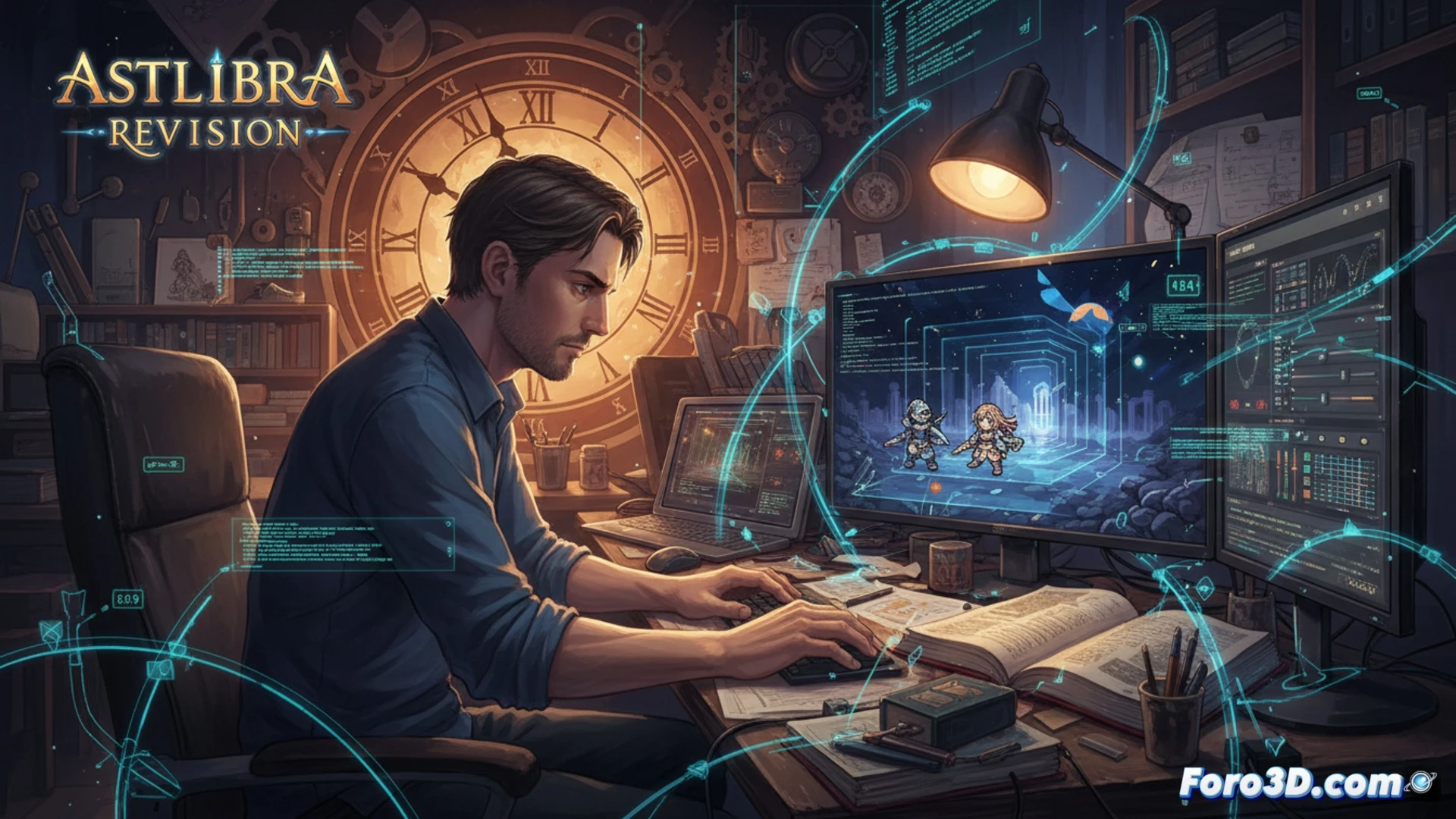
Astlibra Revision is not just a tribute to classic JRPGs; it is a lesson in technical perseverance. Its creator, KEIZO, developed the DX Library engine in C++ over 14 years, a period spanning from simple experiments to a commercial release. This handcrafted approach allowed absolute control over rendering, achieving that unique aesthetic that blends 2D sprites with backgrounds possessing an almost three-dimensional visual depth, something difficult to replicate with generic engines.
Technical Pipeline: DX Library, C++, and Photoshop 🎨
The decision to use a custom engine in C++ instead of solutions like Unity or Unreal offered critical advantages for the retro aesthetic. By not relying on a generic 3D lighting pipeline, the team was able to implement a very precise parallax layer system for the backgrounds, giving that sense of depth without sacrificing the sharpness of the hand-drawn sprites created in Adobe Photoshop. KEIZO was able to optimize the rendering so that the sprites, with their limited but vibrant color palette, integrated perfectly with the backgrounds, avoiding the aggressive anti-aliasing that often ruins the pixel art look in commercial engines. Photoshop was used not only to draw the assets but also to create depth maps and shadows that the engine interprets in real-time, a workflow only possible when the programmer and the artist speak the same technical language.
Lessons for Indie Developers 💡
Astlibra Revision demonstrates that time invested in custom tools is not wasted time, but an investment in visual identity. For an indie developer, building an engine from scratch over years is a huge risk, but the result is a product that feels cohesive and unique. The lesson here is that technology should not dictate art; on the contrary, art should dictate technology. If your vision requires granular control over every pixel, as in this case, a well-documented proprietary engine can be the difference between a game that imitates a classic and one that becomes a new benchmark for the genre.
After 14 years developing his own engine instead of using Unreal or Unity, what specific advantages does KEIZO believe this decision brought to the gameplay of Astlibra Revision that he would not have achieved with a commercial engine?
(PS: game jams are like weddings: everyone is happy, no one sleeps, and you end up crying)