YouTube has implemented mandatory and non-skippable ads globally on connected televisions. This format, lasting 15 to 20 seconds, removes the skip button and aims to offer advertisers a captive audience. For the video game industry, this move is not unfamiliar: it reflects the aggressive pursuit of monetization through forced user attention, a concept that developers know well through mobile ads or waiting times.
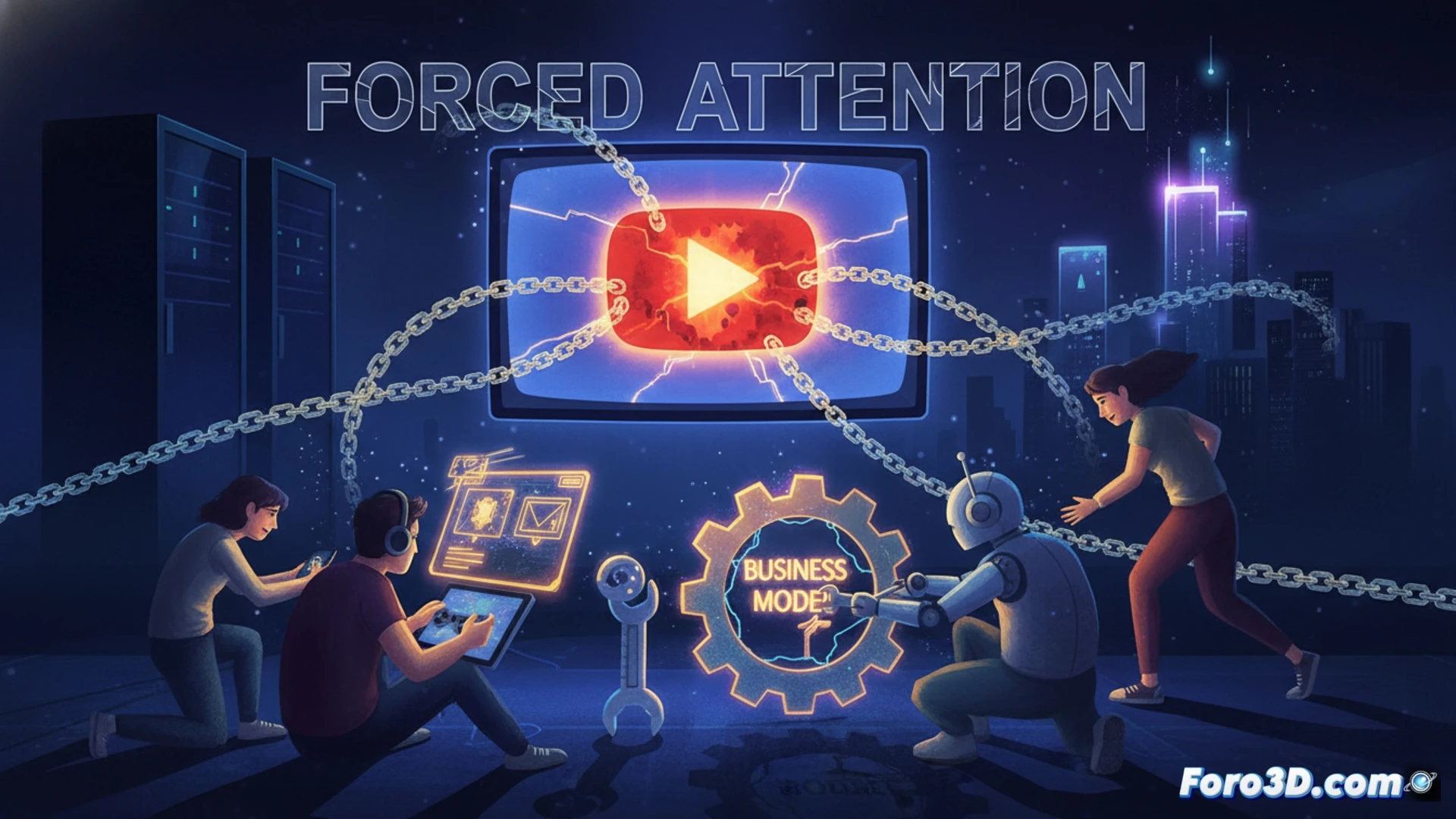
Forced Attention as a Commodity: Parallels with the Video Game Industry 🎮
Google's strategy, called Video Reach Campaigns Non-Skip, turns guaranteed attention into a premium product. This has a clear parallel with free-to-play video game models that implement non-skippable interstitial ads or mandatory reward timers. Both models capitalize on user inertia, assuming that the barrier to abandoning the experience is higher once immersed. For developers, this signals a normalization of forced interruption, raising the bar on what the market tolerates. AI-based targeting, similar to that used in programmatic advertising for games, allows advertisers to pay more for a specific context, something studios could emulate for their own ad integrations.
Lessons for Developers: Balancing Monetization and Experience ⚖️
This YouTube move serves as a warning and case study. While content platforms squeeze the user, video games have the opportunity to differentiate by offering a more respectful experience. Monetization must be balanced with long-term retention. Copying the forced attention model can generate short-term revenue, but also foster rejection. The real lesson is that, in an increasingly intrusive digital ecosystem, user experience quality can become a key differentiating value.
How will the imposition of non-skippable ads on YouTube for TV affect the monetization and marketing strategies of independent video game developers? 📺
(P.S.: optimizing for mobile is like trying to fit an elephant into a Mini Cooper)