The recent passing of Yoshiharu Tsuge, master of gekiga, leaves us with an invaluable visual legacy. His work, far from mere entertainment, explored the human psyche with an introspective and dreamlike style that revolutionized adult manga. For professionals in visual narrative, Tsuge is an essential case study. His approach demonstrates how graphic techniques can build complex and atmospheric narratives, offering profound lessons applicable to contemporary storyboard and 3D previs, where emotion and subtext must guide every frame.
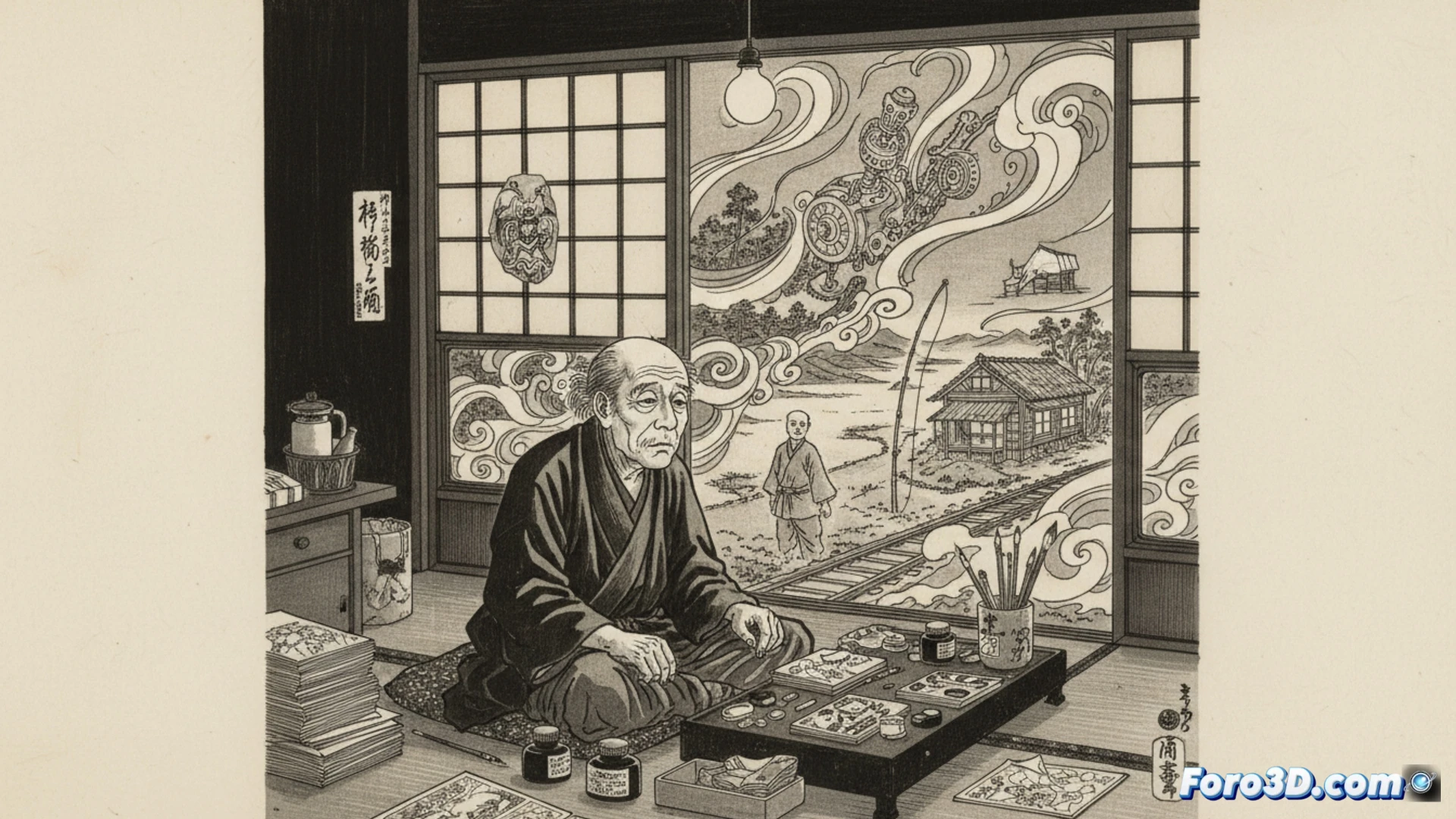
From the Flat Page to 3D Space: Composition and Narrative Time 🎬
Tsuge's visual language, analyzable today as a master storyboard, is based on the distortion of time and space. His panels not only advance the action but encapsulate mental states. The irregular flow between shots, graphic silences, and detailed backgrounds that become protagonists teach to prioritize atmosphere over literal clarity. In 3D preproduction, this translates into the deliberate use of cameras, lighting, and editing rhythm to evoke, not just show. Sequences like those in Nejishiki, where the dreamlike intrudes, are pure exercises in montage and transition that challenge the artist to think in terms of perceptual sensation and not logical sequence, a key principle for cinematics and immersive narrative sequences.
The Intangible Legacy: Prioritizing the Psyche over Action 💭
Tsuge's greatest teaching for any visual narrator is the courage of introspection. In an industry often dominated by explicit action, his work reminds us that internal conflict can be the most powerful visual engine. His autobiographical and avant-garde approach invites artists to use modern tools, from storyboard software to 3D layout, to explore alienation, memory, and human fragility. His legacy endures as a pillar that urges us to seek, in every shot and composition, an emotional truth that transcends the format.
How can Yoshiharu Tsuge's gekiga techniques of ellipsis and visual suggestion revolutionize narrative and emotional impact in storyboards for 3D animation?
(P.S.: Previz in film is like the storyboard, but with more chances for the director to change their mind.)