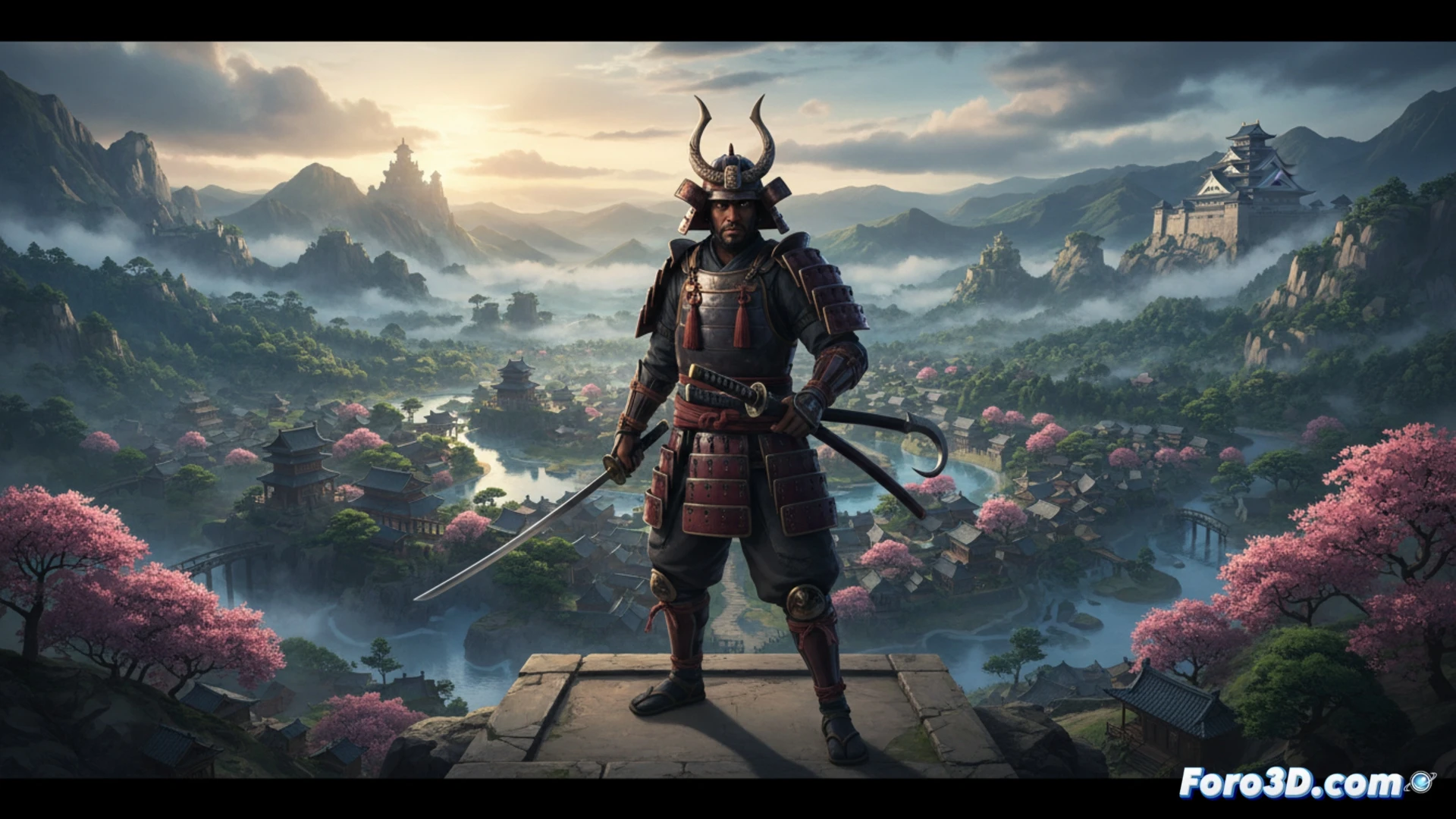
On the first anniversary of Assassin's Creed Shadows, art director Thierry Dansereau detailed the choice of the historical samurai Yasuke as a protagonist. This decision, far from being anecdotal, is a case study in intentional design. Yasuke is not only the first real protagonist in the saga, but his figure was chosen for game design and narrative reasons. His connection with Oda Nobunaga provides verisimilitude, while his outsider's gaze allows presenting feudal Japan as a world to discover for the player.
Narrative and Mechanical Duality: the Samurai Fantasy and the Shinobi 🥷
The choice of Yasuke only makes full sense alongside the fictional ninja Naoe. This duo structures the core of the game. Yasuke embodies the samurai fantasy: raw power, frontal combat, and an imposing presence. Naoe represents the shinobi fantasy: stealth, agility, and subterfuge. This duality transcends the aesthetic to shape gameplay mechanics, progression, and approach to challenges. The player not only switches characters, but philosophies of play. The creative decision to mix a historical character with a fictional one allows balancing contextual rigor with narrative freedom, optimizing each archetype for its playful role.
Beyond Representation: Characters in Service of Gameplay 🎮
Yasuke's case demonstrates that a character decision must first respond to the game's needs. His status as a foreigner justifies organic tutorials, his physique dictates a combat style, and his historicity anchors the plot. Naoe, being fictional, offers flexibility for personal evolution and pure stealth missions. Together, they create a complementary gameplay system. This analysis reveals how the initial choice, explained as narrative, is actually a fundamental pillar of systems design and the final user experience.
How does the inclusion of historical characters like Yasuke influence game systems design and narrative to balance historical accuracy with playability in open-world titles?
(P.S.: game jams are like weddings: everyone happy, no one sleeps, and you end up crying)