Xiaomi has released the update for its electric sedan SU7 for 2026, consolidating its position in the market. The technical improvements are notable: a maximum range of 902 km CLTC and, crucially, standard LiDAR across the entire range. The big novelty is its new high-voltage electrical architecture, which reaches 897V in the Max version for ultra-fast charging. This technological leap, along with commercial success that surpassed the Tesla Model 3 in China, offers an ideal field of study for analysis through engineering and 3D simulation.
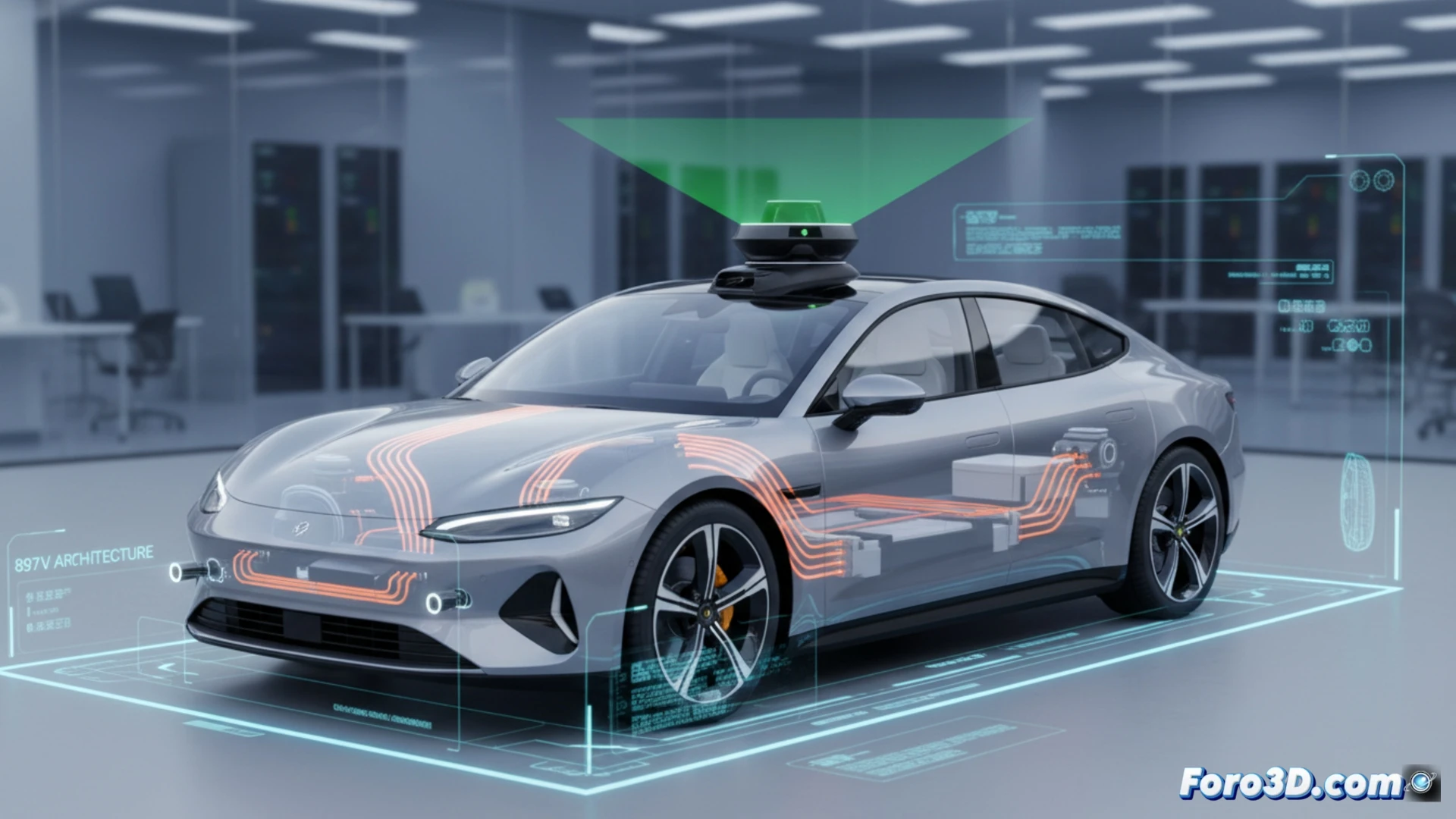
3D Modeling of the 897V Architecture and LiDAR Systems Simulation 🔋
The 897V architecture of the SU7 Max is a fascinating 3D modeling challenge. Recreating this system allows for precise simulation of energy flow, thermal management of high-voltage cables and components, and the efficiency of the battery-inverter-motor assembly. CFD and thermal simulation tools are key to optimizing heat dissipation in software before manufacturing. On the other hand, the inclusion of standard LiDAR reinforces the need for precise virtual environments. 3D models of the car, with its integrated sensors, can be validated in digital recreations of cities to test ADAS algorithms, analyzing failure points and field of view overlaps in a safe and efficient manner.
Comparative 3D Visualization and the Future of EV Design 🚗
The competitiveness of the SU7 against the Tesla Model 3 can be analyzed through comparative 3D visualizations. Overlaying digital models allows for a detailed study of component distribution, aerodynamics, or sensor integration. This approach underscores how 3D tools have evolved from being just for design to being fundamental in the engineering and validation of electric vehicles. The success of the SU7, validated by thousands of pre-orders, demonstrates that technological advantage is also forged in the virtual environment before hitting the road.
How does the 3D analysis of the Xiaomi SU7 2026's 897V electrical architecture optimize LiDAR system integration and thermal management for autonomous performance?
(P.S.: modeling a car is easy, the hard part is making sure it doesn't turn into a box with wheels)