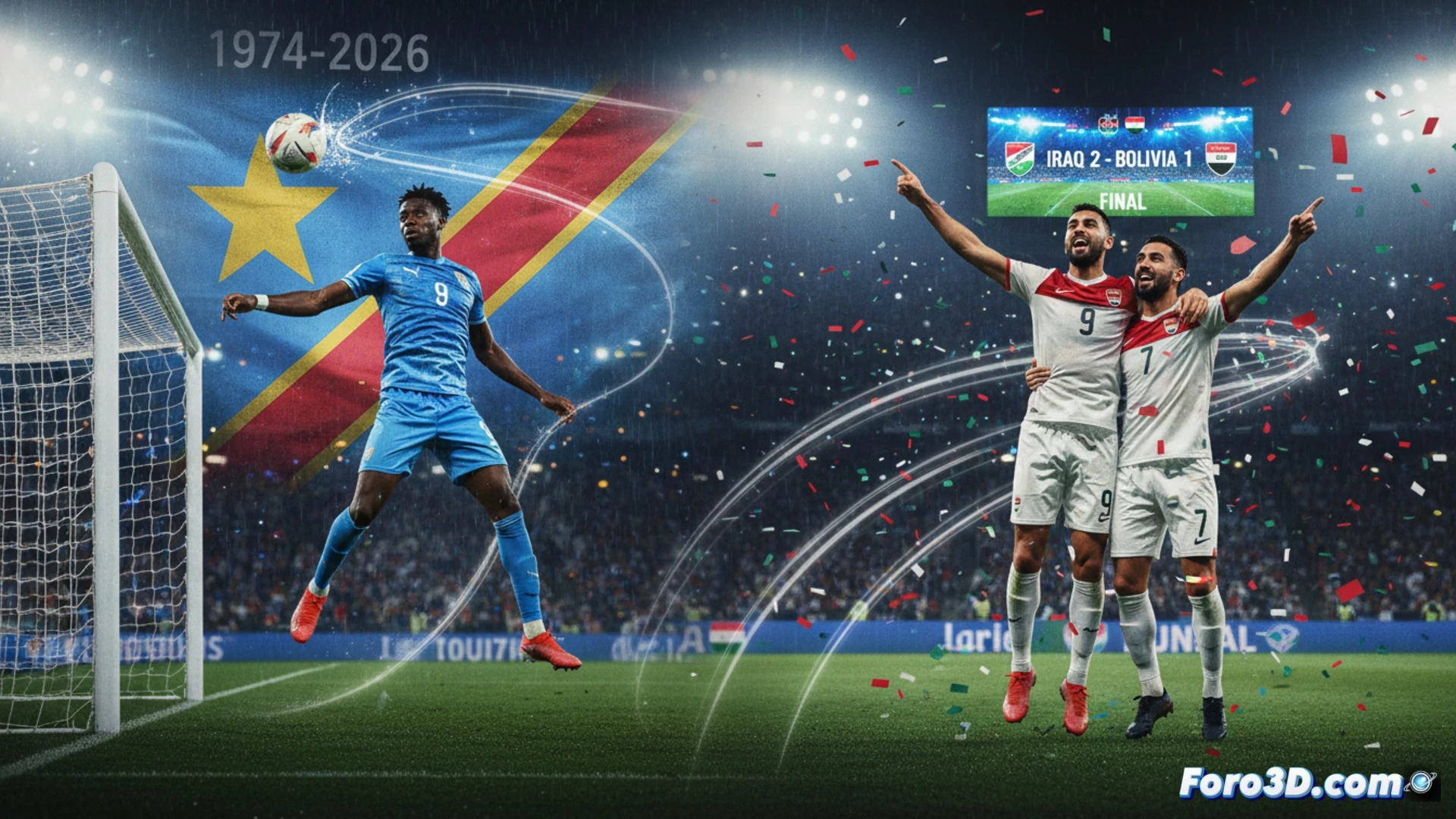
The FIFA World Cup 2026 already has its 48 complete teams. After the playoffs, the Democratic Republic of Congo and Iraq secured their tickets, ending absences of 52 and 40 years, respectively. In a 3D technology forum, we look beyond the result and explore how modern digital tools can delve deeper into this milestone. From analyzing their crucial qualifying goals to simulating their tough groups in the tournament, 3D technology stands out as a key ally for coaches, analysts, and fans. 🏆
Digital Twins and Tactical Simulation for Groups K and I 🧠
3D technology enables the creation of digital twins of the host stadiums in North America, facilitating team adaptation. For Congo, in Group K with Portugal, Uzbekistan, and Colombia, 3D simulations of defensive transitions and player movements like Tuanzebe's can be performed. For Iraq, in Group I against France, Norway, and Senegal, it is crucial to deeply analyze their set-piece plays, the source of their goals in the playoff. Through 3D reconstruction, Ali Al-Hamadi's goal can be broken down to study trajectories, angles, and positioning, offering an invaluable resource for tactical preparation and biomechanical study of technical gestures.
Beyond the Match: The Ultimate Tool for the Fan and the Professional 📊
The application of these technologies transcends the professional realm. 3D recreations of key plays and virtual tours of the stadiums enrich the fan's experience, bringing them closer to the event like never before. For teams like Congo and Iraq, with so little World Cup experience, these tools level the playing field. 3D analysis is not just visualization; it is the evolution of tactical understanding and the democratization of access to elite sports knowledge, marking a before and after in how we experience major tournaments.
How can the 3D analysis of the biomechanics and tactical patterns of the new qualified teams, such as the Democratic Republic of Congo and Iraq, predict their real impact in the unprecedented format of the 2026 World Cup?
(P.S.: 3D tactical simulation never fails, players on the pitch do)