In the free practice sessions in Japan, Williams showed a dual face. Alexander Albon celebrated the eighth time, pointing out tangible progress in the single-seater for qualifying. However, Carlos Sainz, with a look beyond the fastest lap, warned about the persistent poor race simulation pace. This contradiction between short lap performance and long rhythm is not a mere impression, but the result of an exhaustive digital analysis based on 3D models and telemetry.
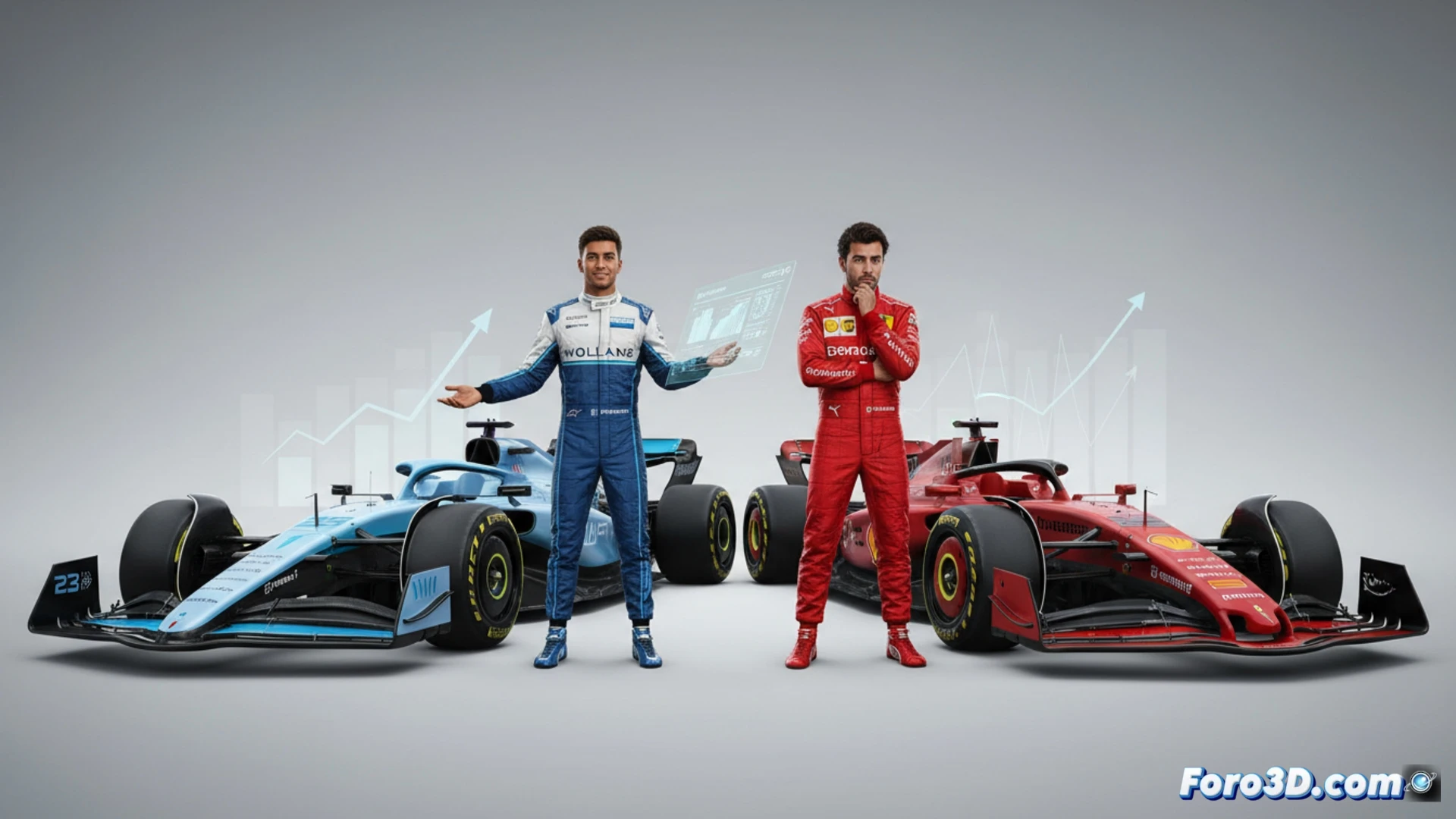
3D Modeling: Unraveling the Single-Seater's Behavior in Real Time 🧩
The drivers' comments directly reflect what the engineers see on their screens: 3D simulations powered by real-time data. For qualifying, the digital model of the FW45 can show optimal aerodynamic balance with a light fuel tank, generating good grip in key corners. But the same model, when simulated with full fuel load and tire degradation, reveals its structural weaknesses. The 3D visualization allows isolating variables like understeer induced by weight or loss of aerodynamic load in dirty air, explaining why a car fast in Q2 can become a problem on Sunday.
Simulation as a Compass in Modern F1 🧭
The Williams case in Suzuka exemplifies how F1 is guided by digital predictions. The anticipated improvement and setback are not guesses, but conclusions from a technological workflow where the car's digital twin is subjected to thousands of scenarios. This capability turns every practice session into a massive data collection to validate and adjust the 3D models, which are the true roadmap for development and race strategy.
How can 3D simulation data analysis explain the performance duality between the two single-seaters of the same team on the same track?
(P.S.: at Foro3D we know that a simulated penalty in 3D always goes in... unlike in real life)