Will Wright, the legendary mind behind titles like The Sims and SimCity, has been immersed for ten years in a personal and radical project: Proxi. This experimental game uses artificial intelligence for players to explore and connect their own memories, building avatars from personal experiences. After investing millions of his own and investors' money, and after laying off his entire team in 2024 due to lack of funds, Wright persists with a handful of unpaid collaborators. His determination contrasts with the market's skepticism, preferring, in his own words, a glorious failure over a moderate success.
AI as an Emerging Design Tool and its Challenges 🤖
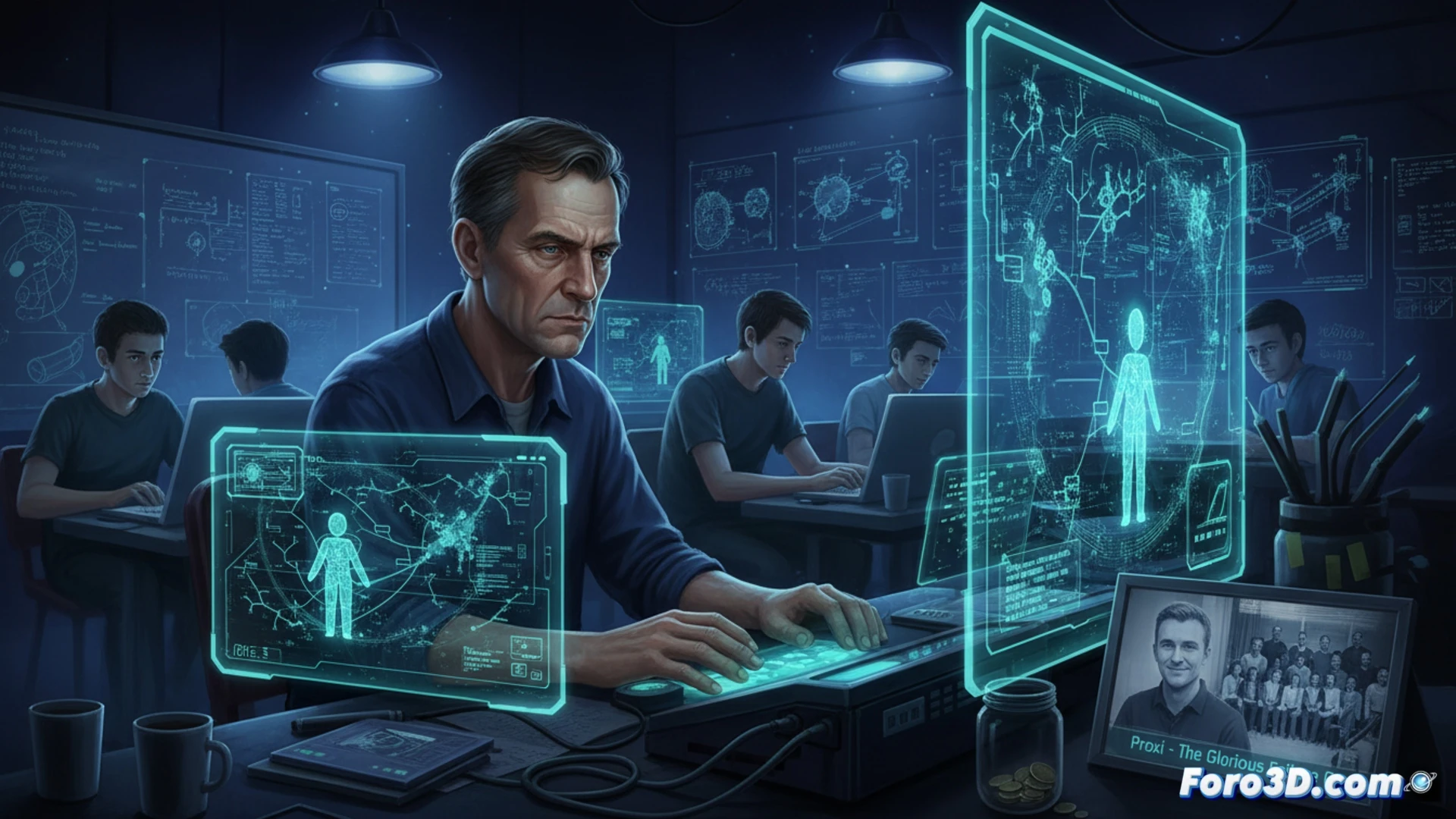
The technical core of Proxi lies in its unconventional use of AI. The game does not seek to generate standard procedural content, but rather to act as a cognitive mirror. The proposal is for the player to feed the system with fragments of their memory, and the AI helps model avatars or proxis that represent those memories, seeking connections and patterns among them. This innovative mechanic turns development into uncharted territory, without clear design or monetization references. This factor, added to the ambiguity about its final form (is it a game, a tool, an experience?), explains investors' reluctance and the funding crisis, underscoring the extreme risk of projects that prioritize pure experimentation over a predictable production cycle.
Indie Perseverance vs. Commercial Logic: A Case Study ⚖️
Proxi transcends anecdote to become a case study on the limits of indie development. Wright, despite his status, operates here with the determination and limited resources of a small studio, betting everything on a unique vision. His project questions the boundary between video game and personal narrative, challenging traditional success metrics. His perseverance, even in the face of probable commercial failure, highlights an alternative path in the industry: the obsessive pursuit of a singular idea, even if unviable for the mass market. Proxi, whether it exists or not in the end, is already a testament to absolute creative risk.
How could Will Wright's approach in Proxi to modeling human memory through AI redefine narrative and interaction in the development of future video games?
(P.S.: game jams are like weddings: everyone happy, no one sleeps, and you end up crying)