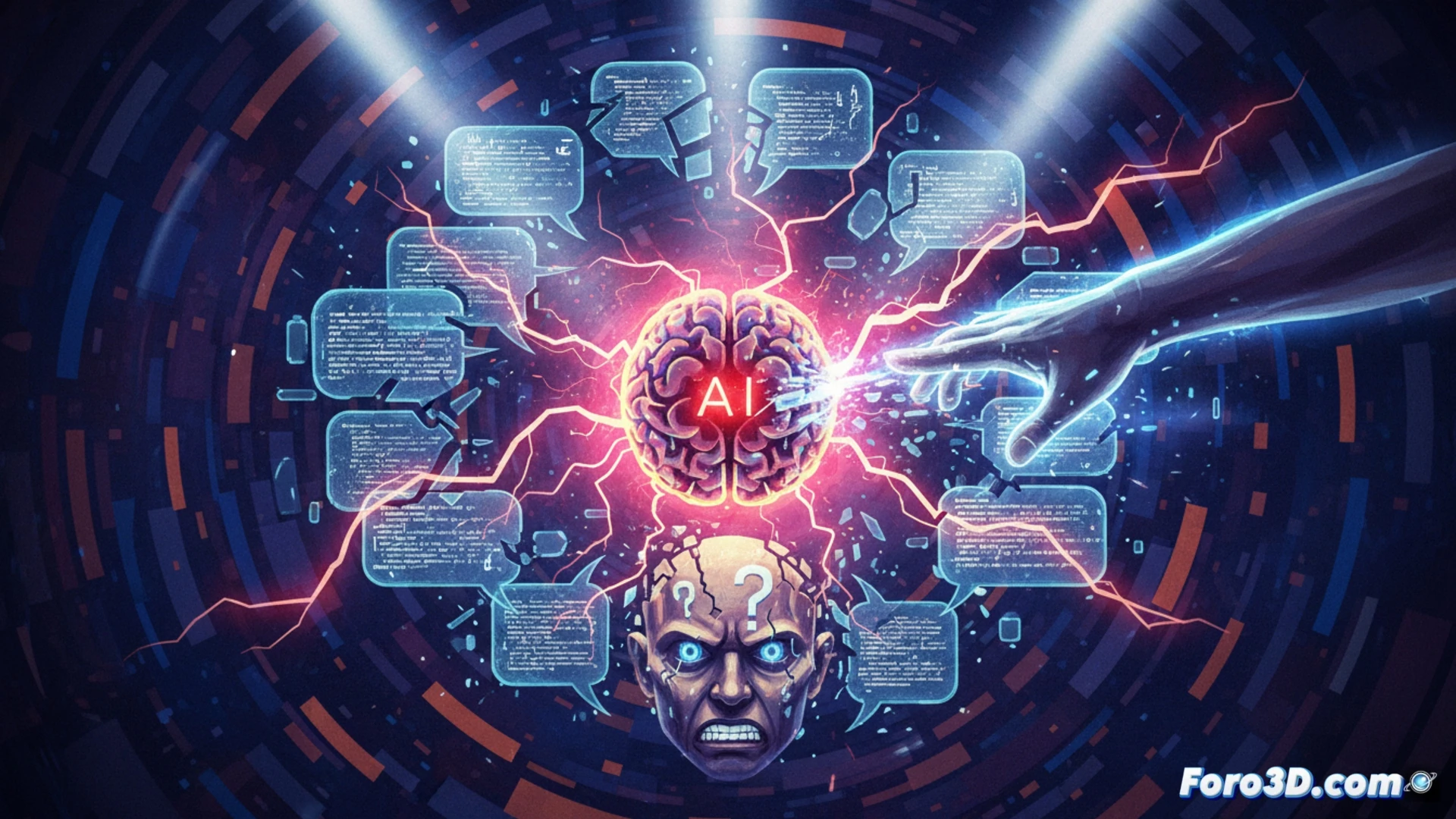
A user recounts a peculiar experience: when abruptly changing the topic in a conversation with an AI and then pointing out the relationship between both topics, the tool showed confusion and even a tone close to anger. This anecdote, beyond the anecdotal, serves as a perfect case study on how we perceive these artificial intelligences and how far their contextual understanding really goes.
Limited context and the illusion of coherence 🤔
Current language models do not maintain a deep and persistent understanding of context like a human does. They operate with extensive but finite context windows, and their priority is to generate the most plausible response to the latest input, without a constant mental model of the dialogue. When a user radically changes the topic, the AI adapts to the new framework. If the user then reveals an unexplicit connection, the tool must reinterpret the entire recent exchange, often resulting in inconsistent responses or ones that seem to deny their own previous messages. This is not anger, but an architectural limitation.
Emotional projection and the future of interaction 🧠
Interpreting the AI's inconsistency as anger reveals our tendency to anthropomorphize technology. We project emotions where there is only statistics and weight adjustments. This experience underscores the need to manage expectations: we interact with sophisticated text prediction patterns, not with consciousnesses. The future challenge lies in designing systems that better manage conversational transitions and communicate their limits transparently, to avoid this frustration in the user.
To what extent is the apparent conversational coherence of an AI an illusion maintained by the user, and what do abrupt breakdowns reveal about the true limits of its contextual understanding?
(PS: at Foro3D we know that the only AI that doesn't generate controversy is the one that's turned off)