Warframe, the successful free online action and role-playing game, expands its cross-platform reach with its optimized launch for Nintendo Switch 2. This move not only allows portability, but also presents a significant technical leap compared to versions on previous hardware. The launch comes with an incentive, the free Ambimanus pack for players who access it in the first weeks, a classic strategy to encourage migration and retention on a new platform. 🎮
Technical analysis: adapting an engine to new hardware capabilities ⚙️
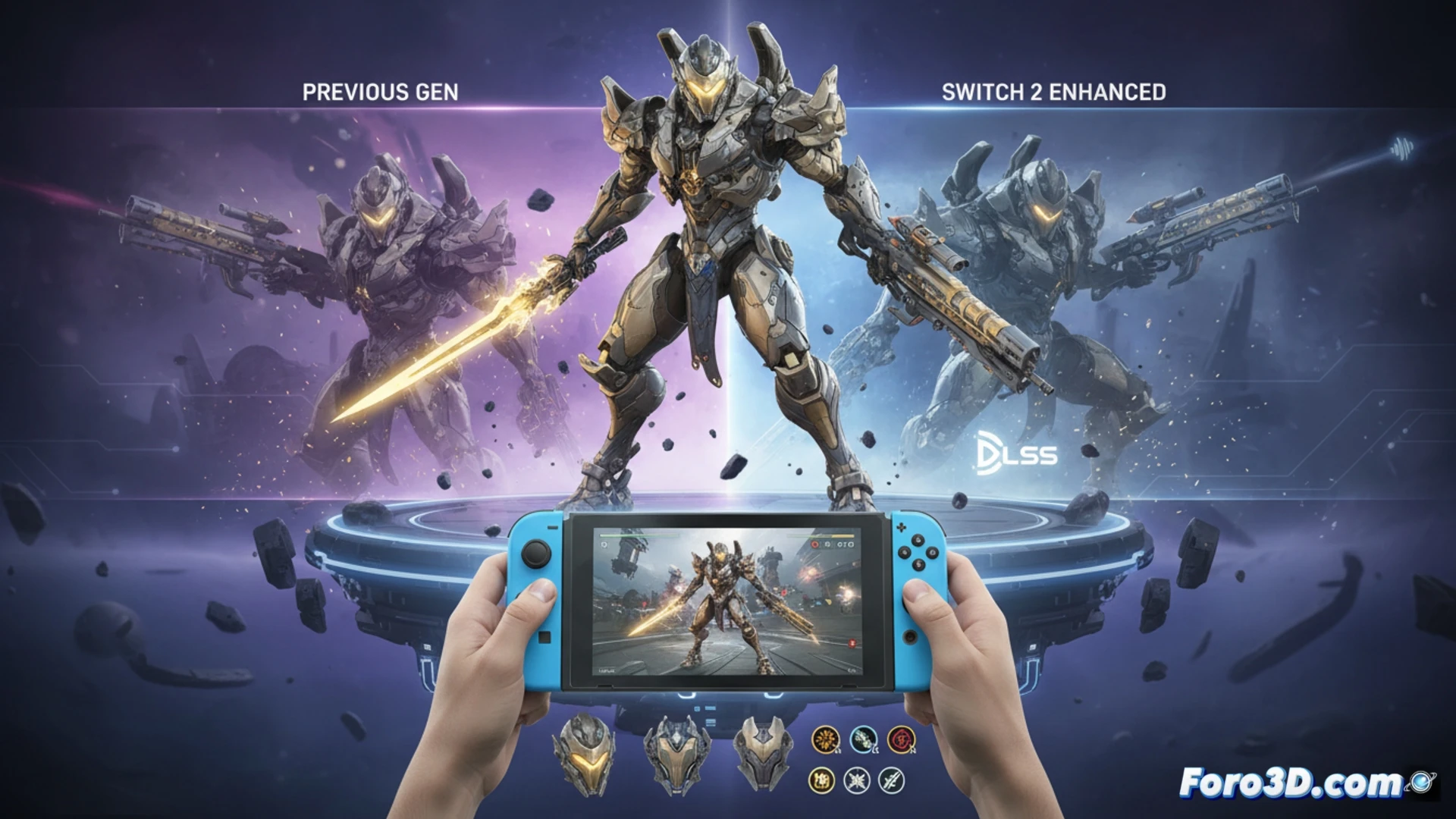
The port to Switch 2 stands out for its technical improvements, key to understanding the adaptation work. The main goal of 1080p at 60 stable fps is achieved with the help of DLSS for intelligent upscaling. This is complemented by reduced loading times, volumetric lighting, and higher resolution textures. These optimizations show how resources are reconfigured to exploit the new GPU and faster storage. Support for Joy-Con 2 as a mouse underscores control adaptations, while audio improvements reflect a comprehensive adjustment, not just graphical, to offer a native experience on the console.
Lessons on development and strategy in cross-platform launches 📈
This launch exemplifies a common process in current development: bringing a mature and live-service game to a new architecture. The focus on performance and specific visual features demonstrates prioritization in the optimization pipeline. Parallely, the offer of the cosmetic Ambimanus pack acts as a marketing hook that facilitates the transition of the existing community and attracts new players, balancing technical effort with an intelligent commercial strategy to ensure the port's success.
What graphics and network optimization strategies were crucial for adapting Warframe's Evolution Engine to the hybrid capabilities and architecture of the Nintendo Switch 2, while maintaining content parity with other platforms?
(PS: optimizing for mobile is like trying to fit an elephant into a Mini Cooper)