The warning from the CSO president, José Manuel Rodríguez Uribes, about the incompatibility between war and sport, focuses on a real risk: the possible absence of Iran from the 2026 World Cup. This geopolitical conflict threatens to disrupt the biggest football event. At Foro3D, we propose going beyond the statement and using 3D simulation tools to quantify and visualize the real impact of these crises on the global sports ecosystem, from the competitive to the economic aspects.
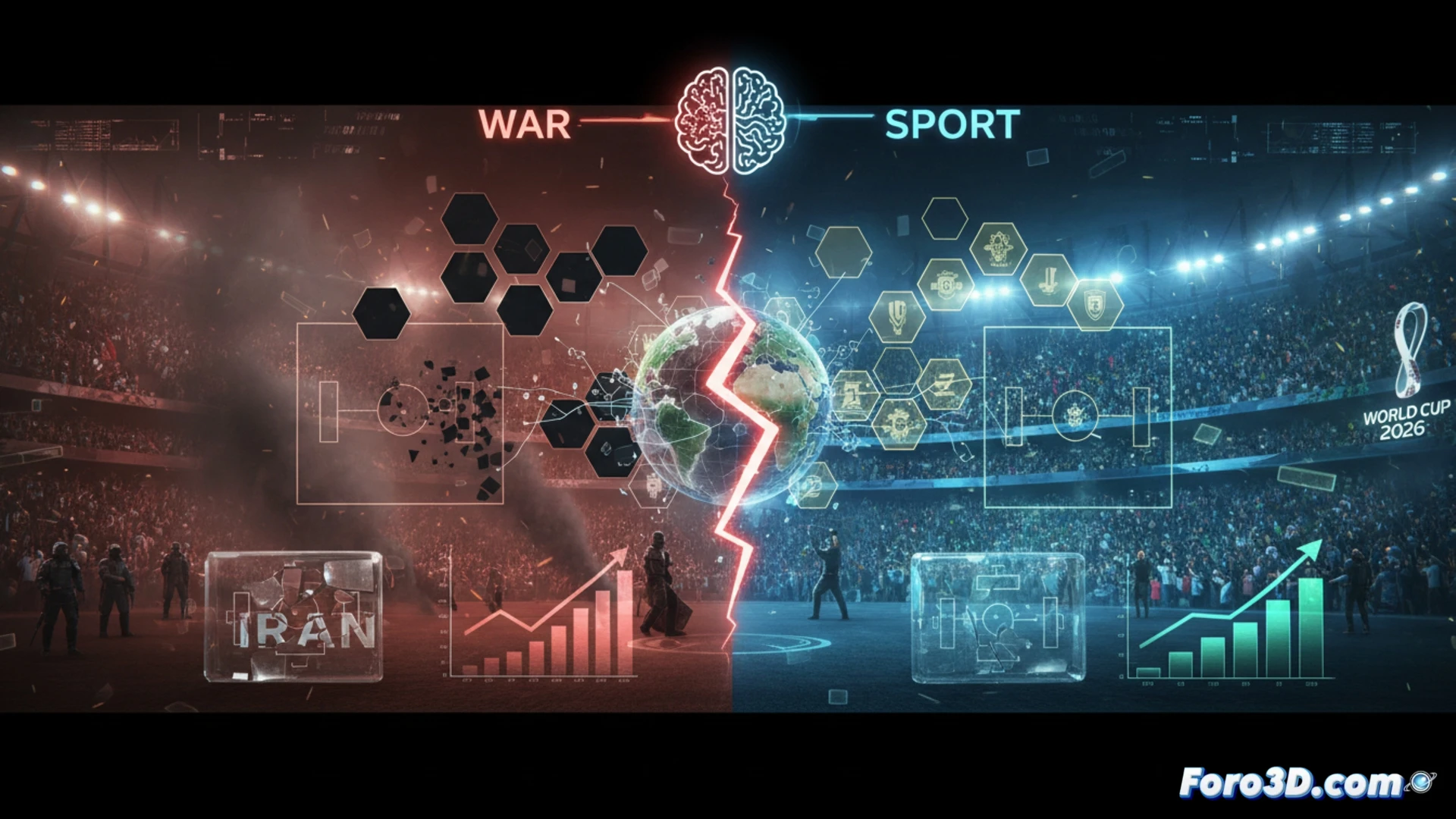
Digital Twins: Simulating Crisis Scenarios in Real Time 🧠
Technology allows creating a digital twin of the World Cup. This 3D virtual model, fed with geopolitical and logistical data, can simulate critical scenarios. We can visualize the domino effect of a national team's absence: rescheduling of matches, impact on fans' travels, and redistribution of TV rights revenues. Additionally, emergency venue changes or extreme security protocols can be modeled, allowing organizers to anticipate problems and plan responses. This simulation offers a tangible perspective on risks that would otherwise be abstract.
Visualizing History to Understand the Present 📜
The history of sport is marked by conflicts. Through interactive 3D infographics, we can map cases like the 1980 and 1984 Olympic boycotts or Yugoslavia's exclusion from Euro 1992. Overlaying this data with the current Iranian scenario helps understand patterns and long-term consequences. Visualizing how those crises were resolved or worsened is key for institutions, like the CSO to which Uribes belongs, to make informed decisions, using sport as a bridge from analysis, not just from desire.
Would you use automatic player tracking or manual animation for the simulation?