The startup Waabi, founded by expert Raquel Urtasun, is revolutionizing freight transportation with level 4 autonomous trucks. Its fleet is already operating on the route between Dallas and Houston. The pillar of its strategy is an innovative simulation system to train artificial intelligence, a method they consider safer and more scalable than relying massively on real-road tests.
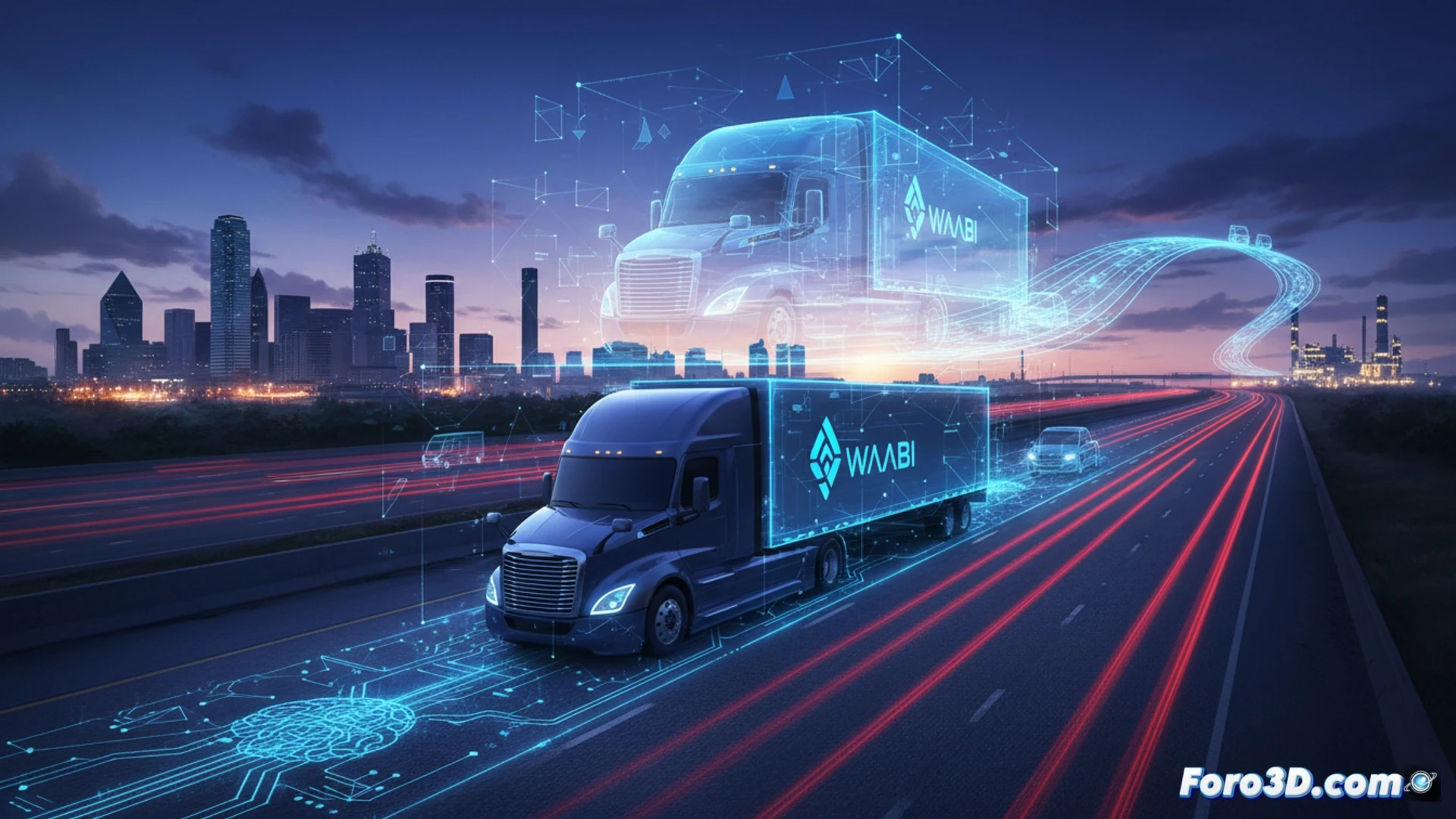
The 3D Simulator as an Accelerator for Autonomous AI 🚀
Waabi bets on a high-fidelity virtual environment to expose its AI to millions of kilometers of complex and rare scenarios, such as extreme weather conditions or unpredictable behaviors of other drivers. This advanced simulation allows iterating and validating decisions in fractions of a second, exponentially accelerating learning compared to traditional methods. The key lies in generating varied and physically accurate synthetic data to train perception and decision-making systems, reducing costs and risks.
Simulation: the Critical Path for Viable Autonomy ⚙️
Waabi's approach underscores a paradigm shift in the industry. 3D simulation ceases to be a complementary tool to become the core of development. This methodology is fundamental to achieving the robustness and confidence necessary for safe commercial deployment, demonstrating that the path to level 4 autonomy is first, and intensively, traveled in virtual worlds.
How is Waabi using 3D simulation to overcome the biggest challenge of autonomous trucks: safety validation in rare and critical scenarios?
(P.S.: at Foro3D our cars have more polygons than horsepower) 🏎️