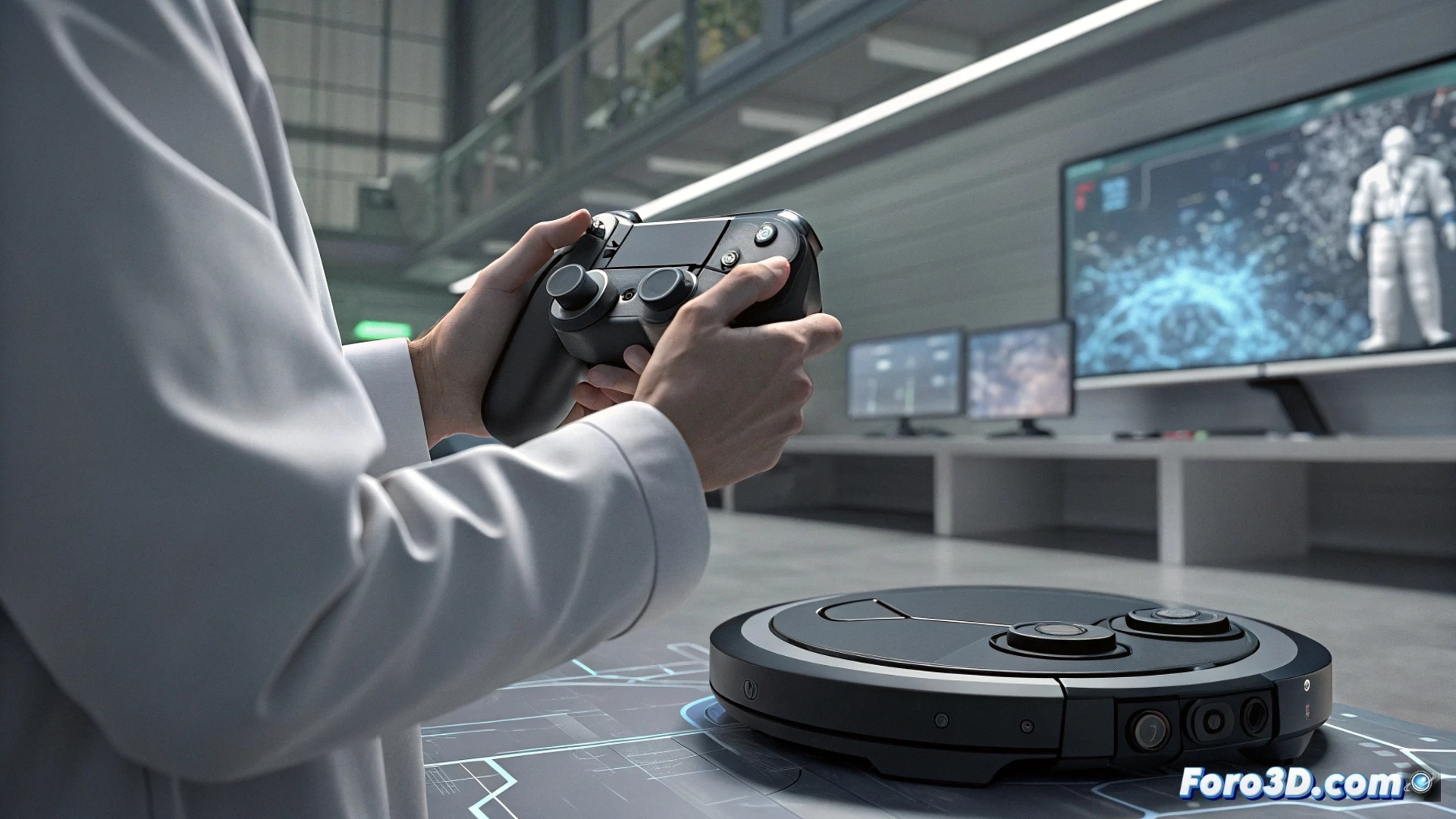
An accidental discovery has exposed serious security flaws in consumer robotics. Sammy Azdoufal, while trying to connect a PlayStation controller to his DJI Romo vacuum cleaner, accidentally accessed a network of about 7000 devices. This incident, which earned him a $30,000 reward, revealed that anyone could view video streams without a PIN. DJI is working on patches, but the case questions the robustness of previous security certifications.
3D Simulation: the crucial testing ground for robotic cybersecurity 🛡️
This case underscores the need to integrate cyber intrusion testing into the earliest design phases. This is where 3D simulation becomes indispensable. Developers can create digital twins of complete home environments and model the IoT device network in 3D to test attack vectors in a safe and controlled manner. Visualizing how a breach propagates in a fleet of 7000 robots in a 3D model helps understand the scale of the risk and design more robust network architectures, isolating failures before the physical hardware exists.
Lessons for the future of home automation 🏠
Connected robotics is advancing, but its security cannot be an afterthought. Integrating cybersecurity testing into 3D simulation cycles must be a standard. It is not enough to test the robot's mobility or navigation; attacks on its communication and control interfaces must be simulated. Only then can home automation systems be built where convenience does not compromise user privacy and security.
What do you think about this development? 🤔