Lindsey Vonn's serious fall at Milan-Cortina 2026, with a fracture and risk of compartment syndrome, underscores the limits of the body in elite sports. Beyond the narrative of pain and resilience, this incident opens a crucial door to analyze how 3D technology can transform our understanding, visualization, and approach to complex injuries, serving as a bridge between the athlete's experience and medical science.
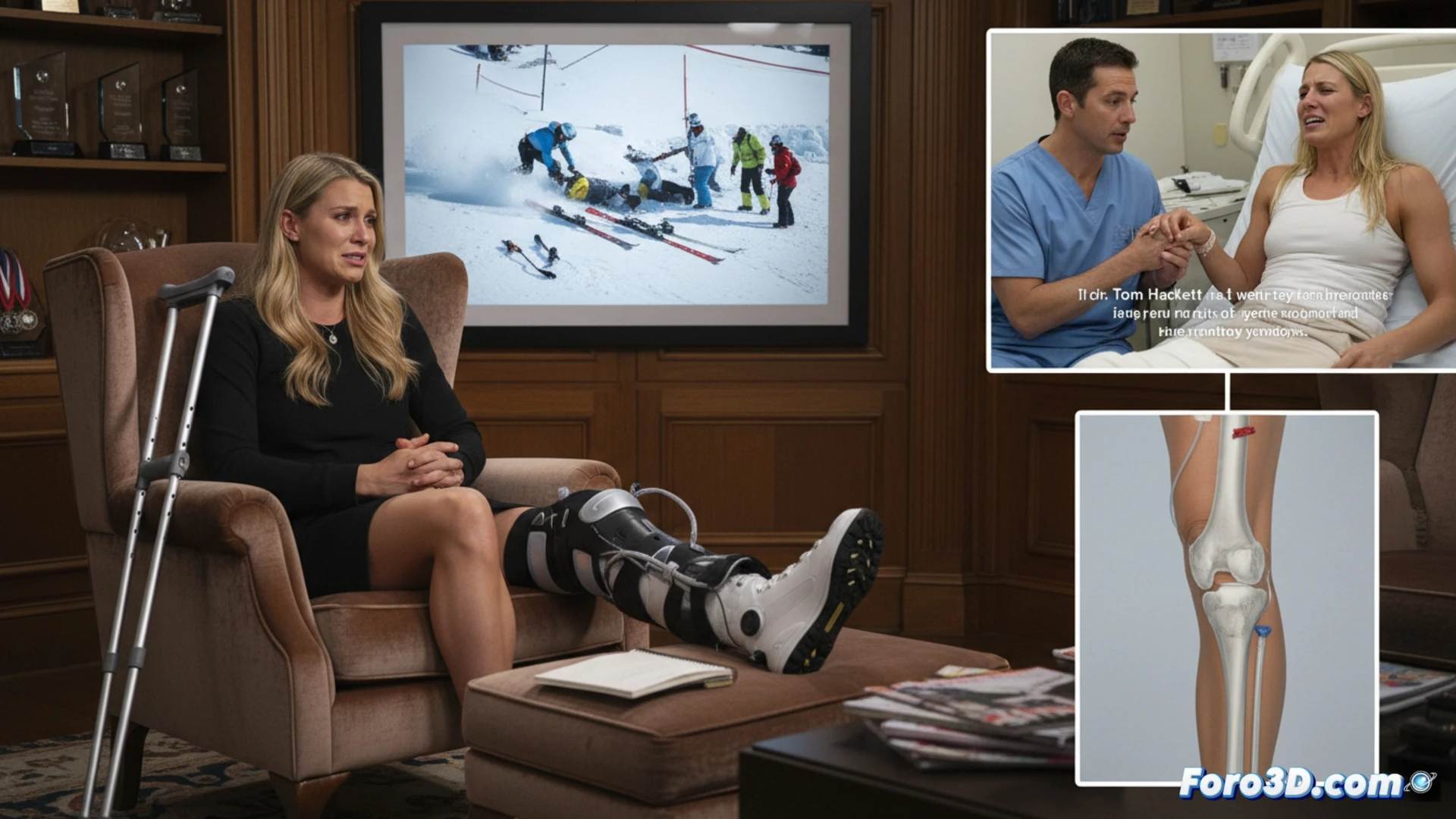
3D Reconstruction and Biomechanical Simulation of the Injury 🦴
3D technology allows digitally recreating the mechanics of the fall, fusing video data with biomechanical models. This helps identify the exact points of impact and the forces that caused the fracture and intracompartmental pressure. A 3D anatomical model of Vonn's leg, based on her scans, would visualize the severity of the syndrome: swollen muscles trapped in a closed fascial space, compromising blood flow and nerves. This visualization is a powerful educational tool for doctors and athletes, explaining why it was a surgical emergency that nearly cost her leg functionality.
Limits, Prevention, and the Future of Digital Rehabilitation 🚑
The debate about competing while injured connects with 3D simulation of physical limits. Modeling stress on a previous injury could quantify risks. In rehabilitation, comparative 3D scans would monitor inflammation reduction and muscle recovery, guiding the return to training. 3D technology does not prevent falls, but it does transform a traumatic experience, like Vonn's, into a digital map to save limbs and careers.
How would you reconstruct the key play of the match in 3D to analyze it tactically?