Volvo has unveiled the prices in Spain for the EX60 Cross Country, the most adventurous variant of its electric SUV. With 510 HP and up to 640 km of range, this model not only stands out for its performance, but also represents a perfect case study on how 3D modeling and computational simulation are pillars in the development of modern vehicles. Its design, aerodynamics, and electrical architecture are the result of advanced virtual engineering processes.
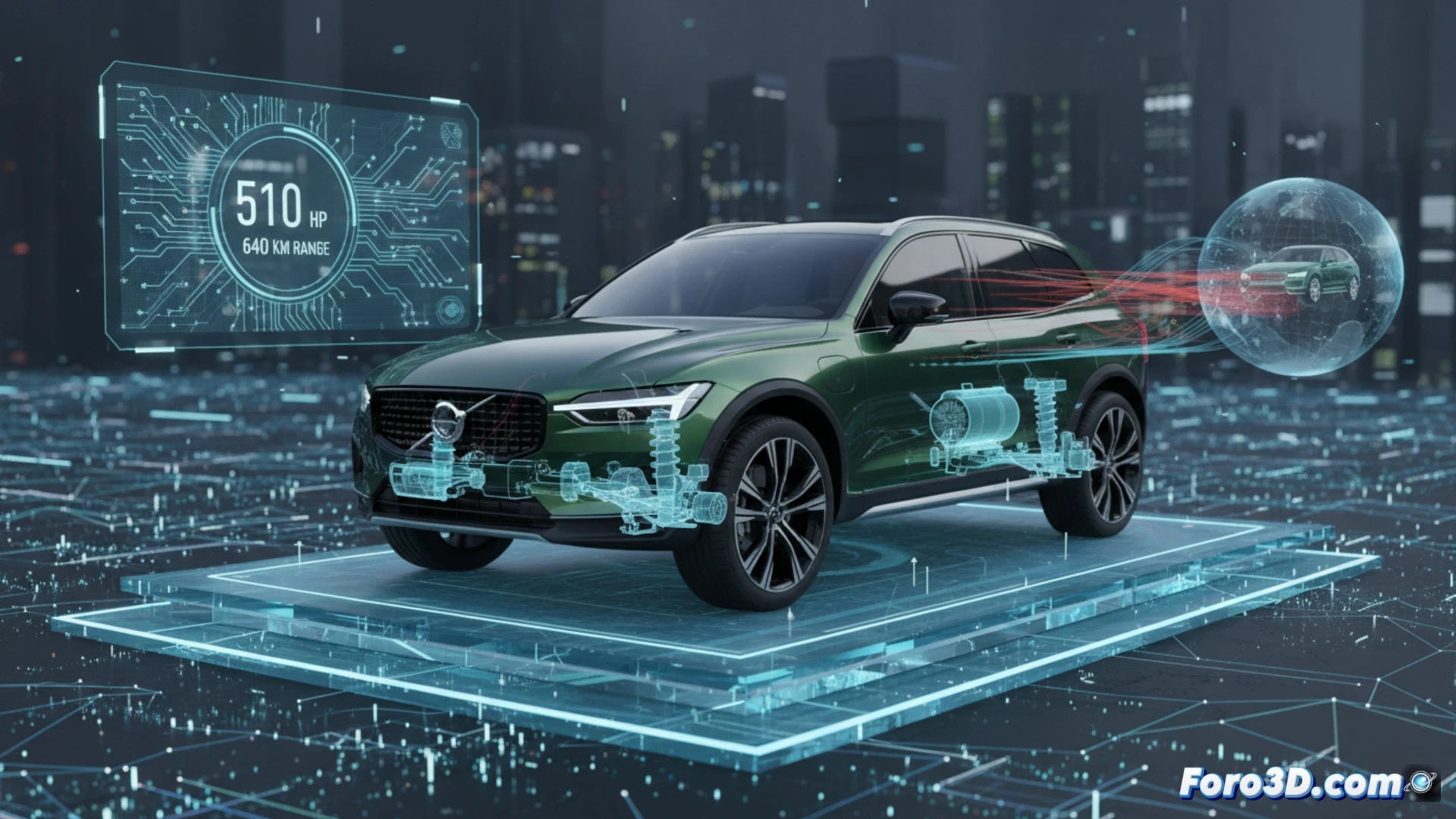
Digital Twins and Simulation: Keys in the Engineering of the EX60 🔬
The creation of the EX60 Cross Country involves intensive use of digital twins. Before a physical prototype exists, its entire electric propulsion system, battery distribution, and thermal management are modeled and simulated in 3D to optimize efficiency and safety. ADAS systems and the interface of its digital screens are validated in virtual environments. Even the distinctive Cross Country exterior package, with its protections and geometries, undergoes airflow and structural resistance analysis using simulation software, seeking the balance between aesthetic robustness and energy efficiency.
3D Visualization as a Design and Marketing Tool 🎨
Beyond engineering, high-fidelity 3D modeling is crucial in the design and commercialization phase. Hyperrealistic renders of the EX60 allow evaluating volumes, proportions, and the integration of equipment, such as the panoramic roof or Matrix LED headlights. These tools enable rapid iteration and create visualizations for the end customer, showing configurations and colors in an immersive way. Thus, 3D technology not only builds the car but also helps sell it.
How does the use of 3D simulation tools influence the development of aerodynamics and range in electric vehicles like the Volvo EX60 Cross Country?
(P.S.: simulating an ECU is like programming a toaster: it seems easy until you order a croissant)