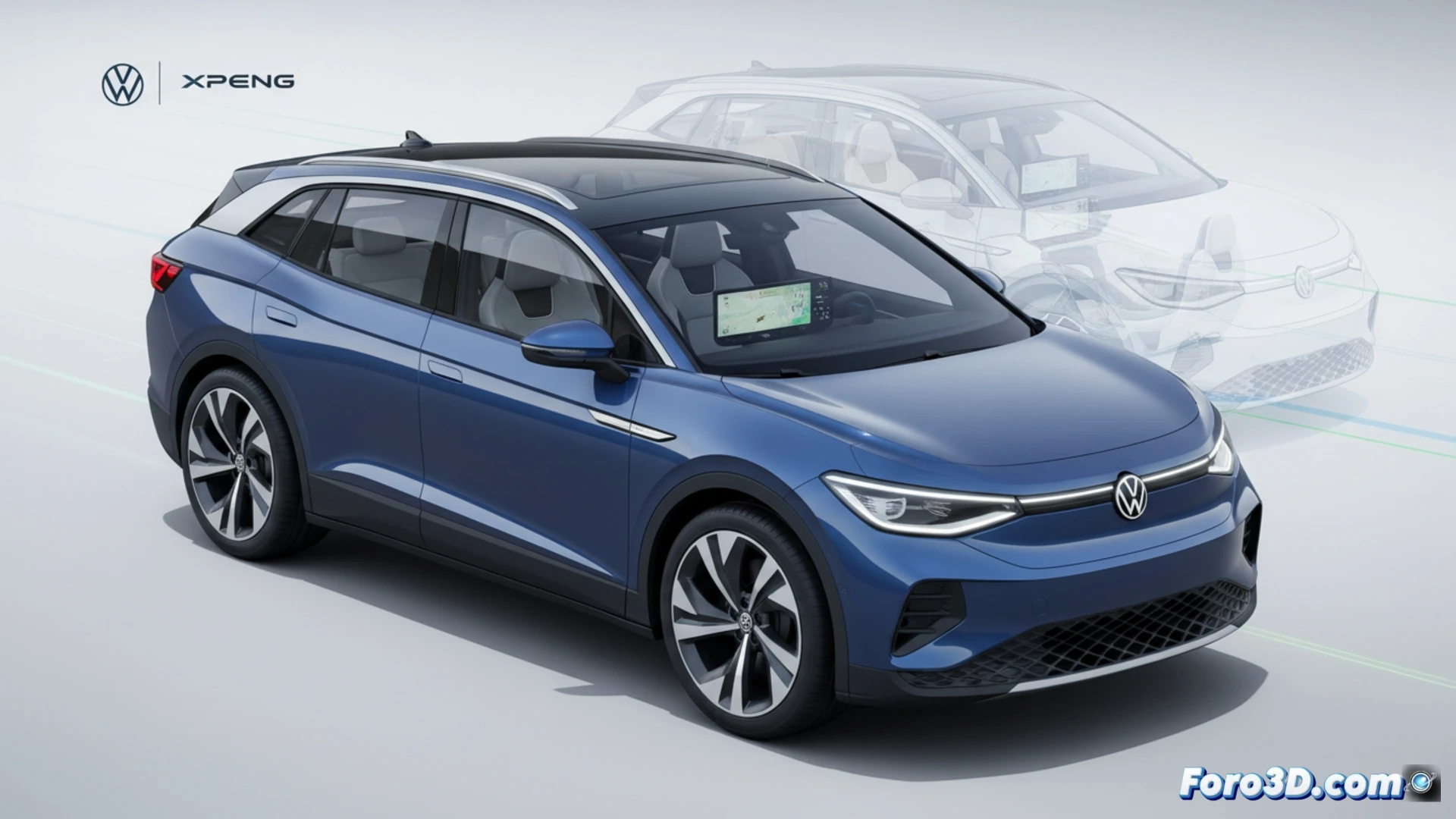
Volkswagen has presented the ID. UNYX 08 in China, a 5-meter electric SUV developed in just two years thanks to its alliance with Xpeng. This model breaks with the brand's traditional design, prioritizing an interior dominated by technology. For 3D professionals, this vehicle is a fascinating case study, as its agile development and advanced systems rely on modeling, simulation, and digital visualization tools in all phases, from the chassis to the user interface.
3D Modeling and Simulation in ADAS and User Interface 🚗
The technological heart of the ID. UNYX 08 lies in its Xpeng autonomous driving systems and its digital cabin with two 15-inch screens. The development of these systems is unthinkable without 3D engineering software. The ADAS sensors, their placement, and field of view are modeled and simulated virtually to optimize their effectiveness and safety. Similarly, the user interface, the AI voice assistant, and the physical integration of the screens are prototyped and validated in 3D environments before physical manufacturing, allowing rapid iterations and perfect ergonomics.
3D Visualization as a Pillar of Agile Development ⚡
The two-year development timeline for such a complex vehicle underscores the crucial role of the digital workflow. The collaboration between Volkswagen and Xpeng surely relied on shared 3D development platforms, allowing the design, testing, and adjustment of the electrical architecture, battery layout, and ECU network in a collaborative virtual space. This approach not only accelerates time to market but redefines how traditional brands can innovate at the speed demanded by the current electric market.
How has the use of 3D design and simulation tools accelerated the development of the Volkswagen ID. UNYX 08, enabling a design cycle of just two years? 🤔
(P.S.: simulating an ECU is like programming a toaster: it seems easy until you order a croissant)