Volkswagen has confirmed the development of the ID. Tiguan, the electric SUV that will succeed the ID.4 starting in 2027. Caught during winter tests, the vehicle shows a more sophisticated design, aligned with the thermal Tiguan, and a slight growth in its dimensions. This launch is key in the strategy to relaunch the electric range by adopting iconic names. Behind its aesthetic and technical evolution is an intensive digital development process, where 3D tools are the fundamental pillar.
CAD Modeling, Aerodynamics, and Simulation: the Trinity of Digital Development 🛠️
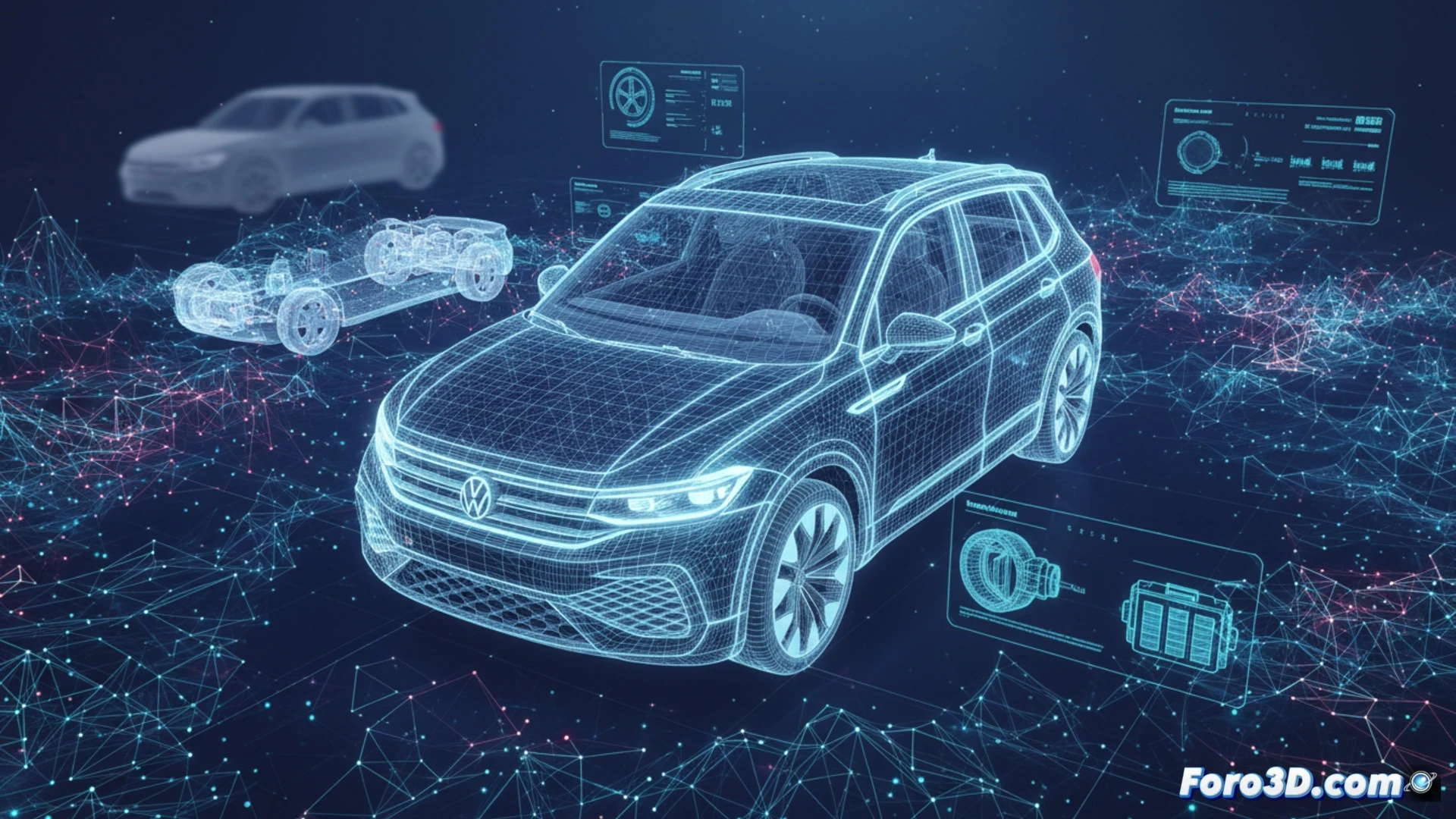
The creation of the ID. Tiguan relies deeply on 3D technologies. High-precision CAD modeling defines its new bodywork, the overhangs, and the integration of components. CFD simulation (Computational Fluid Dynamics) is crucial for optimizing the front, profiling the air intakes and voluminous headlights to maximize aerodynamic efficiency and battery thermal management. In parallel, its entire electrical architecture and ADAS sensor network are modeled and visualized in 3D, allowing validation of location, wiring, and interoperability of complex systems before manufacturing a single physical component. This digital twin accelerates the development cycle and reduces costs.
From Bits to Metal: the Brand Strategy is also Designed in 3D 🎯
The decision to adopt the Tiguan name for an electric vehicle is not just commercial. It reflects how 3D design allows materializing a consistent brand identity between thermal and electric versions, maintaining recognizable proportions and aesthetic language. 3D visualization and rendering tools were essential to project and validate this transition, ensuring that the final vehicle conveys the brand's values at first glance. Thus, 3D technology not only builds cars but also forges their legacy.
How is the use of comprehensive 3D design environments transforming the development process and aerodynamic efficiency of new electric vehicles like the Volkswagen ID. Tiguan?
(P.S.: simulating an ECU is like programming a toaster: it seems easy until you order a croissant)