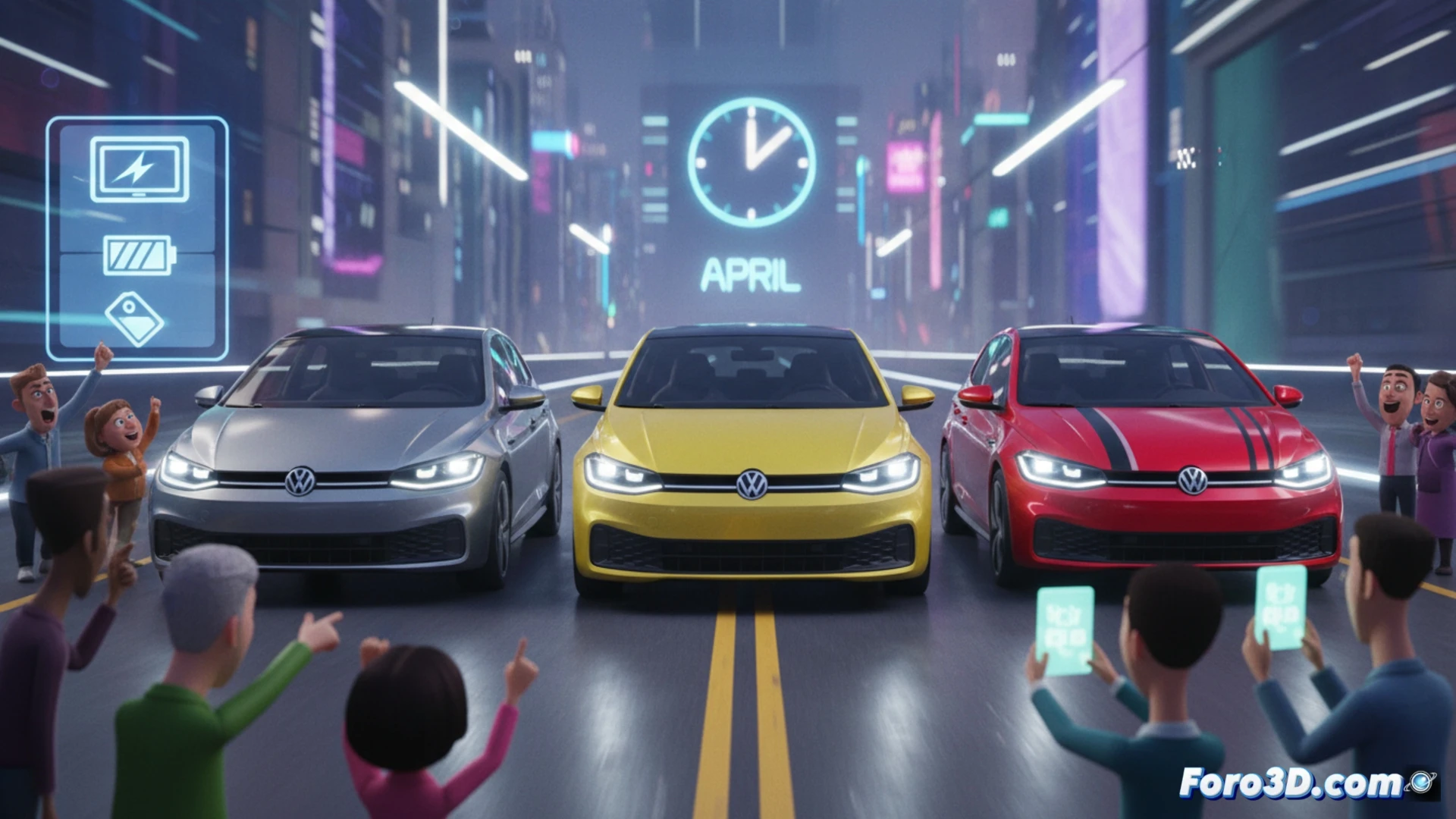
One month before its official presentation, the Volkswagen ID. Polo has been leaked without camouflage, revealing the design of the brand's smallest and most affordable electric car. With just over four meters, it shows a modern front aesthetic with sharp headlights and continuous light. Its images, in colors like yellow or red GTI, and its technical specifications anticipate a utility vehicle with up to 420 km of range, large-format digital screens, and a starting price of 28,000 euros. This launch, scheduled for the summer, is a perfect example of how the development cycle of a modern vehicle is intrinsically linked to digital tools. 🚗
3D Modeling and Simulation: From Concept to Road 💻
The existence of such detailed leaks before the official debut is no coincidence. The ID. Polo's design, from its simple lines to the integration of the front light bar, has been refined for months using advanced 3D modeling and aerodynamic simulation software. These tools allow for rapid iteration on the style, optimization of energy efficiency, and design of the interior around elements like the 10.25-inch screen or the 12.9-inch infotainment system. Additionally, the electrical architecture of its five versions is validated through simulations that test battery distribution, thermal management, and safety, long before building a first physical prototype.
3D Visualization: Immersive Marketing Before Launch 🎨
Beyond development, 3D technology is crucial in the marketing strategy. The leaked images and the official renders that will follow are products of powerful 3D visualization, generating excitement and allowing the media to analyze the car from all angles. Soon, online 3D configurators will allow customers to customize their ID. Polo, changing colors and equipment in real time. This immersive process, which turns engineering data into attractive visual experiences, shortens the distance between the idea and the end customer, redefining the presentation of new models.
How has 3D modeling and simulation influenced the design of the Volkswagen ID. Polo to achieve an optimal balance between aerodynamics, electric efficiency, and manufacturing cost?
(P.S.: Car electronics are like family: there's always a fuse that blows)