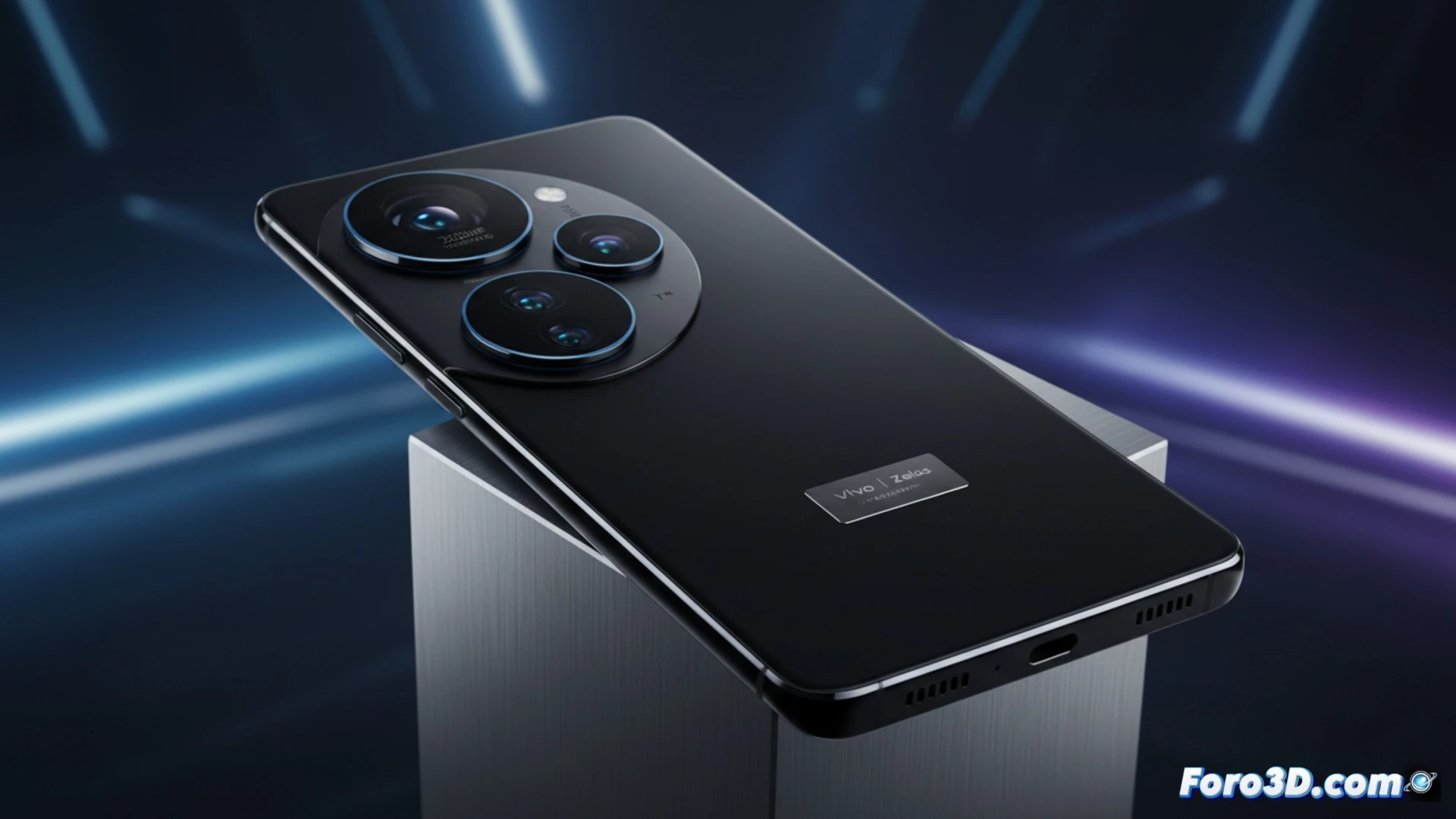
Vivo has presented the X300 Ultra, a smartphone that transcends casual photography to aim at the professional realm. Its collaboration with Zeiss and top-tier hardware, led by the Snapdragon 8 Elite Gen 5, raises an interesting question for our niche: can it be a valid device for 3D artists and creators? Beyond its impressive cameras, we analyze whether its power and video capabilities make it a useful companion for visualization, review, or reference capture tasks.
Raw power and advanced capture: Specifications under the microscope 🔍
The heart of the device is the Snapdragon 8 Elite Gen 5, a chipset that promises high-end computing and graphics performance. This is crucial for 3D visualization applications, allowing the manipulation of complex models on the go or reviewing high-resolution renders. Its camera system, with three master lenses and a 200MP telephoto sensor, is especially relevant. The high resolution and potential detail could be useful for capturing reference textures or even starting basic photogrammetry projects. The ability to record video in 4K at 120 fps also positions it as a solid tool for capturing high-quality reference motion.
A complementary device, not a replacement ⚖️
While the X300 Ultra seems like a promising tool, its role in a 3D workflow would be complementary. It does not replace a workstation, but it could be invaluable for the pre-production phase and asset capture in remote locations. The key will be in the software: compatibility with professional 3D visualization apps and, potentially, photogrammetry processing. Its arrival in global markets at the end of the year will provide the opportunity to test whether its theoretical power translates into practical performance for digital creators.
Can the Vivo X300 Ultra, with its high-performance chipset and Zeiss collaboration, become a viable tool for visualizing and reviewing complex 3D projects on the go?
(PS: If the computer starts smoking when opening Blender, maybe you need more than a fan and faith)