In 1976, Richard Dawkins revolutionized evolutionary outreach with The Selfish Gene, presenting evolution from the gene's perspective. His powerful metaphor, where genes act as selfish replicators, explains complex behaviors intuitively. Today, 3D scientific visualization can take that idea further, transforming the abstract concept into interactive models that allow seeing and exploring these fundamental principles of biology.
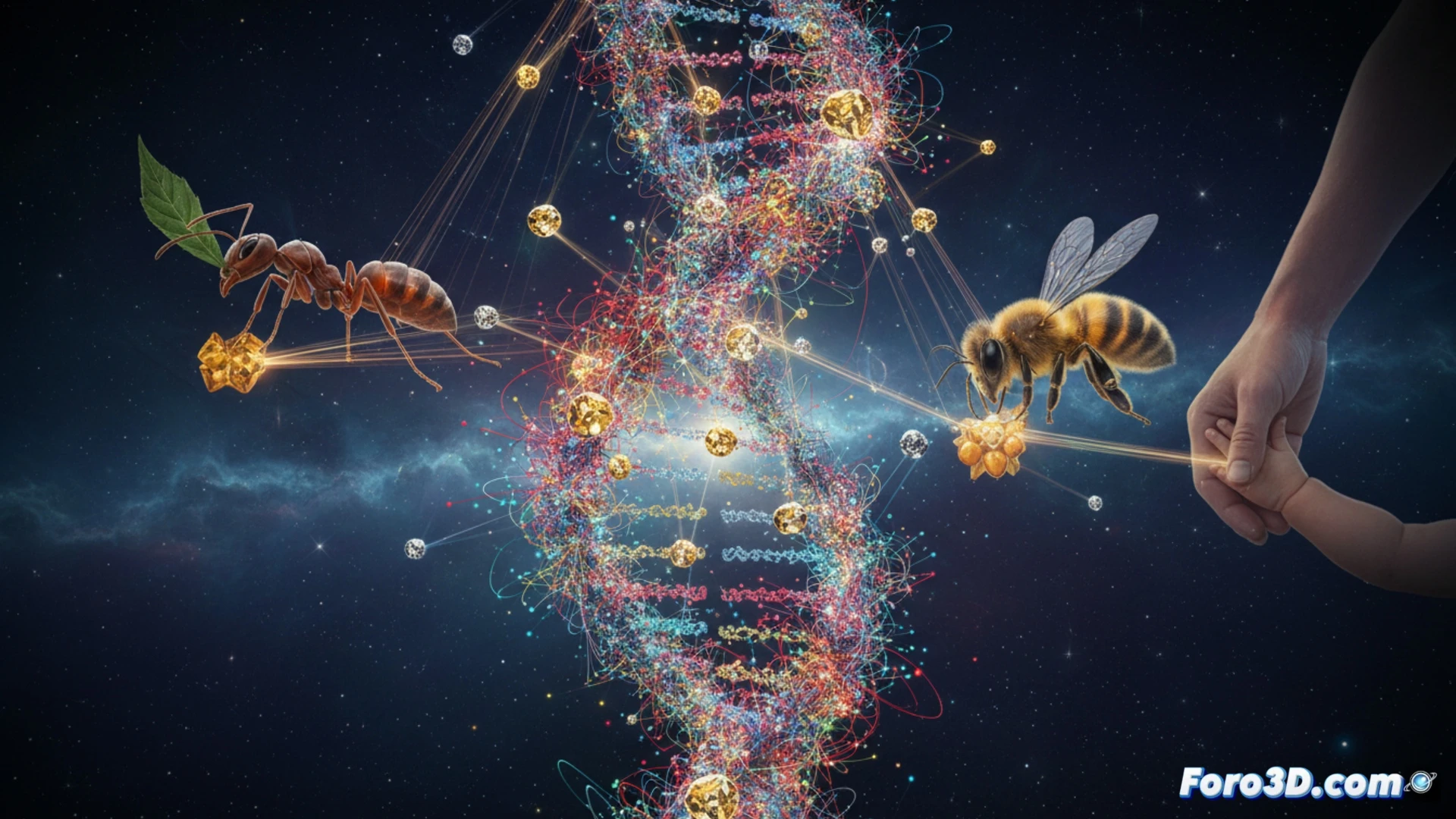
3D Modeling of Genetic Replication and Conflict 🧬
Scientific visualization tools allow materializing the essence of the book. We can create simulations of DNA replication, highlighting how each gene seeks to copy itself. Interactions within a genome can be modeled, visualizing conflicts and alliances like in a digital ecosystem. It is even possible to represent the spread of a selfish allele in a population across generations, making natural selection tangible from a genetic perspective. These models turn the narrative into an educational visual experience.
Visualization as a Tool for Evolutionary Thinking 🔍
More than a simple illustration, an interactive 3D model becomes a thinking tool. By manipulating variables and observing results in real time, the user internalizes the evolutionary mechanisms described by Dawkins. This virtual experimentation capability further democratizes the understanding of biology, extending the book's legacy. Scientific visualization not only explains but allows experimenting with the powerful metaphor of the selfish gene.
How can we use 3D scientific visualization to model and communicate abstract concepts like genetic selection and allelic competition proposed in The Selfish Gene?
(P.S.: modeling manta rays is easy, the hard part is making them not look like floating plastic bags)