NIST researchers have created a device that measures temperature absolutely using the rules of quantum physics. This sensor, based on rubidium atoms trapped and cooled almost to absolute zero, eliminates the need for complex calibrations. Its principle opens a fascinating door to scientific visualization, allowing the 3D representation of phenomena previously confined to abstract equations.
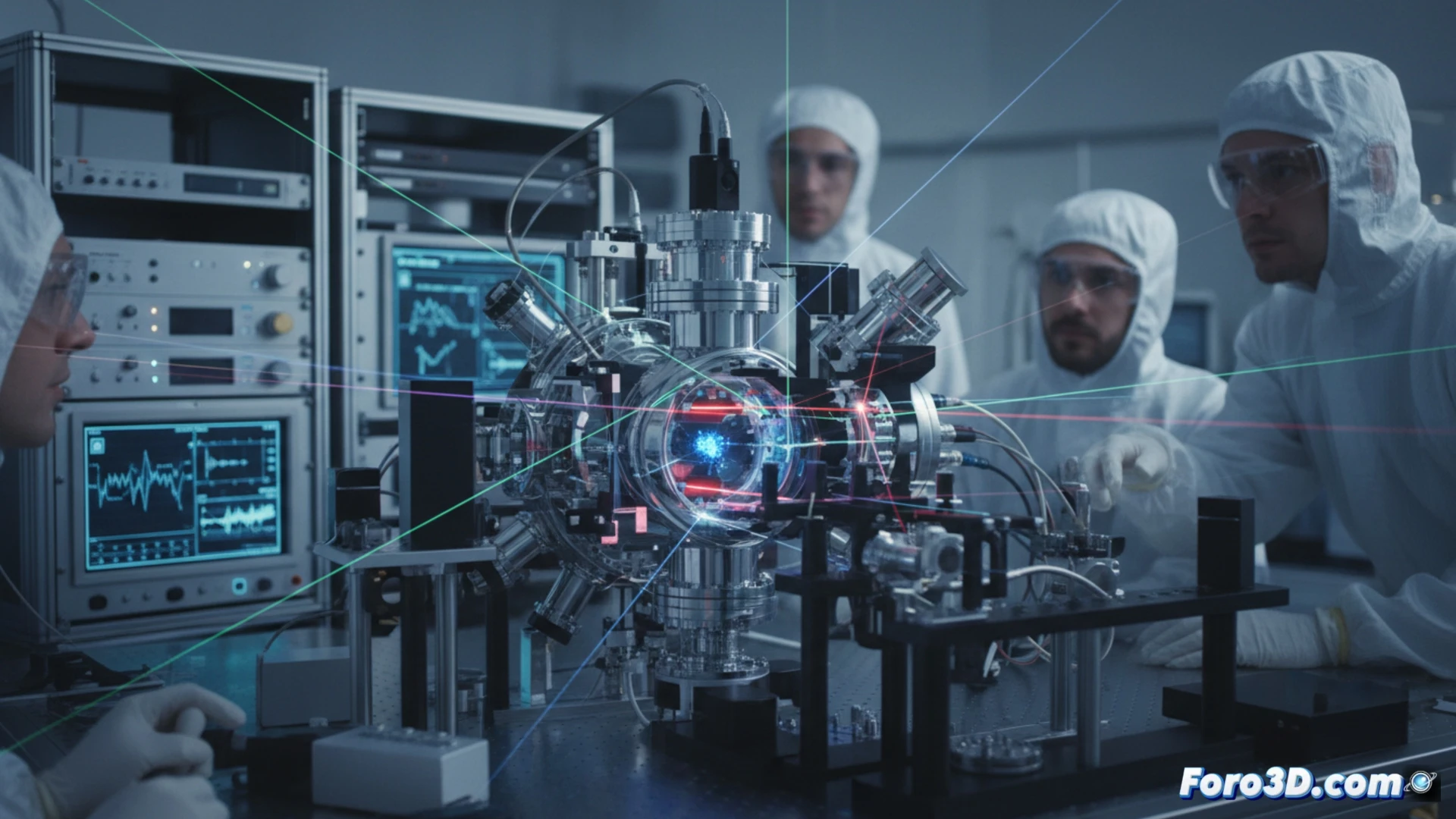
From trapped atoms to pixels: the physical principle turned into a 3D model 🎨
The core of the device is a cloud of atoms suspended by electromagnetic fields and cooled with lasers. At ultralow temperatures, thermal energy perturbs the quantum states of the electrons in a predictable way. An interactive 3D model could visualize this dance: showing the electromagnetic trap, the laser beams that slow the atoms and, crucially, a schematic representation of how a minimal temperature change induces a detectable quantum jump. This translates pure mathematics into an intuitive animation.
Universal precision for clocks and beyond ⚖️
The true revolution is universality. Any replica of the device will give the same measurement, based on natural constants. This precision is vital for technologies like next-generation atomic clocks, which operate in cryogenics. An accessible visualization of this principle not only disseminates science but inspires new simulation tools to design the next generation of high-precision instruments.
How can the quantum transition of a rubidium atom be visually represented to turn temperature measurement into a comprehensible image?
(P.S.: at Foro3D we know that even manta rays have better social bonds than our polygons)