A recent study has quantified that the Posidonia oceanica meadows of the Mediterranean store up to 10% of global coastal carbon, trapping it in intact organic sediments for millennia. This finding is not only a crucial ecological datum, but also an exceptional opportunity for scientific visualization. The 3D representation of this ecosystem allows transforming abstract numbers into a tangible understanding of its vital role against climate change.
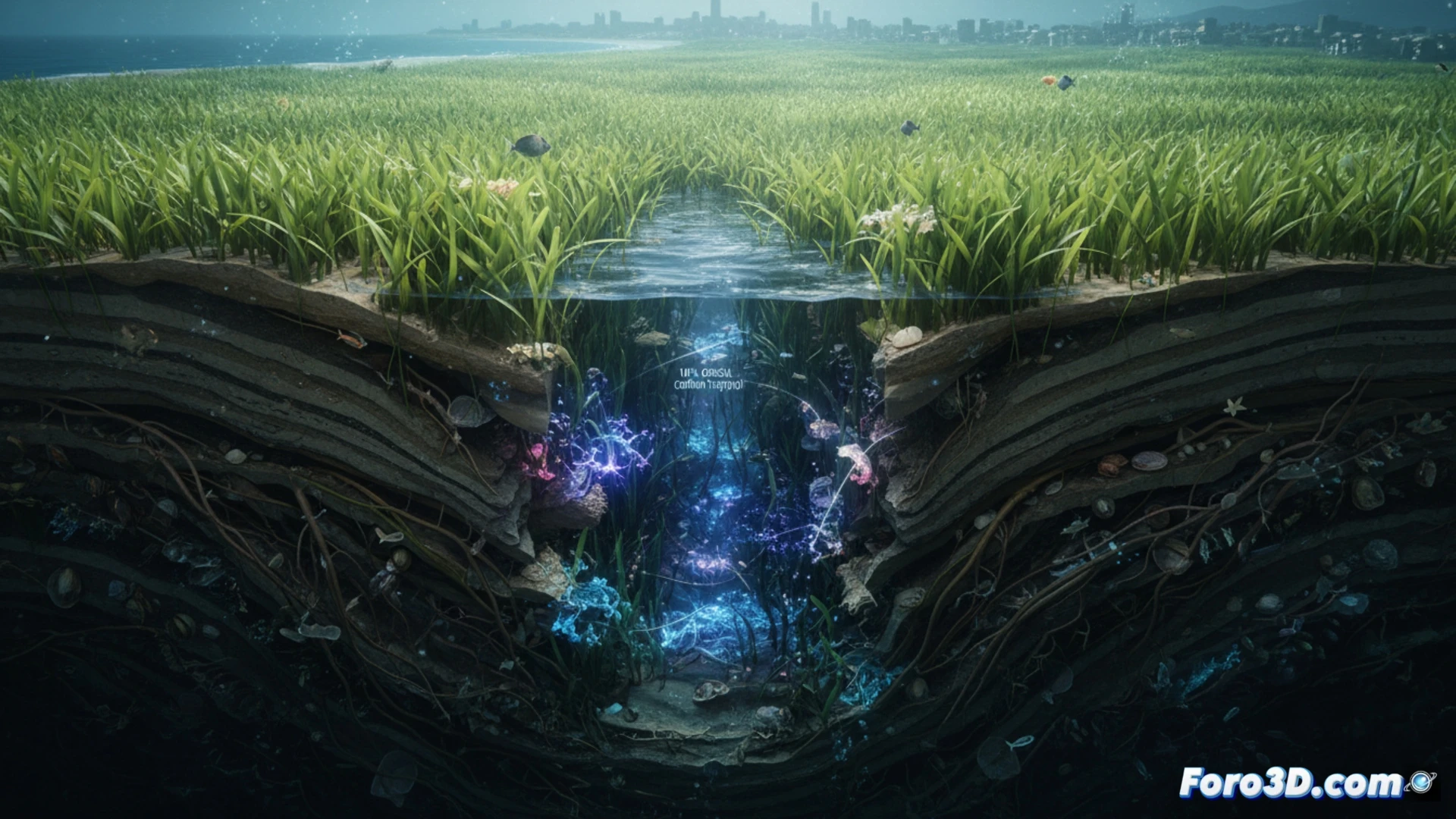
Proposal for an interactive 3D model of a sink ecosystem 🌊
We propose the development of an integral 3D model of the Posidonia ecosystem. This model would include a cross-section of the marine substrate, visualizing the stratigraphy of organic sediments accumulated over centuries. Through 3D volumetric infographics, the equivalent amount of sequestered carbon would be represented, allowing comparisons with annual human emissions. Interactivity would be key: the user could navigate through the different temporal layers, from the living canopy of leaves to the deepest and oldest deposits, revealing the millennial temporal scale of the process.
From data to awareness: the power of visualization 👁️
3D technology transcends mere illustration. By modeling this carbon sink, we transform a complex scientific concept into a powerful and accessible visual narrative. This tool serves not only for research, but also for outreach, making tangible the importance of conserving these underwater gardens. To visualize is to understand, and to understand is the first step to protect.
How can effective 3D visualizations be created to represent the scale and process of carbon sequestration in Posidonia meadows over millennia?
(P.S.: if your manta ray animation doesn't excite, you can always add documentary music from Channel 2)