Lunar exploration enters a new dimension, literally. A research proposal suggests deploying kilometers of optical fiber on the Moon's surface to apply DAS technology, a method that turns the cable into thousands of seismic sensors. This network would enable the generation of an unprecedented 3D model of the lunar subsurface, transforming vibrations into a detailed scientific visualization of its internal structure, crucial for future bases and missions.
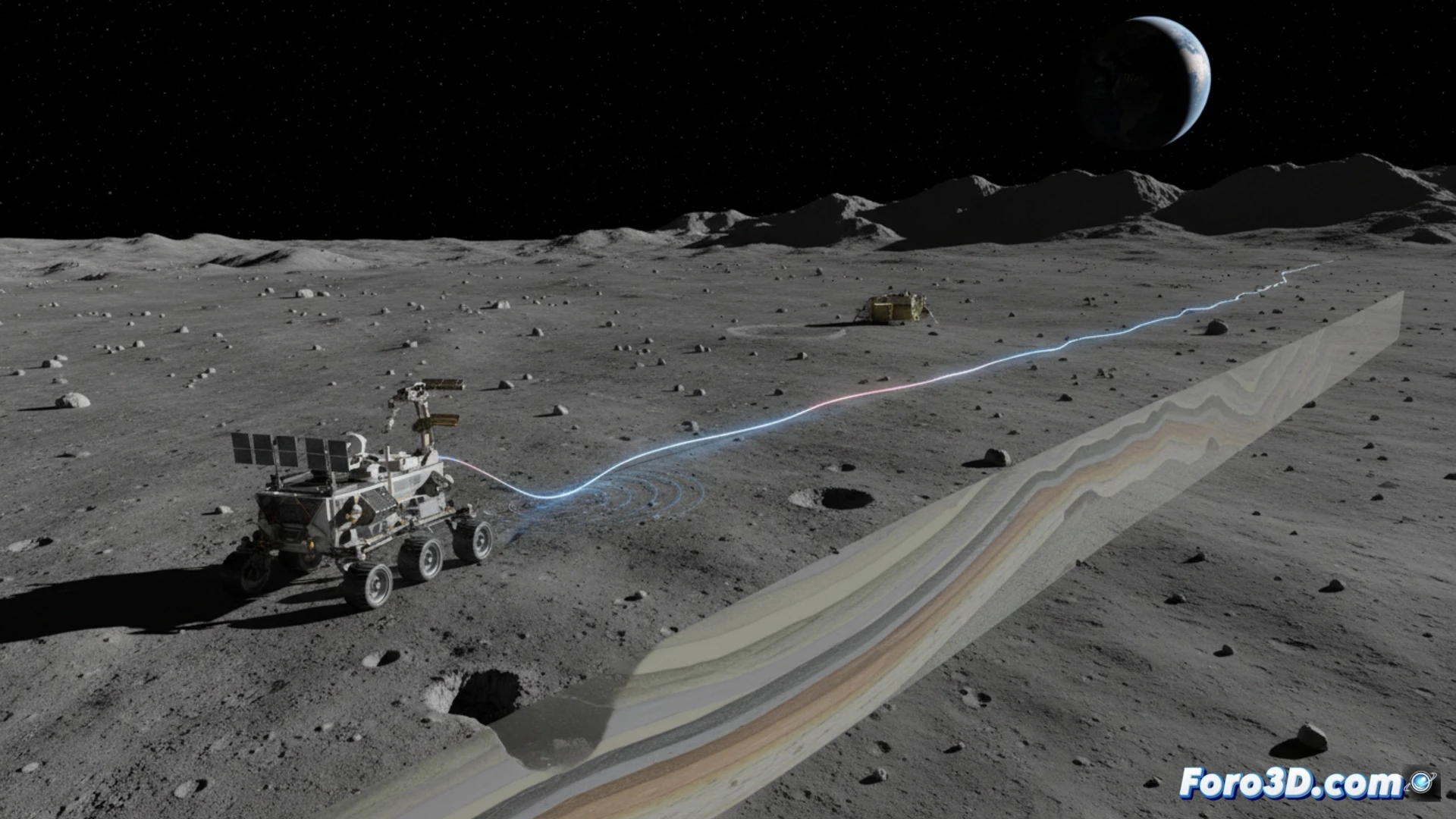
From a laser pulse to a 3D model: the visualization process with DAS 🌐
The core of this technology is Distributed Acoustic Sensing. A rover would deploy a lightweight optical fiber cable. An interrogator sends laser pulses through the fiber, and the tiny vibrations caused by lunar earthquakes or impacts alter the backscattered light. By measuring these alterations along the entire fiber, each meter acts as an independent sensor. This cloud of data from thousands of points, with spatial resolution far superior to isolated seismometers, is processed with tomography algorithms. The final result is a 3D volumetric reconstruction that visualizes geological layers, fractures, and possible cavities beneath the surface, offering a structural map for science and engineering.
Beyond the map: the impact of distributed data visualization 🚀
This methodology represents a leap in planetary scientific visualization. It's not just about detecting events, but integrating massive distributed data into an intuitive and analyzable visual model. This detailed image is fundamental for assessing geological risks for settlements, locating resources, or understanding the Moon's history. Optical fiber thus becomes the most extensive visualization tool ever deployed on another world, defining a new standard for geophysical observation in space exploration.
How would you animate the behavior patterns described in the study?