At Harvard Forest, a decades-long experiment simulates global warming by artificially heating the soil. The results are clear: the temperature increase alters bacterial and fungal communities, essential organisms that manage carbon and nutrients. Understanding these microscopic changes is vital for predicting the future of our ecosystems. This is where 3D scientific visualization becomes an indispensable tool for researchers and communicators.
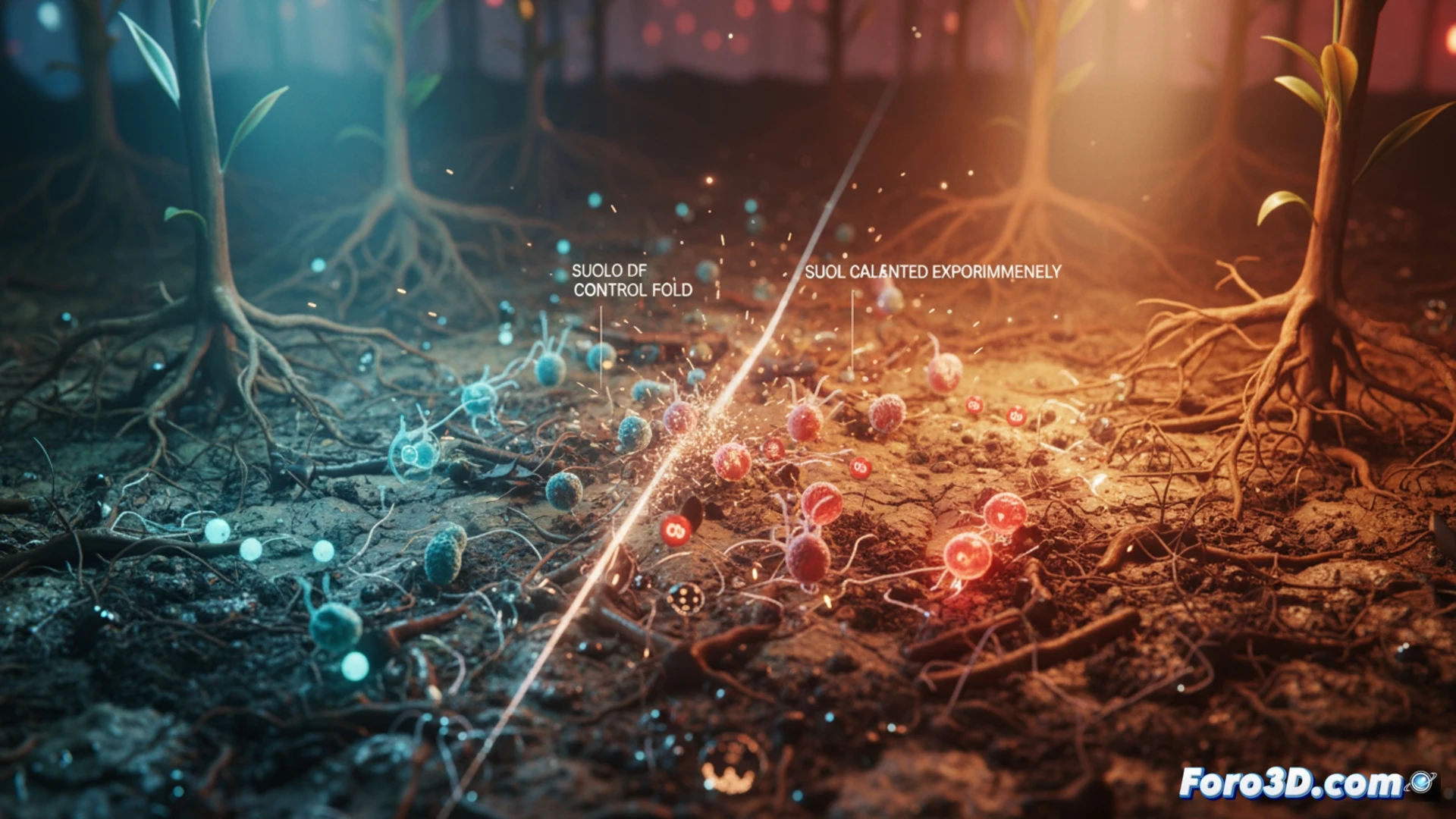
3D Modeling of Transforming Microbial Ecosystems 🔬
The complexity of these hidden worlds demands to be visualized. Through 3D modeling and simulation techniques, we can create interactive representations of the soil network. Imagine a model that visualizes microbial composition, density, and organic matter decomposition pathways. By applying a temperature parameter, the model would dynamically show changes in populations, alterations in carbon flows, and the release of gases like CO2 and methane. These tools allow scientists to test hypotheses and communicate a critical but invisible process intuitively.
From Data to Awareness: Simulation as a Bridge 🌉
Beyond the laboratory, these 3D visualizations have enormous communicative power. An interactive model comparing soil under normal conditions with soil subjected to warming can convey the urgency of the problem immediately and understandably. By giving visual form to complex data, scientific visualization not only accelerates research but also educates and raises awareness among the public about the profound consequences of climate change, even beneath our feet.
How do changes in soil temperature, simulating global warming, affect the structure and function of soil microbial communities, and what implications does this have for scientific visualization models of underground ecosystems?
(P.S.: if your manta ray animation doesn't excite, you can always add Channel 2 documentary music)