The announcement of the SR-1 Freedom mission, the first spacecraft with nuclear propulsion beyond Earth's orbit, marks a turning point in space exploration. For the scientific visualization community, this milestone represents an exceptional challenge and opportunity. Our role will be key in translating the complex reactor, propulsion, and payload systems into comprehensible 3D models, allowing the public and specialists to understand the magnitude of this technological advance toward Mars.
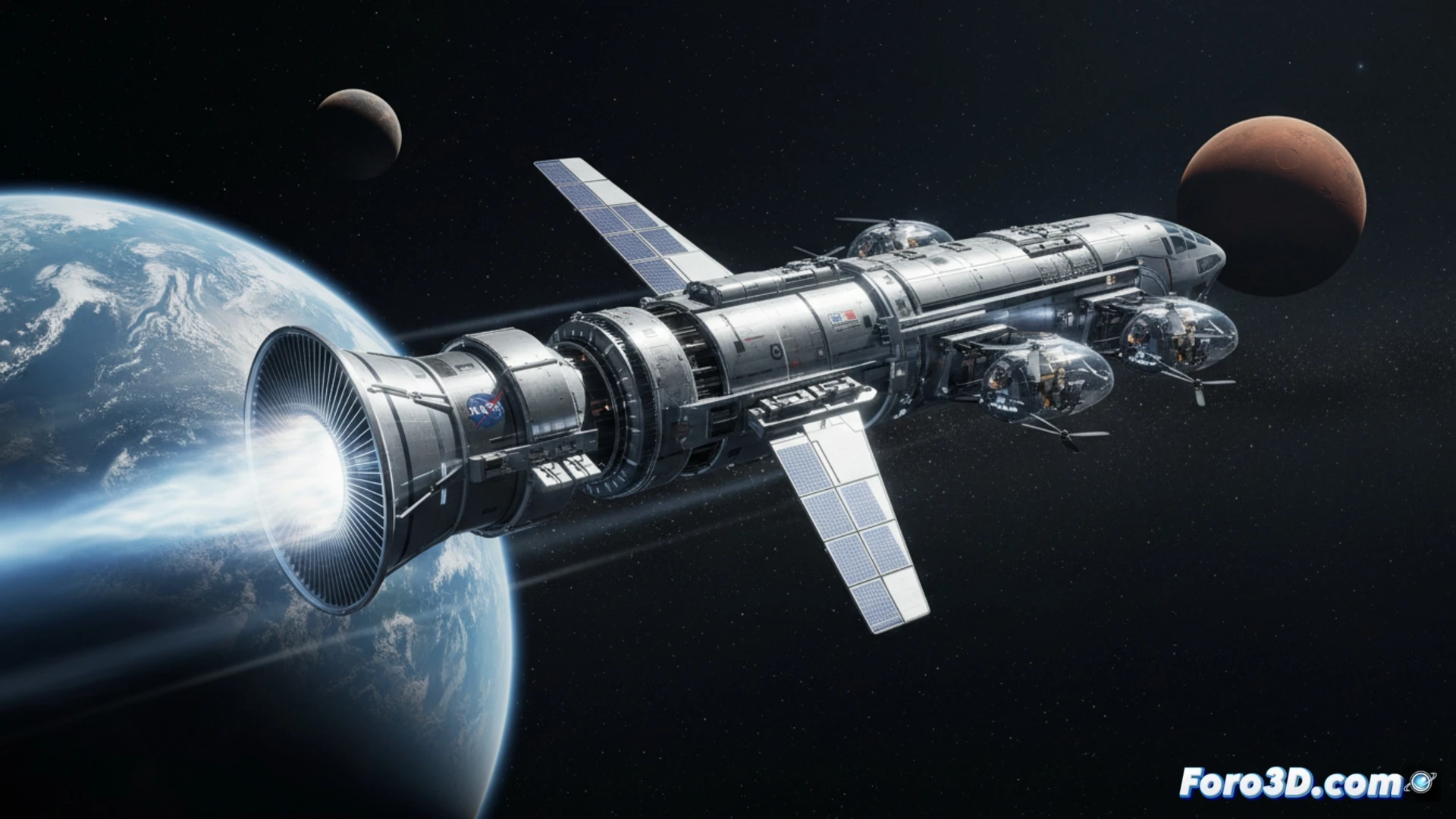
3D Modeling to Break Down Nuclear Technology and Skyfall Deployment 🚀
Scientific visualization can break down this mission into key elements. An interactive model of the fast neutron reactor would show its core, shielding, and heat-to-electricity conversion system. An animated 3D infographic would explain how that power fuels ionic or plasma engines for propulsion. Finally, a detailed sequence of the Skyfall payload deployment, with its three research helicopters, would be vital to illustrate the crucial mission phase on the Martian surface, showing its autonomy and scientific objectives.
More Than Images: Visualization as a Bridge to Understanding 🔬
These tools go beyond illustration. An accurate 3D model of the reactor enables analysis of heat flows and structural stress. Visualizing the orbital trajectory helps plan future missions. By creating these assets, we not only disseminate knowledge but also contribute to the engineering process and foster interest in the next frontier of exploration, where nuclear propulsion will be fundamental.
How can scientific visualization techniques be used to simulate and communicate the effects of thermal nuclear propulsion on the trajectory and environment of the SR-1 Freedom mission to Mars?
(P.S.: fluid physics to simulate the ocean is like the sea: unpredictable and you always run out of RAM)