The recent partial U.S. government shutdown, resolved after 42 days with a law that selectively funds the Department of Homeland Security, is a complex case study. It involves partisan clashes, branches of government, and direct human consequences, such as employees working without pay. For the citizen, following this legislative and political labyrinth can be overwhelming. This is where 3D technology and data visualization emerge as essential civic tools to break down complexity and foster deeper public understanding.
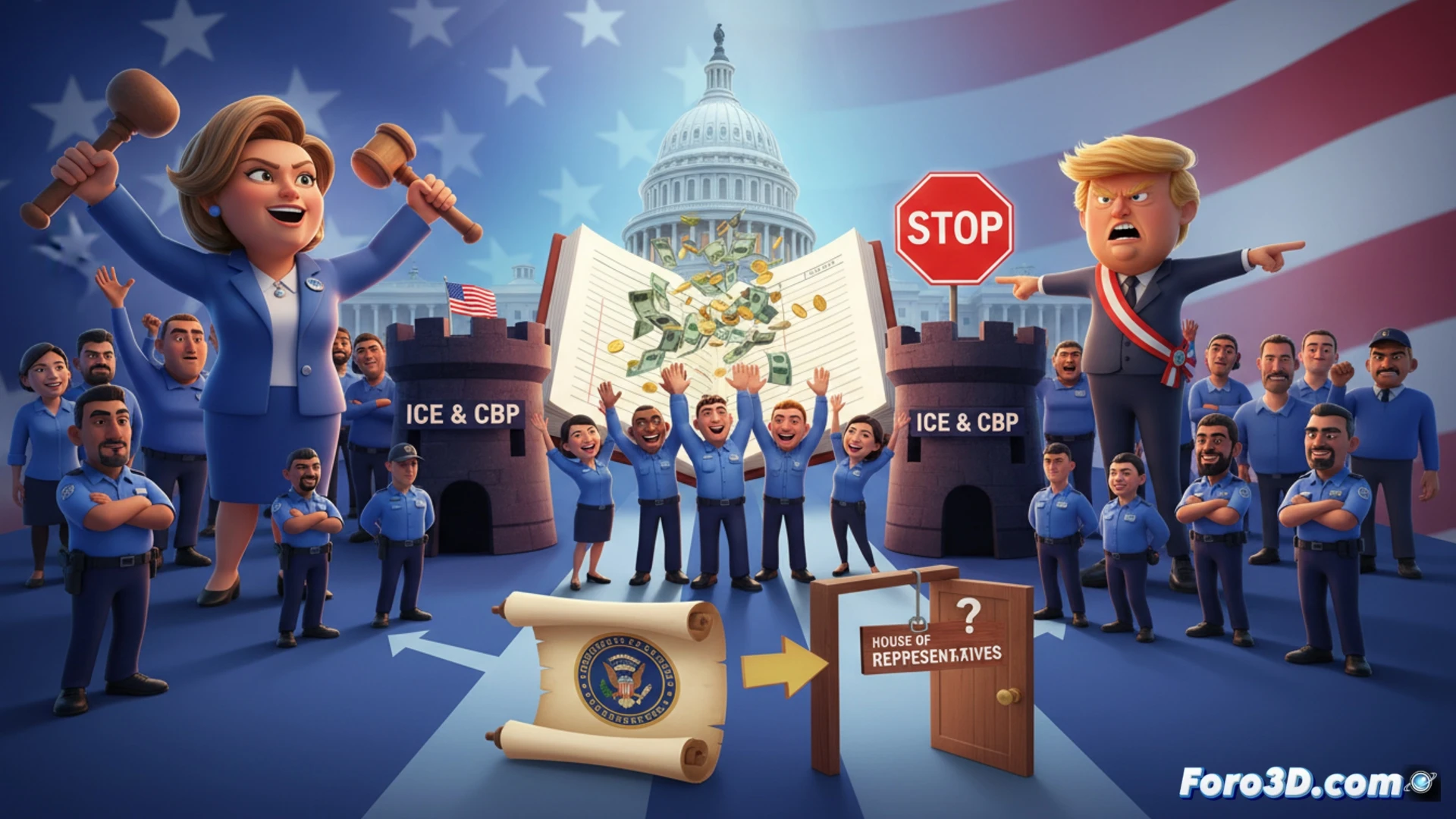
Technical proposal: an interactive model of the legislative process and its impact 🗺️
Imagine an interactive 3D infographic. A central model would show the bill's journey: from its initial blockage in Congress, its stagnation due to conflict over ICE and CBP tactics, to its approval in the Senate and passage to the House. Users could click on each stage to see key actors, statements, and votes. An attached module would visualize the human impact: a three-dimensional bar chart showing the tens of thousands of TSA and Coast Guard employees affected, with data layers on weeks without pay. Another module would break down the final funding allocation, highlighting with colors the funded agencies and those whose funds were specifically withheld, such as ICE.
Beyond the news: democratizing institutional understanding 🔍
This proposal is not just a tool for one news story. It is a prototype for transforming how we follow democracy. By converting dense textual processes and abstract outcomes into navigable visual experiences, we empower citizenship with a clear understanding of how political decisions affect lives and the functioning of the state. 3D visualization can make tangible the cost of a shutdown, the weight of a vote, and the mechanism of checks and balances, thereby strengthening informed participation.
How can 3D models and interactive data visualization empower citizens to understand and oversee critical democratic processes, such as budget allocation during a government shutdown?
(P.S.: 3D electoral panels are like promises: they look great but we need to see them in action)