Nature holds mechanisms of astonishing precision. A recent discovery has revealed that corals possess photoreceptor proteins specialized in detecting moonlight. This biological system allows them to synchronize the massive spawning of their gametes, a crucial event for their survival. In the niche of scientific visualization, this phenomenon becomes the perfect opportunity to create 3D models and animations that translate complex biology into a comprehensible and visually impactful experience.
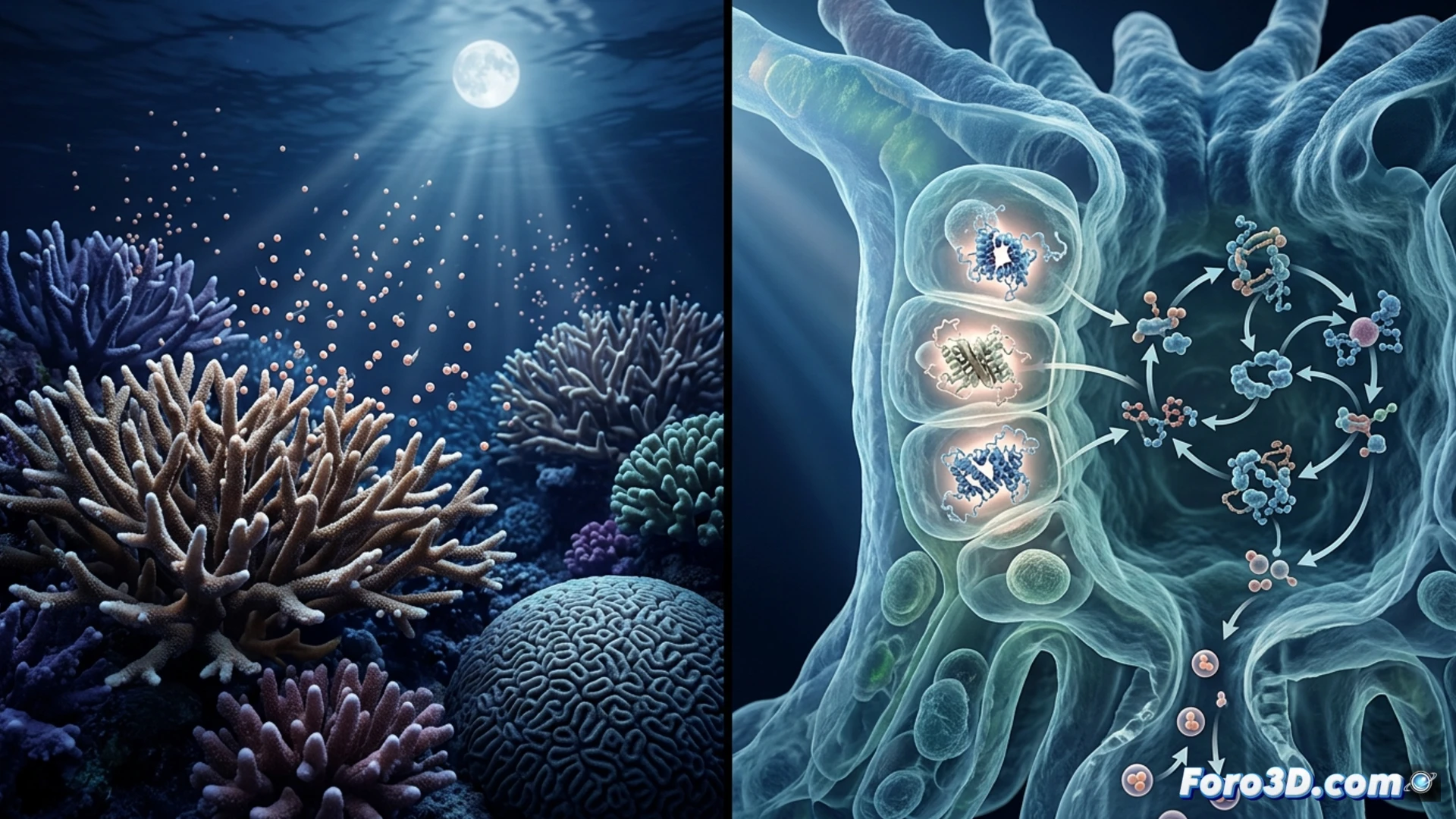
From data to image: Proposal for an interactive 3D model 🎮
To disseminate this finding, we propose the development of an interactive 3D model of a coral polyp. This model would allow virtually sectioning the organism and spatially locating the photoreceptor proteins, such as cryptochromes, in their tissues. The centerpiece would be an animation that simulates, in accelerated time, the lunar cycle and its influence on the concentration of these proteins, ultimately triggering the synchronized release of gametes into the water. Tools like Blender or Unreal Engine could simulate fluid dynamics to visualize this spectacular mass spawning event, integrating scientific data into visual parameters.
3D visualization as a bridge for science 🌉
This project exemplifies how scientific 3D visualization transcends mere illustration. By building a functional and animated model, not only is a process explained, but a powerful research and education tool is created. It allows biologists to validate spatial hypotheses and the general public to appreciate the sophistication of marine life. Transforming abstract data into an immersive visual narrative is the key to communicating 21st-century science.
How can we use 3D scientific visualization techniques to model and represent the complex interaction between coral photoreceptor proteins and lunar cycles?
(P.S.: if your manta ray animation doesn't excite, you can always add Channel 2 documentary music)