In New Zealand, massive plantations of Pinus radiata for timber production have led to a serious ecological problem. These conifers, now out of control, are colonizing native landscapes at an alarming rate, reducing water resources, displacing biodiversity, and increasing the risk of fires. 3D scientific visualization emerges as a key tool to understand the scale of this invasion and communicate its quantifiable impacts in a clear and effective manner.
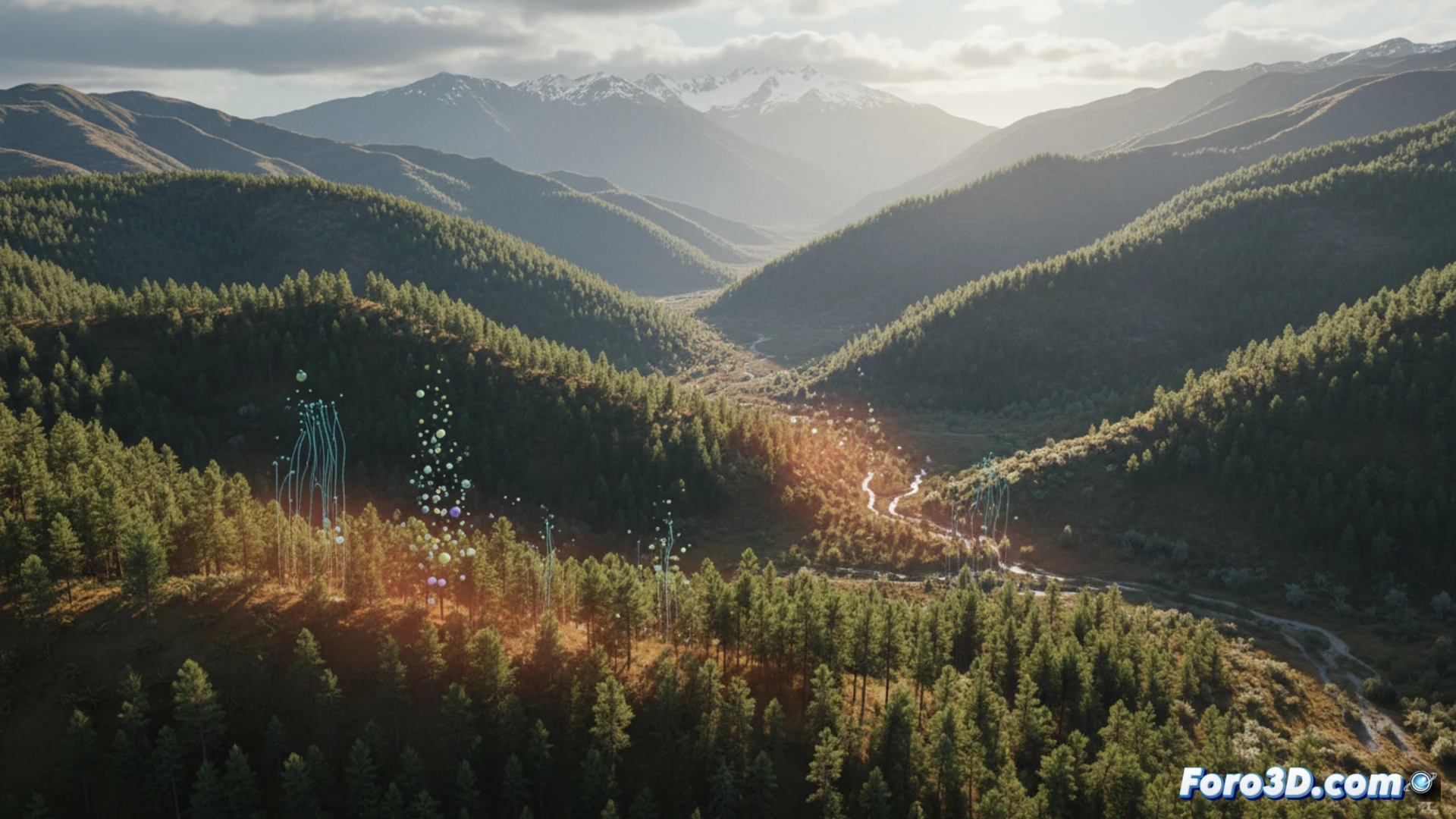
3D Modeling for Analysis and Simulation of the Ecological Disaster 🌲
Scientific visualization tools allow the creation of dynamic models that transform complex data into accessible visual narratives. 3D representations of the temporal expansion of wilding conifers can be developed, showing their advance over millions of hectares. Similarly, it is possible to simulate rainfall interception by the forest canopy and its impact on river flow, or model biodiversity comparisons between native and invaded ecosystems. These models facilitate scientific analysis and the planning of control strategies, while also illustrating the enormous economic investment required for their management.
Visual Narrative as a Tool for Awareness 👁️
Beyond research, the power of these visualizations lies in their ability to communicate. A 3D model showing the drastic reduction of a reservoir or the loss of native habitat has an immediate and understandable impact for any audience. In environmental problems of this magnitude, scientific visualization becomes an essential bridge between technical data and the necessary public and political awareness to drive decisive actions.
What software do you recommend for visualizing animal tracking data?