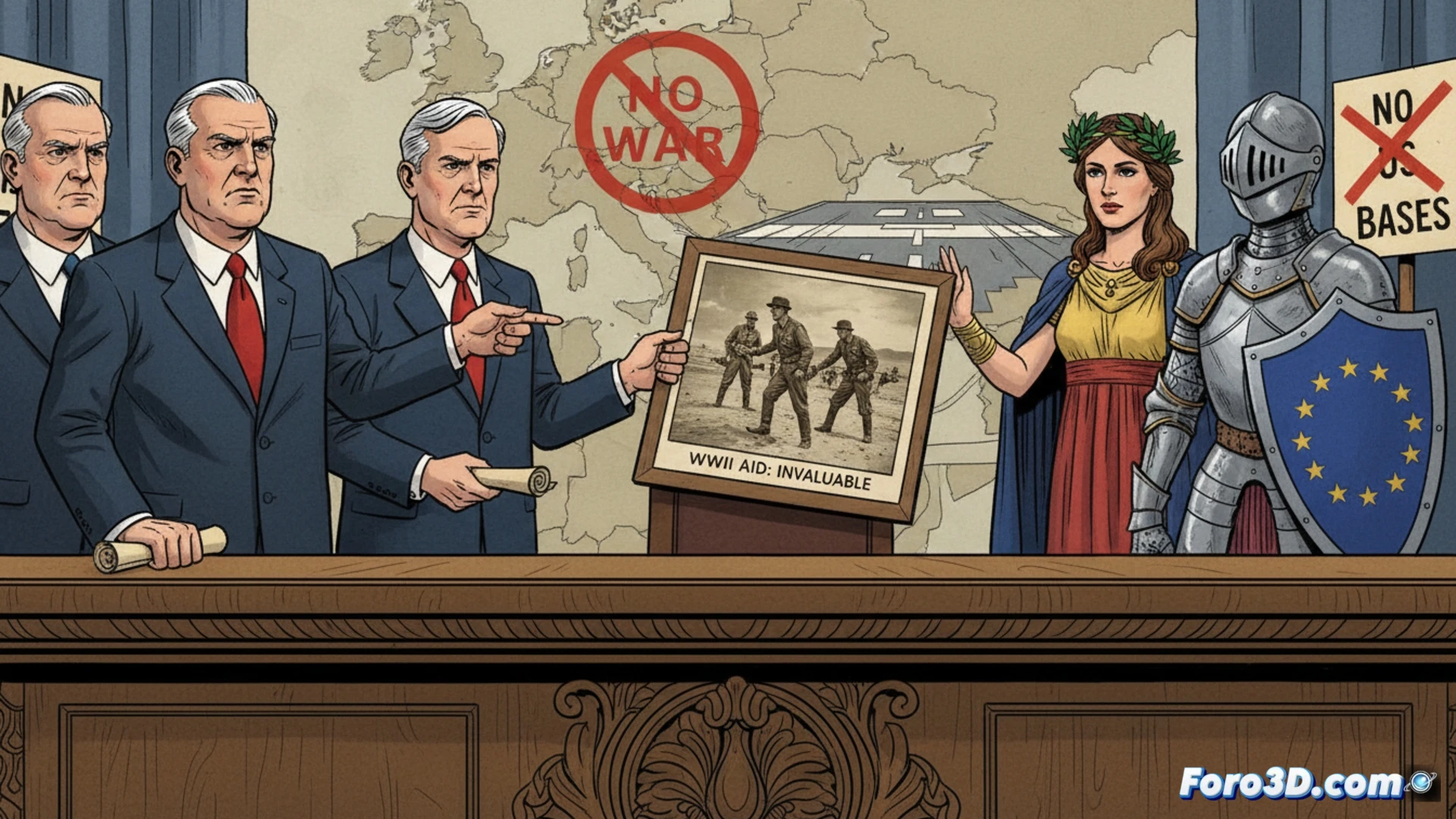
Recent tensions between some U.S. senators and their European allies, which include criticisms over dissonant stances in conflicts and refusal to use bases, reveal a fracture in the Western security architecture. This discontent, which evokes historical past aid, transcends political rhetoric and exposes the concrete risks of logistical interdependence. In the niche of geopolitics and supply chain, this is not just a diplomatic debate, but an alert about the vulnerability of critical strategic assets.
3D Modeling of Assets and Logistical Vulnerabilities 🗺️
Interactive 3D modeling technology allows transforming this dispute into a tangible analysis. All U.S.-used air bases in Europe can be geolocated in a model, from Ramstein to Aviano, and connected with supply networks, critical flight routes, and storage nodes. This model would allow simulating the cascade effect of access denial: visualizing how replenishment chains are interrupted, how alternative routes and bottlenecks are lengthened, and calculating the operational impact in time and cost. It is a tool to quantify geopolitical risk.
Beyond the Map: Simulation as a Strategic Tool 🧠
The true power of this visualization is not to show the static, but to simulate scenarios. A dynamic 3D model can test hypotheses: how to redistribute assets if a base is lost, or how a simultaneous crisis strains the remaining infrastructures. This turns a political news item into a clear exercise in strategic risk management, evidencing that dependence is not an abstract concept, but a physical network of locations, permissions, and routes whose interruption has measurable and visualizable consequences.
How would you visually represent the concentration of manufacturing in Taiwan?