The recent statement by the Italian Minister of Justice, Carlo Nordio, regarding the confidence received and his decision not to resign, transcends mere political chronicle. This episode, which includes the resignation of an undersecretary, exemplifies the complex dynamics of governmental stability and instability. In the niche of Democracy and Digital Participation, a key question arises: how can we translate these institutional tensions into a clear and accessible visual language for the citizen? The answer may lie in data visualization and interactive 3D modeling.
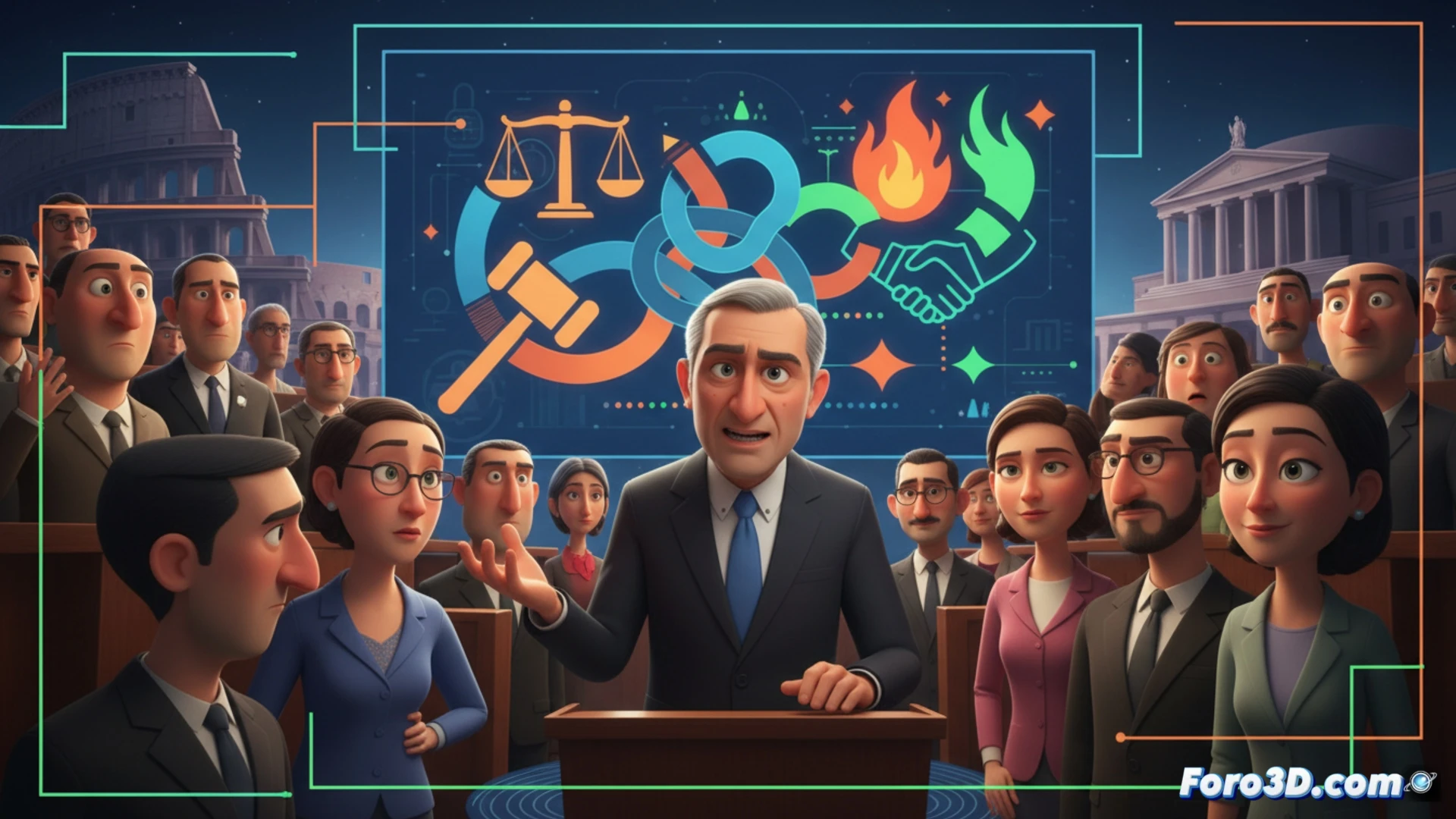
3D Modeling of the Architecture of Power: A Practical Case 🛠️
We propose the development of an interactive 3D model of the Italian executive structure. This model would not be a simple static pyramid. Each ministry and secretariat of state would be represented as a modular block. By inputting the news data, the Justice block would show a state of reaffirmed confidence, while the undersecretary Delmastro's block would fade or be marked as resigned. The tool would allow tracking the chain of events: the input from the justice referendum, the output (resignation) of a position, and the retention decision of another. Users could interact, consulting key statements or confidence vote data, transforming the abstract political narrative into a comprehensible and analyzable visual structure.
Beyond the Crisis: Democratic Pedagogy in 3D 📚
The true power of this approach is not just to explain a specific crisis. Such a model becomes a permanent tool for civic pedagogy. It would allow simulating scenarios: what would happen if another minister falls? How does the majority recompose? By visualizing how resignations respond to issues of opportunity and not just formal ones, as Nordio pointed out, depth is added to the analysis. This digital layer enriches participation, offering a tangible lens to decipher the always complex health of democracies.
How can digital participation tools make transparent and strengthen the accountability of public officials after popular consultation processes like referendums?
(PD: 3D electoral panels are like promises: they look very nice but you have to see them in action)