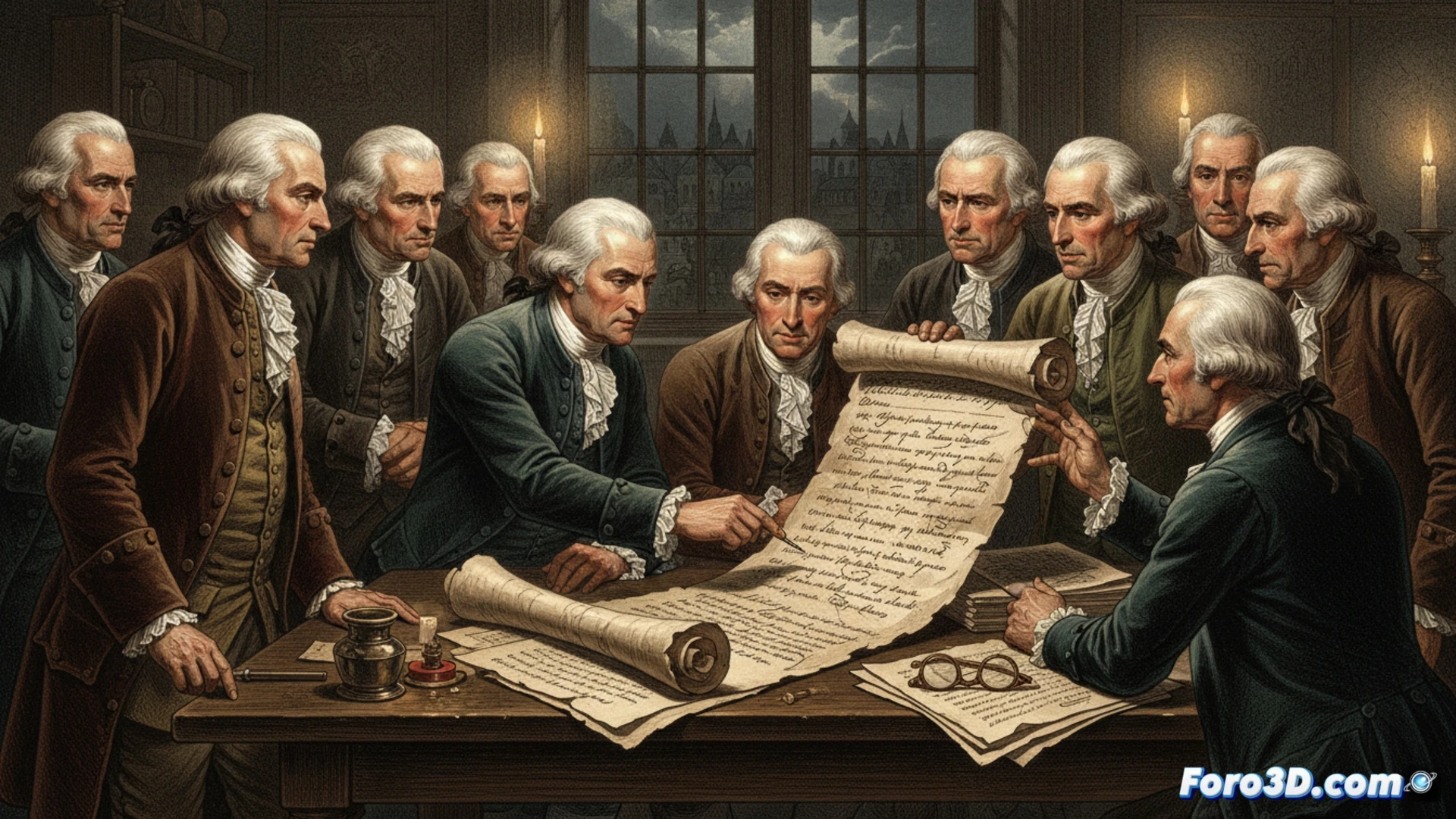
The discovery of the first draft of the Bill of Rights reveals a living process of debate and compromise. Far from being a static text, its amendments underwent crucial modifications before ratification. In the niche of Democracy and Digital Participation, this invites reflection: how can we use current technology to better understand these legal foundations? 3D visualization and immersive experiences emerge as powerful tools to democratize access to constitutional history.
3D Tools for Legal Deconstruction 🛠️
Imagine an interactive model where each proposed amendment in that initial draft is a three-dimensional object. By interacting with it, the user could visualize layers of text, observing strikethroughs, additions, and marginal notes. A system of spatial timelines would show the evolution of each article, connecting versions and highlighting key semantic changes. This technical deconstruction transforms the flat document into a landscape of moving ideas, allowing analysis of the weight of each modified word and the context of the debates in the Convention.
Immersion in the Democratic Process 🕶️
The true power lies in the immersive experience. Recreating a virtual debate space, where avatars represent the framers, allows living the political negotiation. Hearing arguments, pushing for changes, and seeing the consequences in the final text fosters an empathetic and deep understanding. This visual narrative not only educates but inspires more informed civic participation, reminding us that rights are the result of a human, imperfect, and collective process, always subject to review and improvement.
How could interactive 3D visualization and digital participation transform our understanding of historical democratic processes, such as the creation of the Bill of Rights, and be applied to improve transparency and debate in contemporary legislation?
(P.S.: at Foro3D we believe in democracy... and that the render always finishes before the elections)