The hard problem of consciousness, the one that questions how brain matter generates subjective experiences like the color red or pain, has ceased to be an exclusive territory of philosophy. Current neuroscience has begun a new phase, moving from merely detecting the presence of consciousness to attempting to map its internal structure. This approach, known as structuralism, seeks to map the relationships between all our sensations, and it is here where scientific visualization becomes a fundamental tool for making the intangible tangible.
Structuralism and the Cartography of Subjective Experience 🗺️
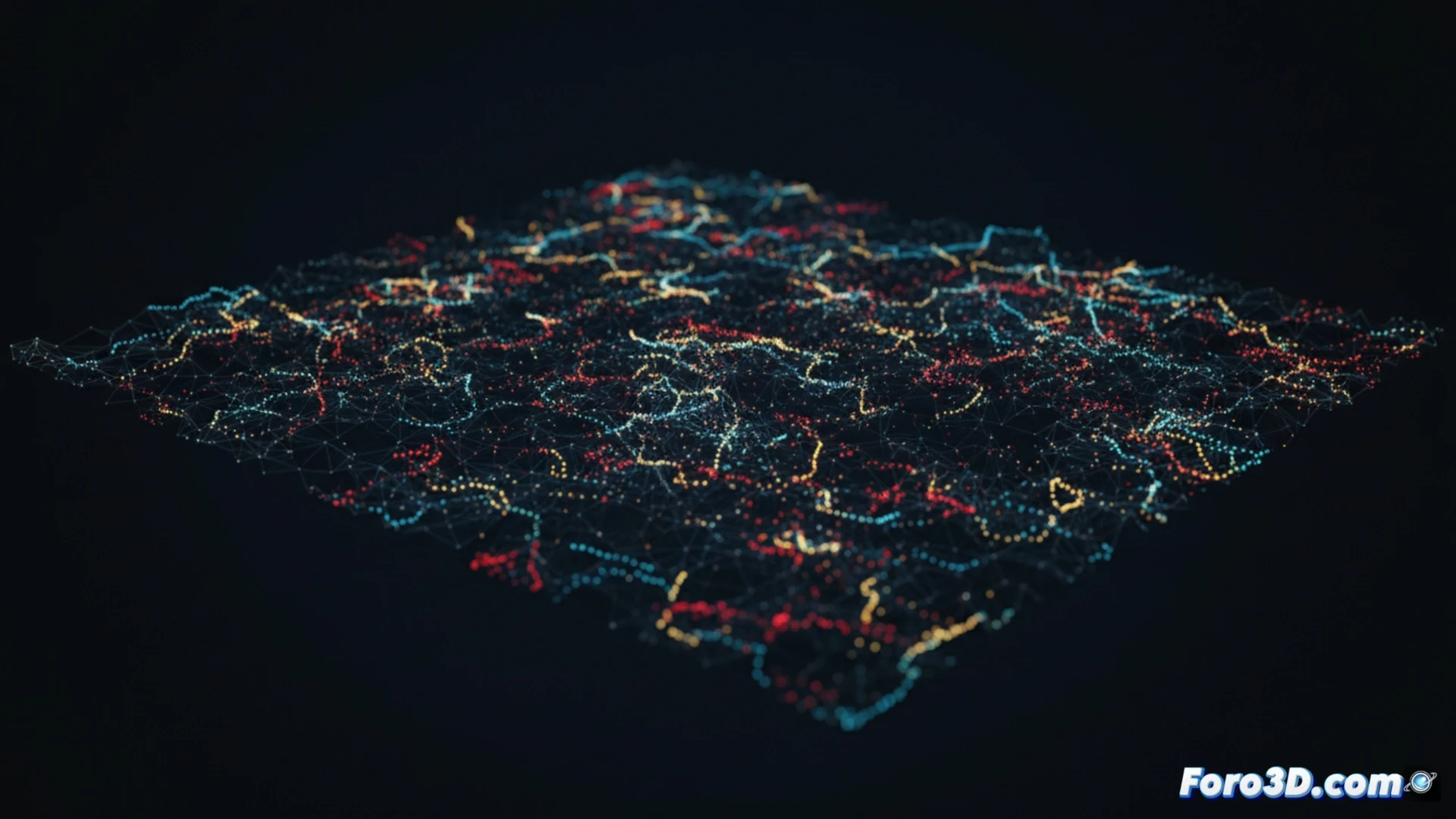
The central hypothesis of structuralism is that each conscious experience, or quale, is defined not in isolation, but by its contrast and position within the total network of our perceptions. Seeing red is what it is because it is not green, nor blue, nor a sound. Scientific research now attempts to create objective maps of these relationships using neurophysiological data. This is where 3D visualization becomes crucial: imagine a model where each sensory experience is a node and the connections represent their relationships of similarity or difference. These multidimensional maps, similar to those used to visualize complex neural networks, would allow scientists to analyze the architecture of consciousness and check whether the structure of experience is universal or individual.
Towards a 3D Model of the Conscious Mind 🧠
This effort to map qualia represents the frontier of scientific visualization applied to the mind. It is not about rendering a brain, but about giving geometric and spatial form to the network of meanings that emerges from it. By transforming abstract data from neural correlations into interactive structural models, we not only advance in solving a fundamental mystery, but also create powerful tools for outreach, making the internal landscape of consciousness accessible and understandable.
How can we use 3D scientific visualization techniques to represent and explore computational models of consciousness, such as the Global Workspace or the Integrated Information Theory, and make tangible the hypothesis that qualia emerge from specific patterns of information processing in the brain?
(P.S.: fluid physics for simulating the ocean is like the sea: unpredictable and you always run out of RAM)