A recent experiment has successfully grown chickpeas in simulated lunar regolith, a milestone for space agriculture. This advance, which combines worm compost and symbiotic fungi to enrich the poor soil, is an ideal case study for scientific visualization. Using 3D technologies, we can break down and communicate this complex biotechnological process in an intuitive and precise way, transforming data into comprehensible models.
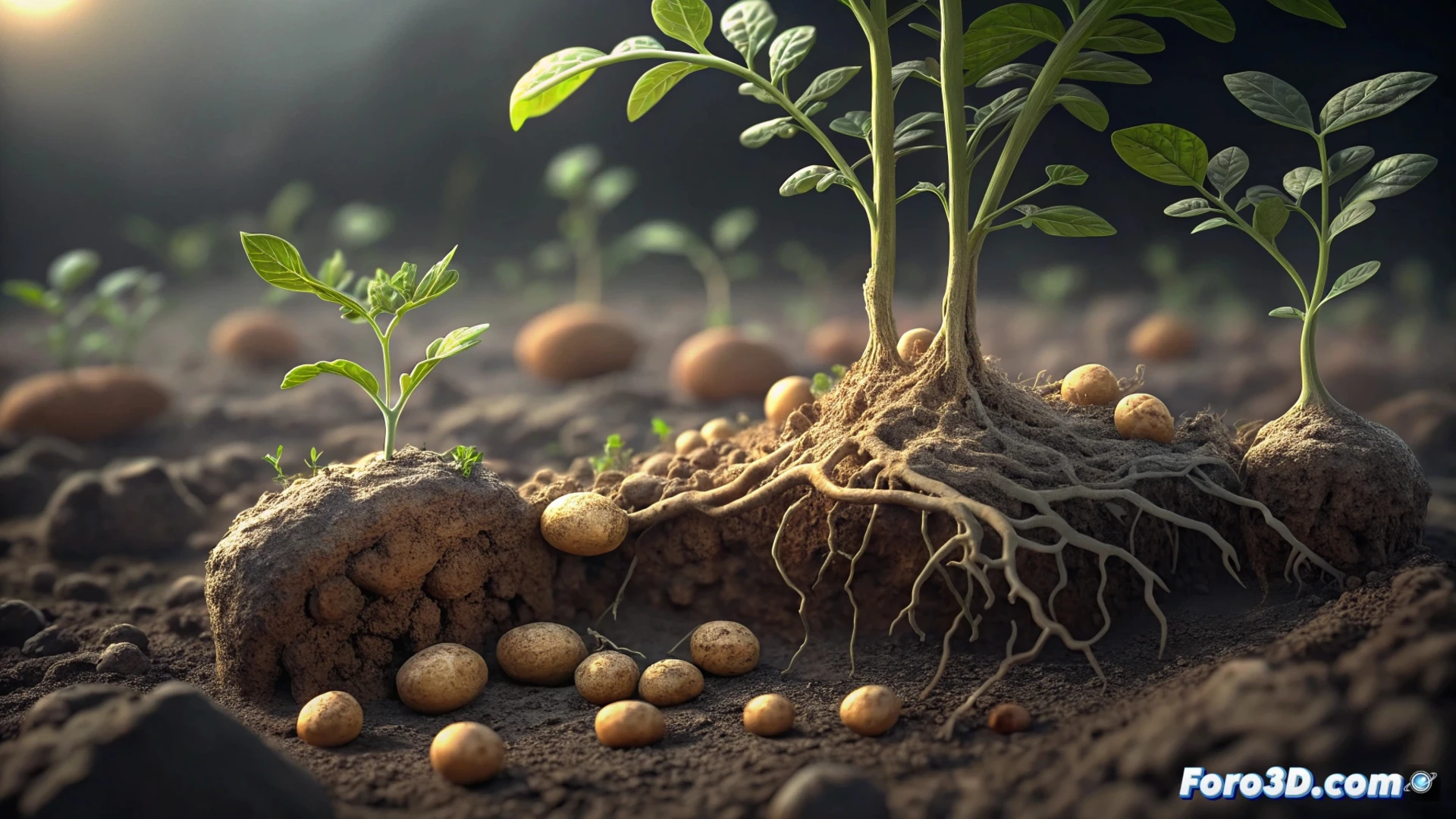
3D Modeling to Break Down a Space Bio-Remediation Experiment 🌱
3D visualization can illustrate each layer of this system. An interactive model would show the stratified composition of the substrate: regolith, compost, and the mycorrhizal network. A temporal simulation would visualize root growth and its interaction with the fungi, highlighting how they mitigate metal stress. A 3D infographic would compare plant physiology in different soil mixtures, and a full life cycle model, from seed to new generation, would serve as a fundamental educational tool for planning colonization missions.
From Data to Dissemination: 3D as a Scientific Bridge 🔬
This case underscores the crucial role of 3D visualization in modern science. It's not just about illustrating a result, but creating an analysis environment where symbiotic relationships and lunar soil challenges are understood. These models are bridges between pure research and society, enabling the evaluation of closed ecosystems' viability and communicating the path to safe and sustainable extraterrestrial agriculture.
How can scientific visualization techniques be used to analyze and communicate plant growth and health data in space agriculture experiments, such as growing chickpeas in simulated lunar regolith?
(P.S.: fluid physics for simulating the ocean is like the sea: unpredictable and you always run out of RAM)