Marine Le Pen's recent public support for Viktor Orbán is not an isolated event, but another node in the complex network of European nationalism alliances. Understanding the depth and evolution of these ties requires going beyond the text of the statements. This is where data visualization and 3D modeling offer a crucial analytical advantage, transforming abstract relationships into interactive spatial structures that we can explore and dissect.
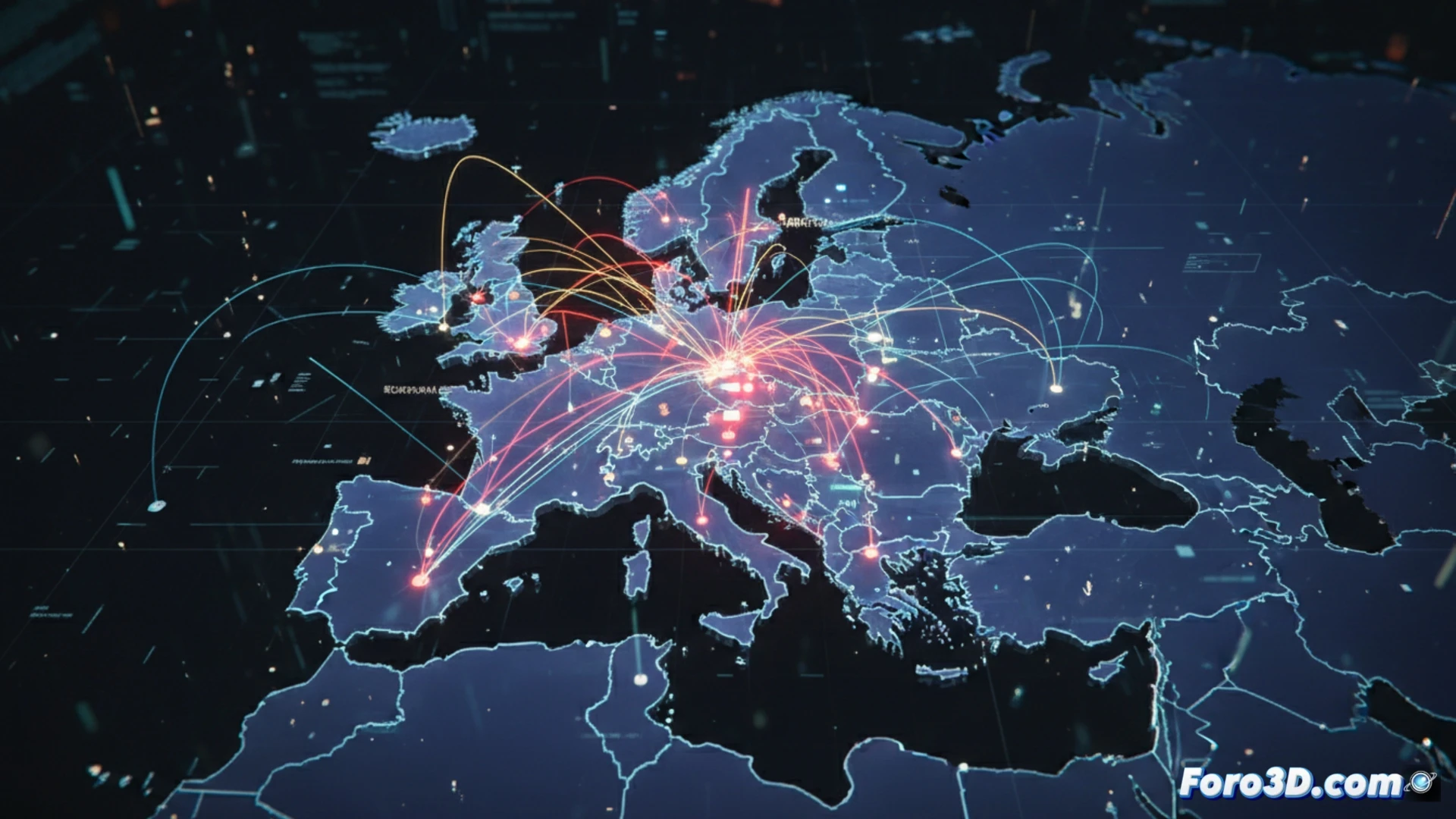
Modeling political networks in an interactive 3D space 🕹️
A traditional 2D network map limits the representation of multiple layers of information. A 3D model allows placing actors like Le Pen and Orbán in a virtual space where the axes represent ideology, relationship intensity, or frequency of contacts. Nodes (leaders or parties) would connect with lines whose thickness and color indicate the strength and type of alliance. This network could be animated over time, showing how these ties strengthened before key elections. Tools like Blender or game engines would enable creating this environment, where the user could orbit around the structure, isolate clusters, or follow the trajectory of a specific link, offering a holistic and immersive perspective impossible on a flat plane.
From data to tangible geopolitics 🗺️
This visual approach is not just illustrative, it is analytical. A temporal 3D model can reveal hidden patterns, such as synchronies in support statements or the formation of a hard core of alliances. By making the architecture of these relationships tangible, we facilitate the identification of central actors, bridges between groups, and the evolution of continental strategies. Turning speech data into a queryable spatial object is a fundamental step for deeper and more accessible geopolitical analysis, demonstrating that 3D technology is a powerful tool for contemporary political science.
How can 3D modeling and spatial data visualization reveal the structure and evolution of alliance networks between nationalist political movements in Europe?
(P.S.: at Foro3D we know that the only absolute truth is that the render always takes longer than expected)