Defense Minister Margarita Robles categorically denied Donald Trump's accusations about the lack of Spanish collaboration. In the face of a discrediting narrative, Robles brandished concrete data: the EU support rating for Cyprus and the key collaboration in Turkey to shoot down an Iranian missile under NATO umbrella. This verbal confrontation is a perfect case study to apply forensic visual analysis, contrasting statements with geolocated evidence and verifiable timelines.
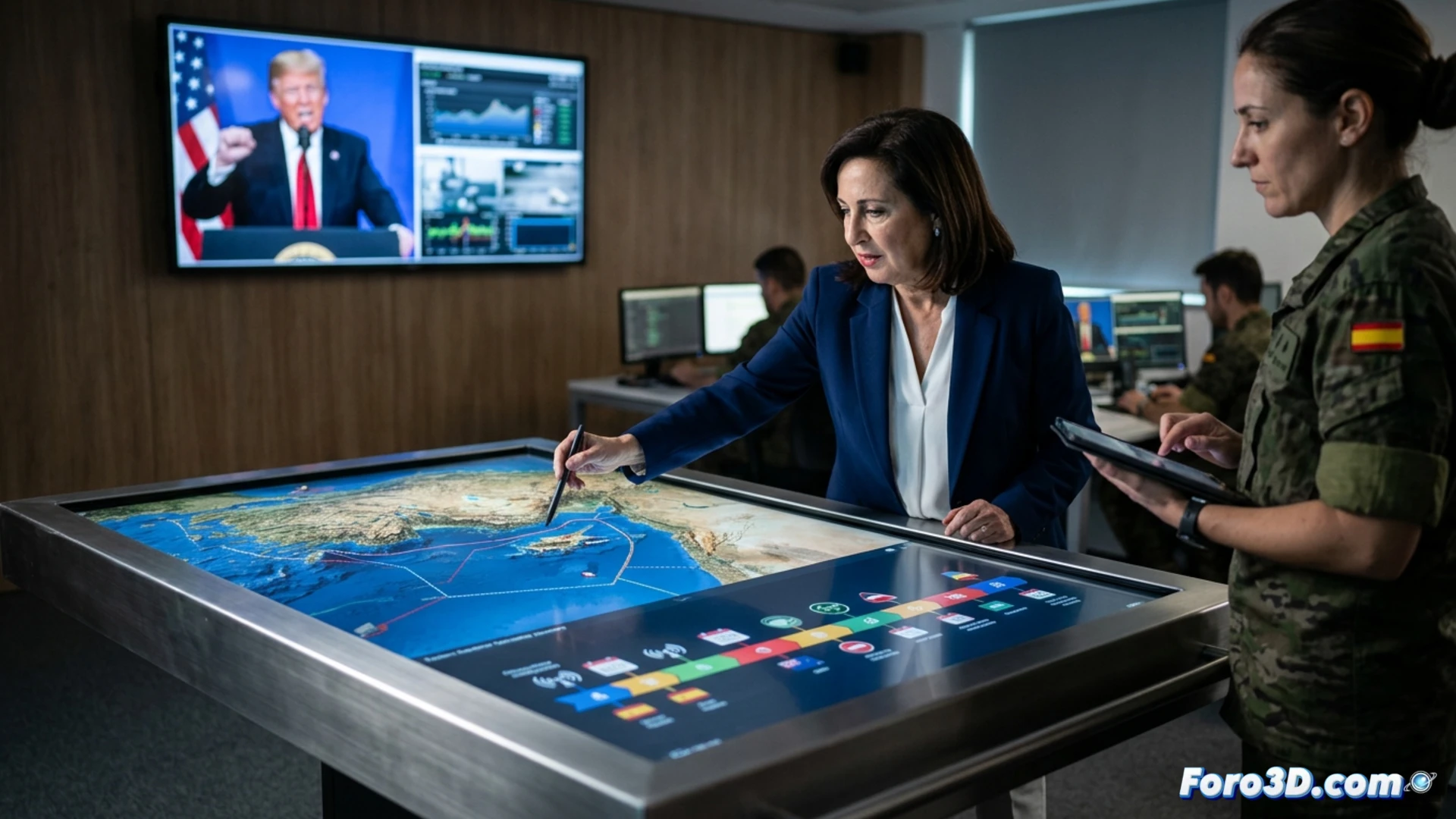
3D Geolocalization and Interactive Timelines for Verification 🗺️
The effectiveness of Robles' refutation is enhanced with visualization tools. An interactive 3D model could geolocate and detail all cited Spanish international missions, creating a visual network of commitment. Simultaneously, a synchronized timeline would contrast Trump's statements with the facts deployed on the map, adding layers of information such as UN resolutions or EU mandates. This technique not only verifies but makes tangible the discrepancy between discourse and recorded action.
The Ethical Narrative as a Rendering Object 🧩
Beyond the data, 3D technology allows analyzing the construction of narratives. We can render Robles' discourse, visualizing how she frames each action within pillars like the UN, NATO, and defense of peace. By modeling this argumentative architecture and contrasting it with vague accusations, visual analysis reveals the communicative strategy: replacing polarization with an image of prudence and multilateral shelter, where each decision is a node in a network of institutions.
How can the visual analysis of Margarita Robles' non-verbal communication during her rebuttal to Trump reveal strategies of political credibility?
(PS: analyzing political microexpressions is like looking for inverted normals: everyone sees them, no one fixes them)