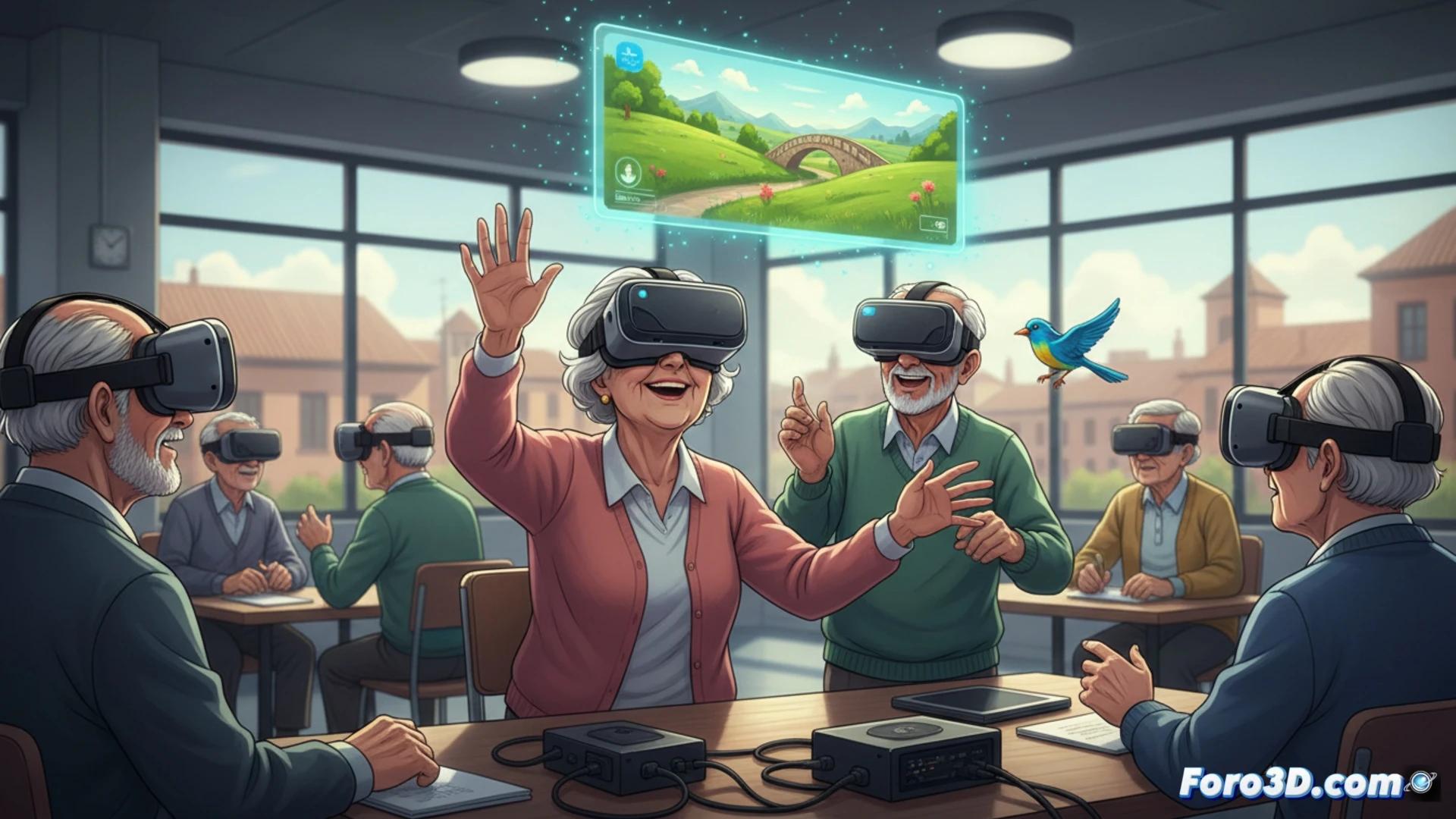
The Juan XXIII municipal center in Móstoles has demonstrated that cutting-edge technology is for everyone. It organized a pioneering activity where its elderly users experienced immersive journeys with virtual reality glasses. This initiative aimed to foster socialization, provide cognitive stimulation, and reduce the digital divide, allowing this group to access a tool normally associated with younger generations. The experience was a resounding success, with very positive feedback from the participants.
Designing Immersive Experiences for a Senior Audience 👓
The key to success lies in the careful design of the experience. It's not just about putting on VR glasses, but selecting appropriate content that avoids sudden movements or vertigo sensations, prioritizing calm scenarios and accessible narratives. Interaction must be intuitive, with a clear introduction session and constant support during the immersion. This approach ensures comfort and safety, transforming technology into an effective pedagogical tool that stimulates memory, attention, and curiosity, while generating topics for conversation and socialization among participants.
A Replicable Model for Active Aging ♻️
The Móstoles case establishes a replicable model for other institutions. It integrates technological innovation into social welfare policies, promoting active aging and improving quality of life. Activities like this not only entertain but empower, demonstrating that the digital divide can be reduced with pedagogy and patience. It is a perfect example of how 3D technology can serve as a generational bridge and tool for social inclusion with tangible and positive impact.
How can Virtual Reality become an effective tool for digital inclusion and cognitive stimulation of elderly people, breaking the generational technological gap?
(PS: Teaching with 3D models is great, until the students ask to move the pieces and the computer crashes.)