The return of the Vindictus franchise with Defying Fate marks a monumental technological leap. Developed in Unreal Engine 5, the game promises to take Hack and Slash action to a new level of visual fidelity. This analysis focuses on the technical decisions behind its aesthetic, examining how the combination of a cutting-edge graphics engine and specialized production pipelines seeks to create unprecedented cinematic realism in the genre.
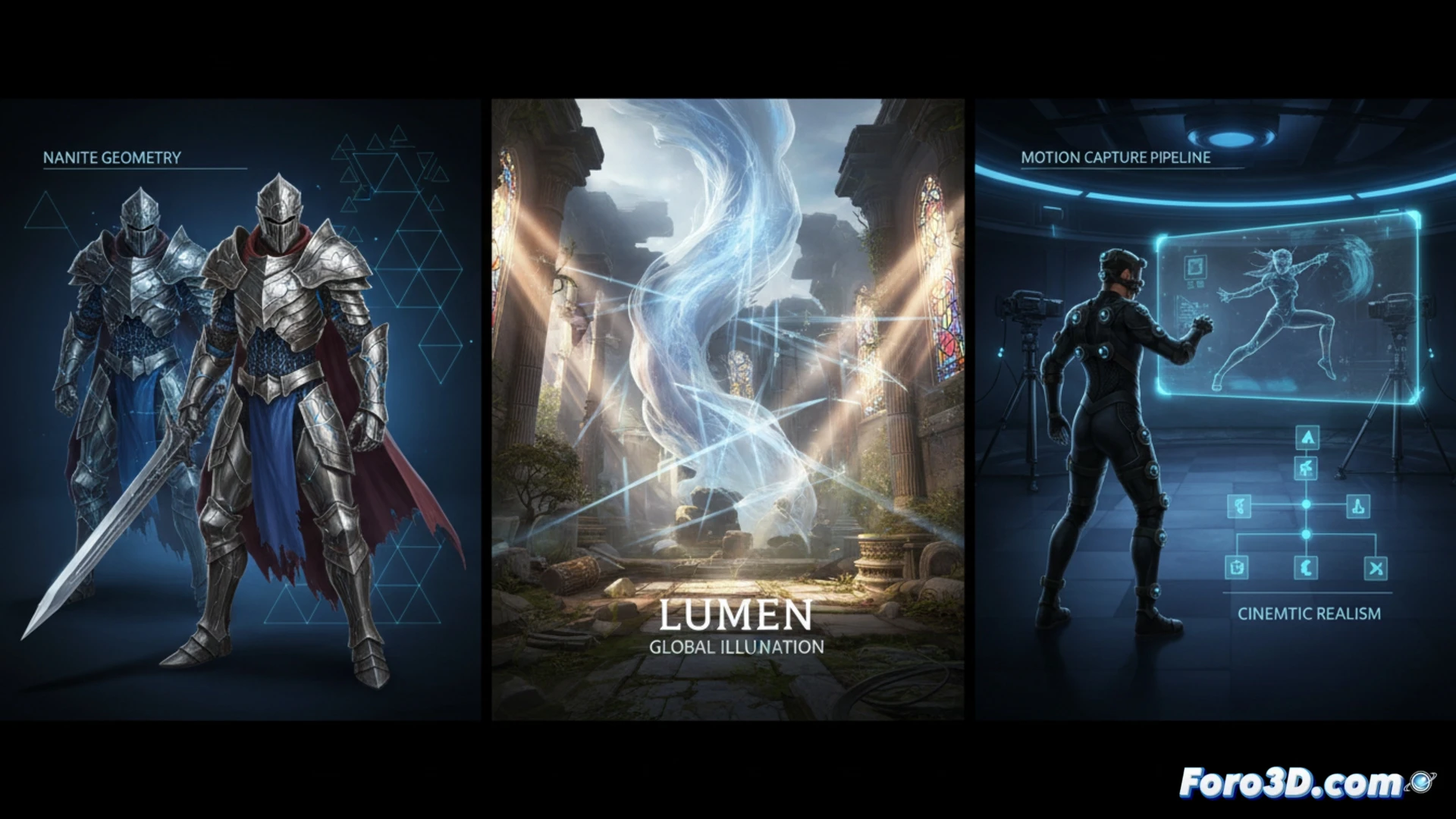
The technical trinity: UE5, ZBrush and Motion Capture 🛠️
The visual foundation rests on three pillars. Unreal Engine 5 brings its Lumen and Nanite systems, crucial for dynamic lighting and extreme geometric detail in destructible environments and character models. Precisely, these models are born from rigorous work in ZBrush, sculpting armors and anatomies with a polygon density that captures subtleties in skin and materials. To bring them to life, advanced Motion Capture is employed, not only for basic movements, but to capture the complexity and weight of close-quarters combat, integrating the brute force of the gameplay with the fluidity of a high-quality animated sequence.
Beyond technology, the visual identity 🎨
Technology is not an end, but a means. The challenge for the development team lies in using these tools without falling into a generic aesthetic. Cinematic realism must serve the dark narrative and the spectacular nature characteristic of Hack and Slash. The true test will be how the hyperrealism of the skin and the visual impact of the effects align with the gameplay, creating a cohesive experience where the technique amplifies immersion and the sense of power, thus defining a new visual identity for the saga.
How is Vindictus: Defying Fate using Unreal Engine 5's Lumen and Nanite technologies to overcome performance challenges in a high-speed action game with real-time environmental destruction?
(P.S.: a game developer is someone who spends 1000 hours making a game that people complete in 2)