The perception of video games as mere entertainment has changed. Today, specific titles function as effective educational tools, fusing game mechanics with knowledge transmission. From managing historical civilizations to solving physics-based puzzles, these games turn complex concepts into interactive experiences. Their use in educational contexts demonstrates that fun and learning can be parallel processes.
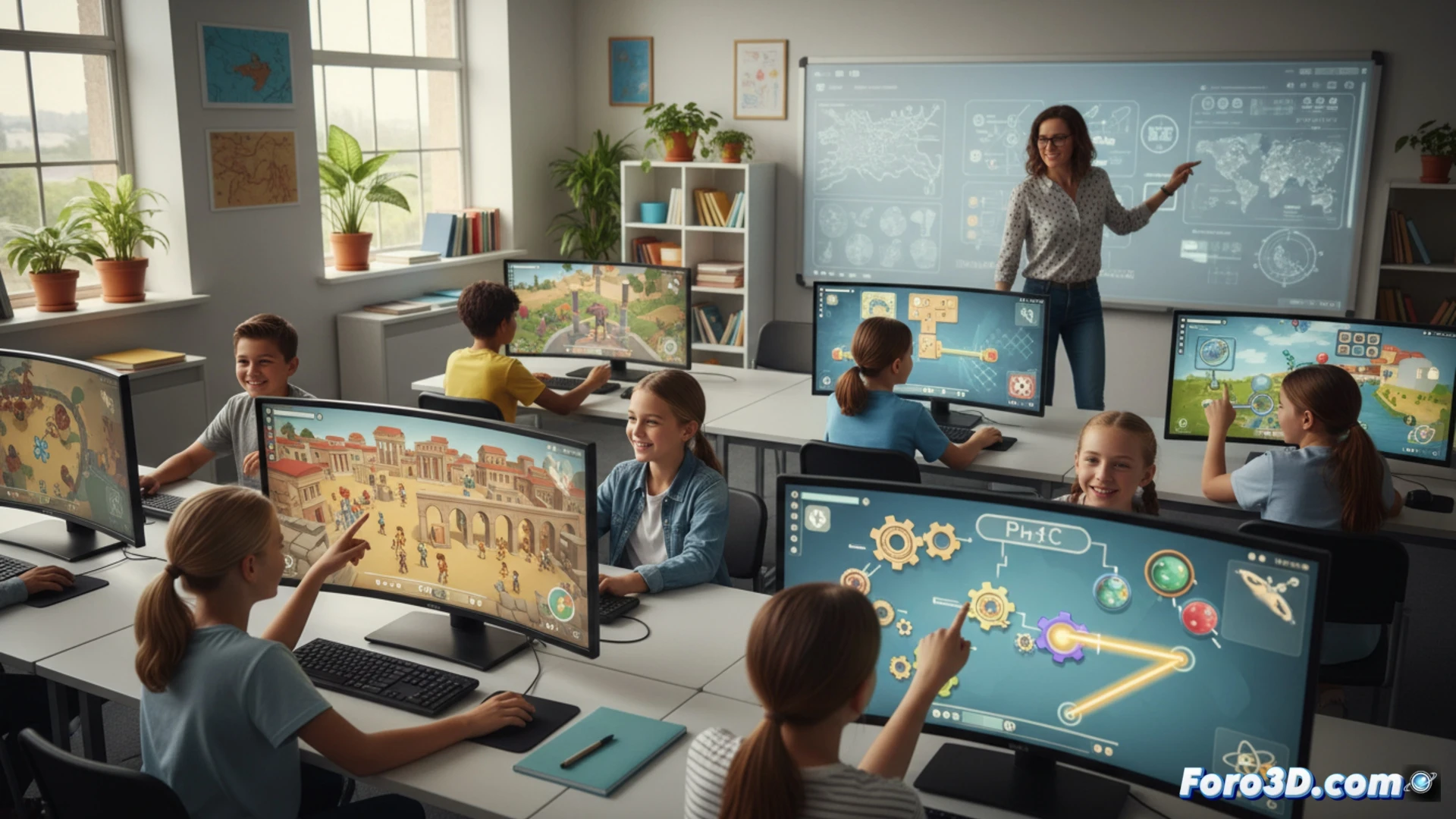
System design as the educational core 🧠
The pedagogical value lies in system design and gameplay. A game like Civilization is, technically, a simulation of complex systems where the player interacts with variables of economy, research, and diplomacy. The game engine processes these interactions and generates consequences, teaching cause-and-effect relationships. Similarly, Portal builds its didactics on a physics engine that respects predictable rules, where the player learns them through practical experimentation and error.
My teacher has a health bar ⚔️
It's curious to think that, after hours of a game explaining the Silk Road or momentum theory to you, the final exam consists of defeating a giant boss. Traditional education could take note: imagine that, to pass history, instead of a test, one had to guide Gandhi toward world domination through the clever use of resources. Maybe class attendance would increase if, at the end of the lesson, a screen appeared with the phrase Achievement unlocked: Basic Wisdom.