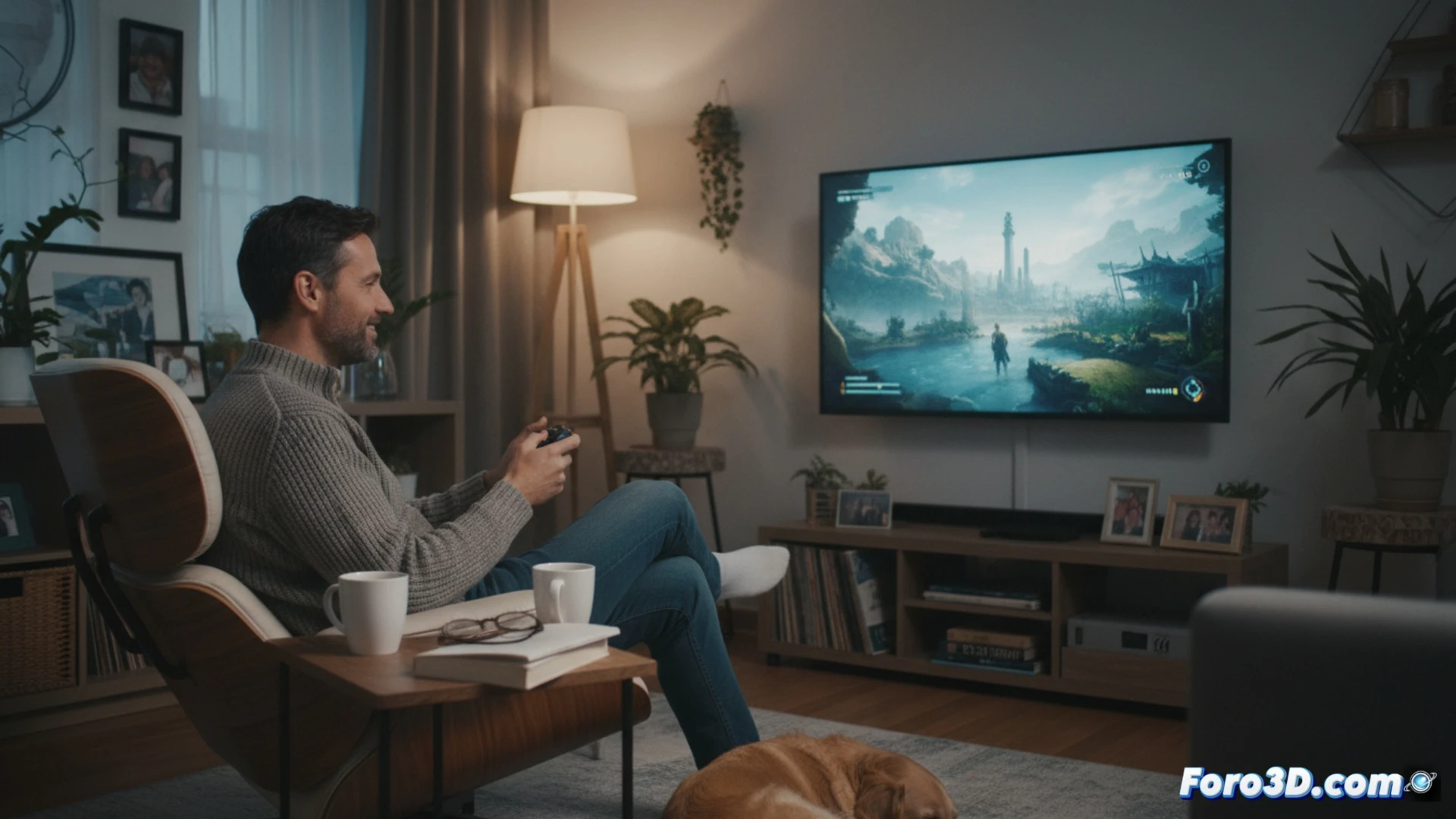
A persistent stereotype points out that playing video games in adulthood is a symptom of immaturity. For those who grew up in the 80s and 90s, this activity is an integrated cultural pastime. Psychology indicates that there is no link to incomplete psychosocial development. It is a valid leisure choice, comparable to watching series or reading, which can serve to manage stress, socialize, or enjoy complex narratives.
The technical evolution accompanying an adult audience 🎮
The industry has not remained static. It has evolved in parallel with its foundational audience, which is now adult. This is reflected in graphics engines that enable cinematic narratives, game designs that value depth over immediate accessibility, and online experiences that facilitate asynchronous socialization among adults with responsibilities. Current technology supports diverse experiences that resonate with mature interests.
Manual of responsible immaturity: pay the mortgage and then save the kingdom 👑
The logic is clear: if after working, doing the shopping, and helping with homework, you dedicate an hour to exploring a virtual world, you are clearly irresponsible. It is preferable, according to this criterion, the exemplary maturity of passively watching television for four hours. Managing an online team with teammates from three continents is chaotic; on the other hand, discussing soccer in a bar is a sign of absolute sanity. Coherence shines by its absence.