Fernando Alonso has brought to the table a technical problem with the Aston Martin AMR26: the severe vibrations from its Honda engine. These not only cause physical discomfort to the driver, but also damage secondary components such as mirrors or lights. However, Alonso downplays its importance compared to the main challenge: the lack of overall competitiveness and reliability. This scenario is a perfect case study for analysis using engineering and 3D simulation tools.
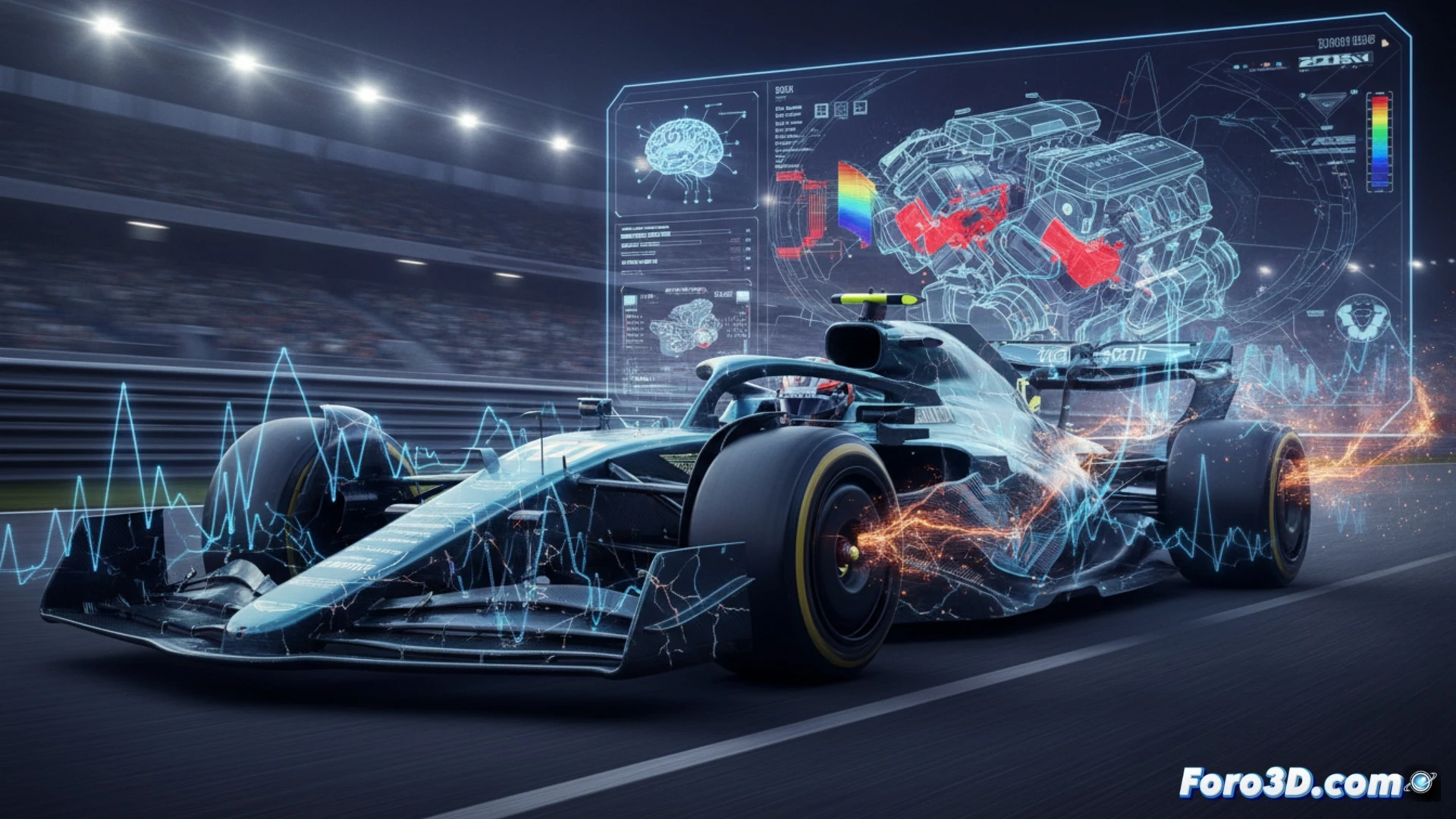
Vibration Diagnosis and 3D Simulation in Competition 🔍
This type of failure is ideal for diagnosis using computer-aided engineering. The engine block and chassis structure could be 3D scanned to create an exact digital model. On it, finite element simulations (FEA) could be run to identify vibration modes and resonant frequencies. In parallel, a 3D ergonomic model of the driver would allow evaluating how vibrations are transmitted to the body. Visualizing the propagation of stress waves in 3D helps understand why specific points fail, such as mirror mounts, and to virtually test solutions like new supports or dampers before manufacturing them.
Digital Simulation, Key in Modern F1 ⚙️
Alonso's admission of a short and problematic development winter underscores the critical dependence on time. This is where virtual 3D development becomes indispensable. It allows compressing test cycles, exploring more solutions, and optimizing components without relying so much on physical prototypes. In the fight for reliability and performance, mastering these digital tools is not a luxury, but a necessity for teams like Aston Martin, which must recover ground against better-established rivals.
How can 3D modeling and simulation help diagnose and solve the critical vibration problem in the Honda engine of the Aston Martin Formula 1 car?
(P.S.: VAR in 3D: now with replays from angles that didn't even exist)