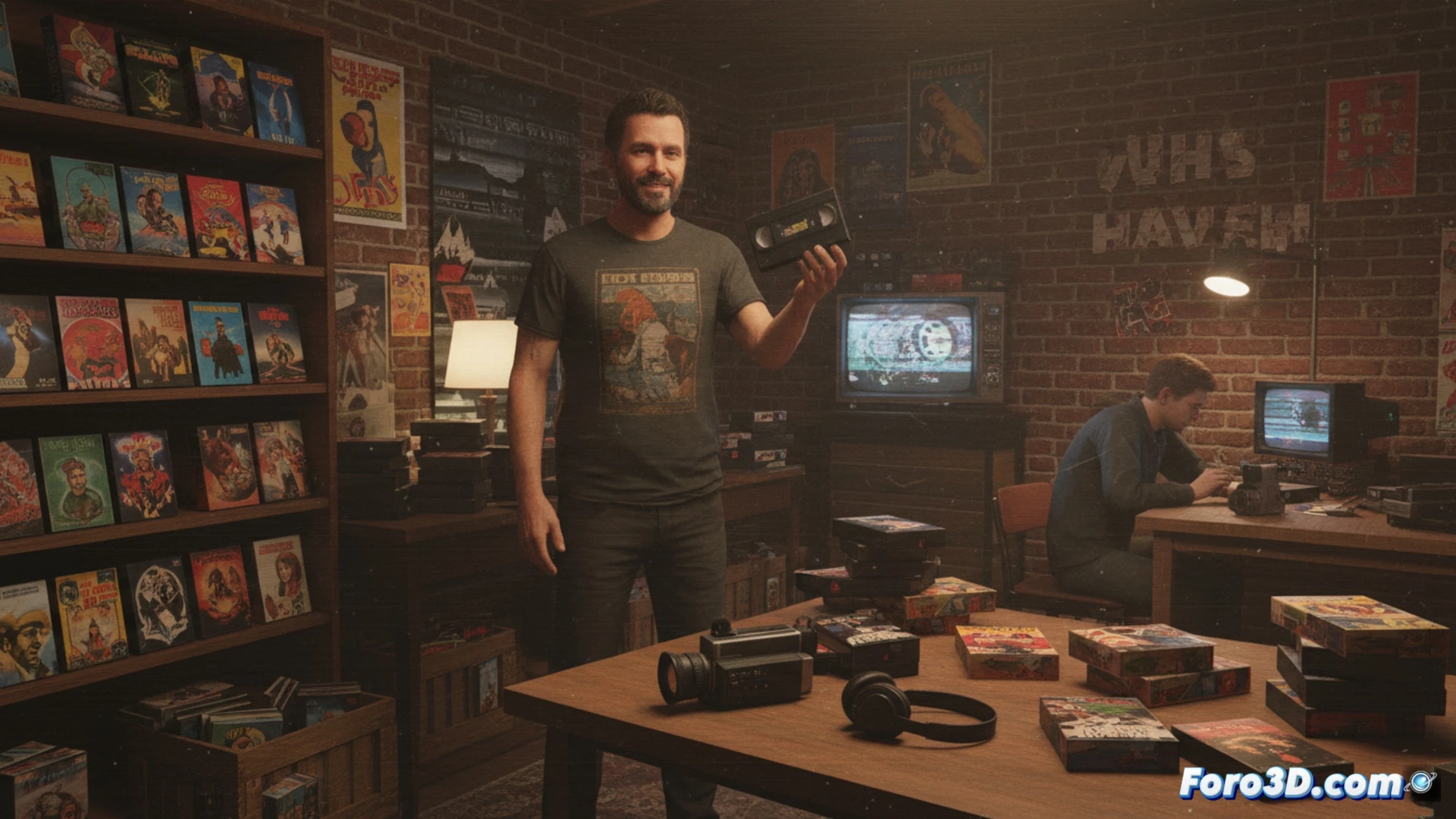
In an era of immaterial streaming, the VHS Haven project, led by Hiram Dobbs, stands as a tangible manifesto. It is not just about nostalgia, but about reclaiming the videotape as an artistic medium with unique sensory qualities. Its visual texture, the whisper of the tape, and the physicality of the object enrich the filmic experience, offering a warm and tactile counterpoint to the coldness of the perfect pixel. This initiative transcends archiving to become an active workshop of contemporary creation.
The aesthetics of noise: VHS as a pre-production choice 🎬
The work of VHS Haven operates as a fundamental aesthetic decision, analogous to defining a color palette or a 3D storyboard in pre-production. By producing and distributing new films in this format, collaborating with current filmmakers, they transform technical limitations into language. The grain, the jitter, and color degradation cease to be flaws to become intentional expressive elements, a layer of texture that informs the narrative. This conscious choice of medium challenges standard digital workflows, prioritizing atmosphere and materiality over resolution. Thus, the physical medium integrates into the creative process, defining the visual and sonic identity of the work from its conception.
Beyond obsolescence: living archive and sensory community 📼
VHS Haven does not preserve a technological corpse, but cultivates a living ecosystem. It functions as a distributor, publisher, and community node, organizing screenings that ritualize the act of watching cinema. This approach generates an essential dialogue about the materiality of the moving image and the ephemeral nature of media. By celebrating VHS as a vital artistic medium, the project underscores that the authenticity of a cultural experience can reside in its imperfection and tangibility, challenging the narrative of linear obsolescence.
How can the physical materiality of VHS, with its imperfections and technical limitations, become an active narrative element that enriches the cinematic experience beyond the purely visual?
(P.S.: Previz in cinema is like the storyboard, but with more chances for the director to change their mind.)