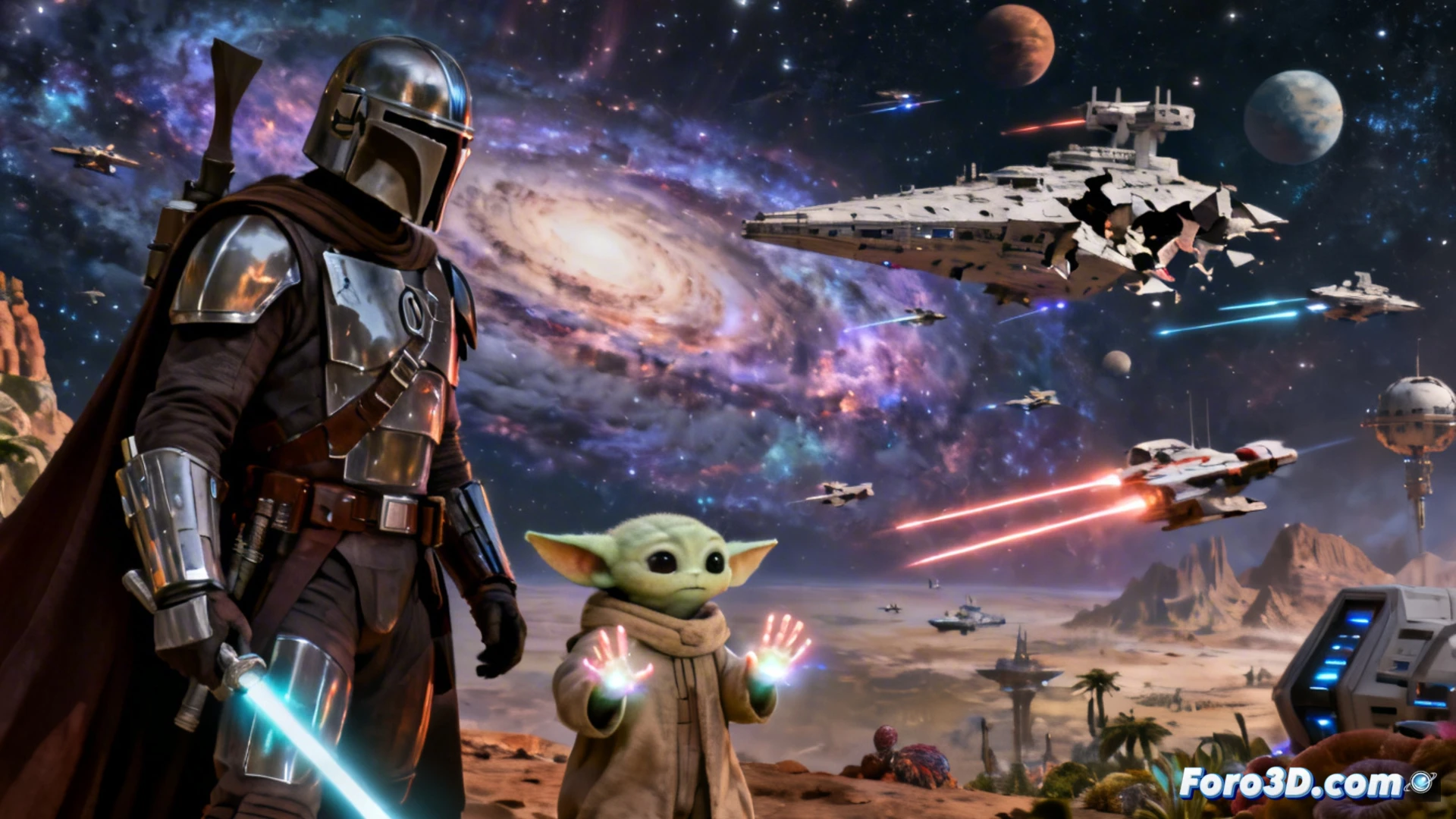
The announcement of Star Wars: The Mandalorian and Grogu marks an epic leap from the series format to the big screen, a monumental challenge for the visual effects team led by Industrial Light & Magic. This scaling not only implies more ships and explosions, but superior technical complexity in every shot. The VFX pipeline must evolve to maintain the intimate essence of the characters while building cinematic-scale battles, all under Jon Favreau's supervision. The integration of Grogu, an entirely digital character, into action and calm scenes will be more crucial than ever.
Pipeline and Techniques: Scaling the Galaxy with ILM 🛠️
ILM will coordinate a distributed pipeline with specialized studios, optimized for massive sequences. The main technical challenge will be large-scale simulation: fluid dynamics for explosions in vacuum, particle systems for debris rain, and capital ship destruction simulations. Rendering extensive digital environments, such as planetary cities or stellar fleets, will require efficient asset and lighting management. In parallel, creature FX work on Grogu must refine his emotional range and Force abilities, using machine learning for subtler facial animations that connect on IMAX screens. The key will be a pipeline that allows rapid iteration between Favreau and the artists.
Narrative and Spectacle: The VFX Balance ⚖️
The success of the VFX will not be measured solely in scale, but in how they serve the story. The great battles must feel the tactical weight of the fragmented Empire, while intimate moments between Din Djarin and Grogu will depend on perfect lighting and composition to maintain verisimilitude. The effects must be invisible in calm and overwhelming in the climax, without the latter eclipsing the former. This balance will define whether the transition to cinema preserves the heart of the series, using technology not as an end, but as a bridge to emotional narrative.
How do VFX artists scale techniques and visual effects quality from a television series to the demanding standards of a big-budget cinematic production, as in the transition from The Mandalorian to the movie The Mandalorian and Grogu?
(P.S.: VFX are like magic: when they work, no one asks how; when they fail, everyone sees it.)