Refuge studio completed 240 visual effects shots for the second season of One Piece on Netflix, work focused on enhancing weapons and creating complex transformations faithful to the original anime. This technical process was key to transferring the stylized essence of the series' universe to a live-action format, maintaining the fantasy and spectacle that define the work. The breakdown of their pipeline reveals the strategic use of specialized software like Houdini and Nuke.
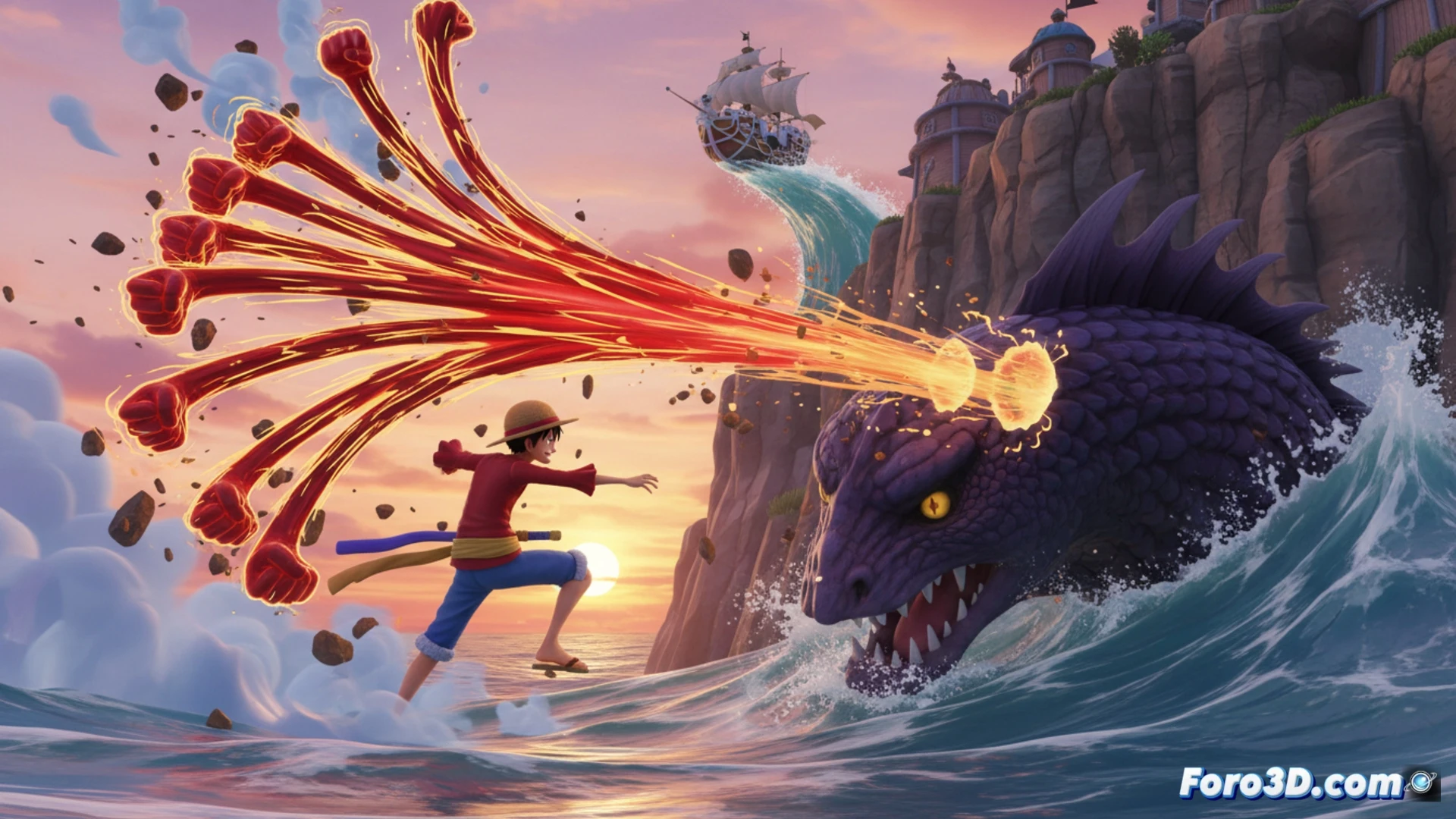
Technical Pipeline: from Houdini to Nuke 🛠️
The case of expanding and animating Zoro's sword illustrates the pipeline. For dynamic simulations and believable physical behaviors, the team used Houdini, handling the geometric complexity and movement. Subsequently, in the compositing stage, Nuke allowed integrating these digital elements with the filmed footage, ensuring organic interaction with real lighting and actors. A parallel challenge was the evolution of the character Tony Tony Chopper, requiring rigging and animation that balanced his caricatured appearance with coherence in a realistic environment.
The Balance Between Fantasy and Realism ⚖️
Success in adaptation projects like this lies in finding a technical and artistic middle ground. It's not about literally replicating the anime, but interpreting its iconic elements with a credible visual language in live-action. VFX work, from simulation to final compositing, is fundamental to building that bridge, allowing the audience to accept swords that change size and anthropomorphic characters within a world with tangible textures and physics.
How are visual effects designed and executed to enhance weapons and iconic objects from an anime in a live-action adaptation, maintaining their caricatured essence but integrated into a believable physical world?
(P.S.: VFX are like magic: when they work, no one asks how; when they fail, everyone notices.)