Max Verstappen, four-time Formula 1 champion, has issued a serious warning about his future in the sport. His dissatisfaction does not stem from poor initial performance, but from the new technical philosophy for 2026. He criticizes that the complex energy management, with multiple recharges per lap, creates an artificial and unpleasant driving experience. His statement raises a fundamental question: to what extent can technological evolution sacrifice the purity of the sport and the driver's satisfaction? 🏎️
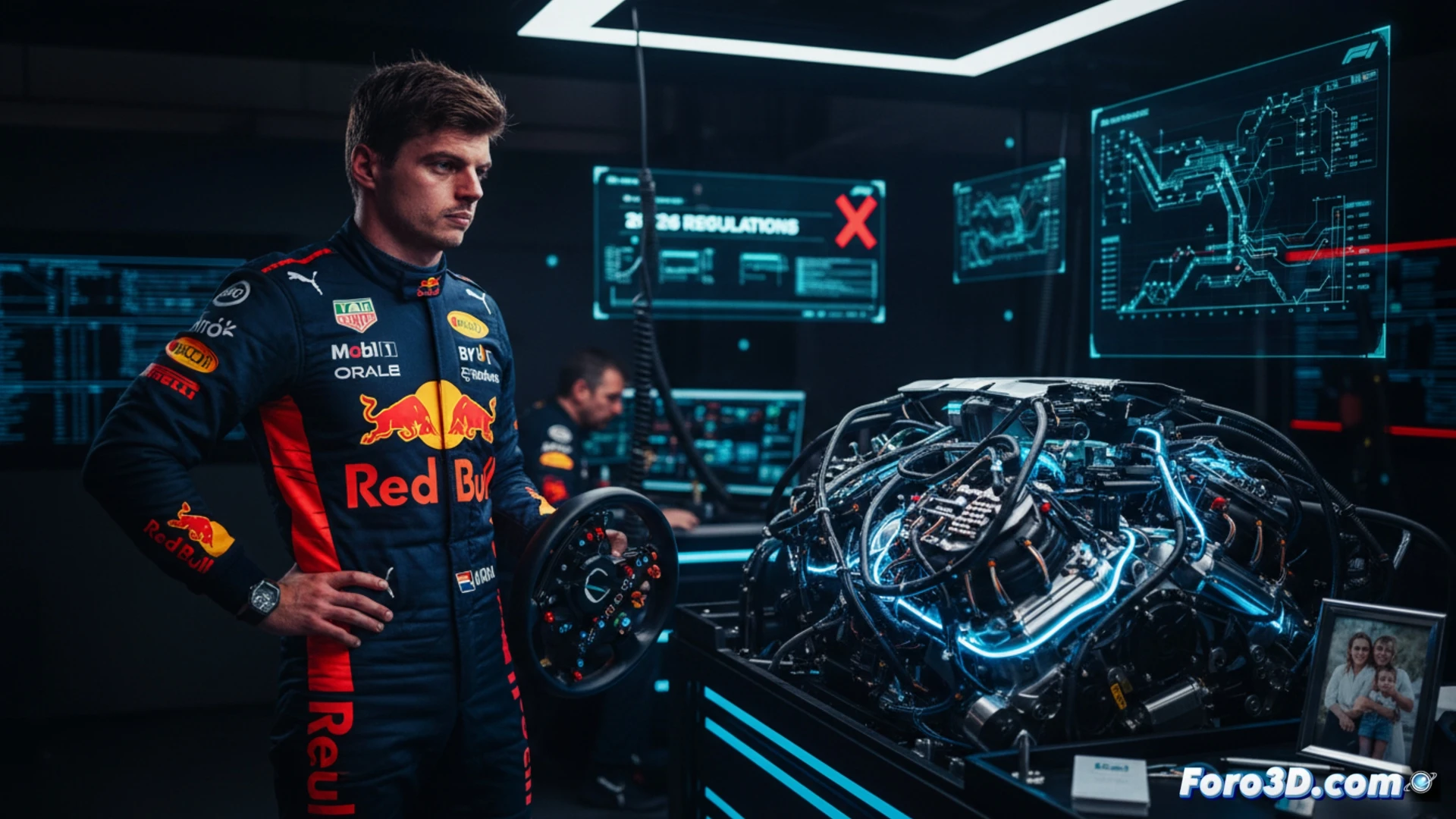
Visualizing the challenge: 3D Simulation of 2026 Energy Management 🔋
To understand Verstappen's criticism, we must visualize the intricate system that will govern the single-seaters. This is where 3D technology becomes indispensable. We propose the development of an interactive model that breaks down the energy flow of the new power unit. This simulation would show, in real time, how the energy from the MGU-H, the MGU-K, and the batteries is distributed and recharged during a lap. We would visually see the critical moments of deployment and recovery that the driver must actively manage, transforming their role and the feeling at the wheel. This tool would not only educate fans but also evidence the added mental load that the champion denounces.
The human factor versus technical evolution 👤
Verstappen's reflection goes beyond the technical and points to the heart of motorsport. When a driver of his caliber says he's no longer having fun, it's a red flag. Technology must be a bridge to expand the limits of performance, not a barrier that isolates the driver from the machine. The extensive calendar and personal sacrifice only make sense if the passion persists. His possible forced retirement would force F1 to balance innovation with the preservation of the human challenge and the spectacle that made it great.
Can 3D technology and advanced simulation save the essence of driving in Formula 1 against the growing automation that Verstappen criticizes?
(P.S.: reconstructing a goal in 3D is easy, the difficult part is making it not look like it was scored with the leg of a Lego doll)