Marty Blumen has released VDBRender, a free plugin that changes the game for Nuke compositors. This tool introduces native and physically accurate rendering of OpenVDB volumes, such as smoke, fire, or clouds, directly within the Nuke environment. It eliminates the need to go through external renderers, significantly streamlining VFX and animation workflows. Designed for production, it promises interactivity and precision, compatible with Nuke 17.0+ on Windows and distributed under the permissive MIT license.
Integration and technical capabilities for an optimized pipeline 🚀
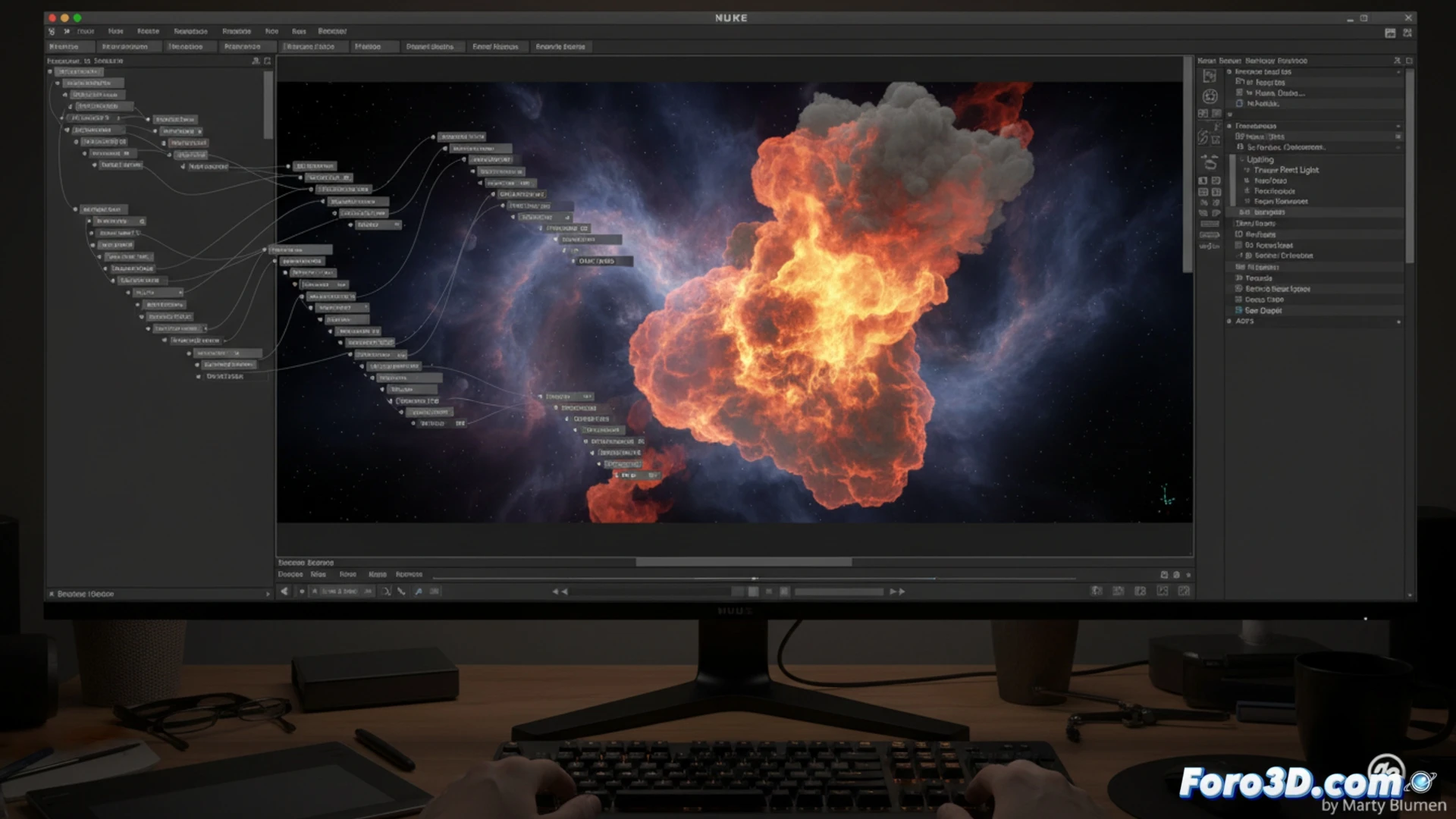
VDBRender integrates as another node in the Nuke graph, offering direct control over the visualization of volumetric assets. It includes nine presets for common materials, a configurable three-point lighting system, environment control, and full support for deep output and AOVs (Arbitrary Output Variables). This native integration allows artists to adjust the lighting, density, and appearance of the volume in context with the rest of the composition, facilitating real-time creative decision-making. The code optimization prioritizes interactivity, a crucial factor for rapid iteration in production environments with tight deadlines.
An open-source resource to empower the VFX community 💡
Beyond its technical utility, the release of VDBRender under the MIT license represents a valuable contribution to the community. Being free and open-source, it democratizes access to high-quality volume rendering within Nuke, allowing studios of all sizes to implement it without economic barriers. Additionally, it fosters collaboration and continuous improvement, as artists and developers can audit, modify, and extend the tool. Its enthusiastic reception underscores the need for integrated and efficient solutions that simplify the complex pipelines of contemporary visual effects.
How can VDBRender transform the workflow for integrating complex volumetric effects in Nuke, eliminating the dependency on external render engines?
(P.S.: VFX are like magic: when they work, no one asks how; when they fail, everyone sees it.)