Metal additive manufacturing takes an accessible turn with ValCUN's Molten Metal Deposition technology. Presented in a webinar with the Bauhaus University of Weimar, this innovation positions itself as a disruptive alternative for laboratories and R&D centers. Its main appeal: it operates at lower temperatures than laser melting, eliminates the need for expensive metal powders, and does not require controlled atmospheres of inert gases. This makes it a promising tool for democratizing prototyping and research with metal components.
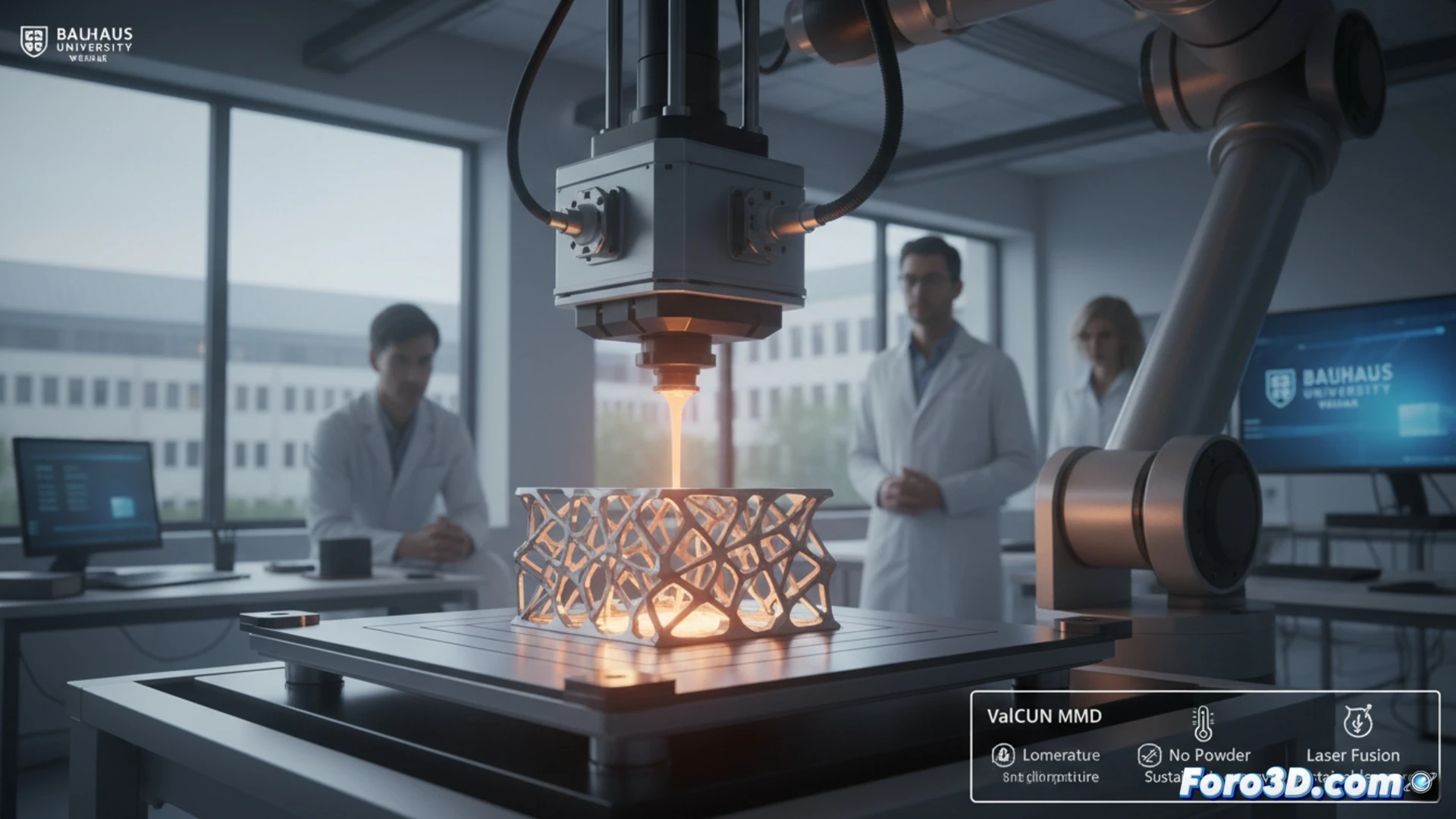
Operating principle and key advantages over SLM 🔬
Unlike Selective Laser Melting (SLM), which sinters thin layers of powder, ValCUN uses a process similar to MIG welding. A head deposits molten metal wire, layer by layer, to build the part. This hybrid approach between 3D printing and traditional casting techniques brings decisive benefits. It drastically reduces raw material costs (wire vs. powder) and operating costs (no sealed chambers with argon). Additionally, by working with standard alloys and in less demanding environmental conditions, it simplifies logistics and expands its applicability in academic environments and development workshops.
A bridge to accessible metal manufacturing 🌉
ValCUN's true disruption is not only technical, but conceptual. It acts as a bridge that connects the flexibility of additive design with the economy of conventional metallurgical processes. For researchers and engineers, it translates into a practical tool for iterating metal designs more quickly and economically, accelerating development cycles. Its arrival underscores a key trend in 3D printing: the search for more sustainable and affordable processes that bring high-quality metal manufacturing closer to more users.
Could ValCUN's Molten Metal Deposition technology finally democratize metal 3D printing for workshops and small manufacturers?
(PS: A good printable model is like a good friend: it doesn't need supports.)