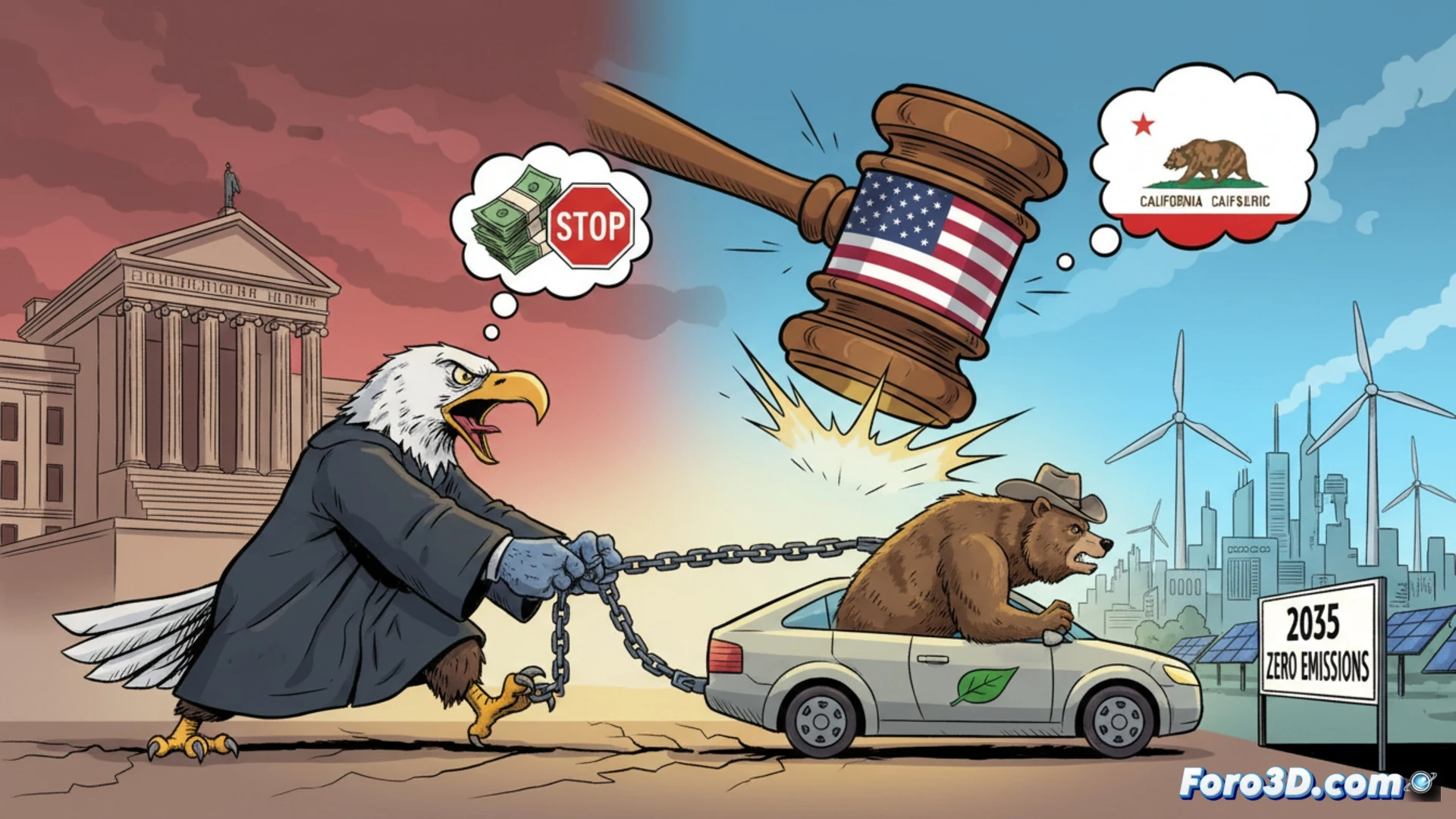
The U.S. federal government has sued the state of California to prevent the enforcement of its clean vehicle regulations. This law, which requires all new car sales to be zero-emission by 2035, is considered by the Trump administration as an overreach that would make automobiles more expensive. California defends the measure as crucial against pollution and is preparing for a legal battle.
The technical and logistical challenge of the electric mandate ⚙️
The forced transition to zero-emission vehicles poses considerable technical challenges. It requires a massive expansion of electric charging infrastructure, adaptation of supply networks, and advances in battery range. Additionally, it pressures manufacturers to accelerate development and reduce costs, which could affect the supply of models and national delivery timelines.
The cold war of the plug ⚡
While federal and state lawyers tangle in courts, one imagines the scene: automotive executives with a U.S. map, drawing red lines to sell combustion cars and green ones for electric, depending on the state. It seems that the future of mobility is not decided by engineers, but by judges. In the end, the consumer is left looking at the catalog, wondering if their next car will need gasoline, a plug, or a federal permit.