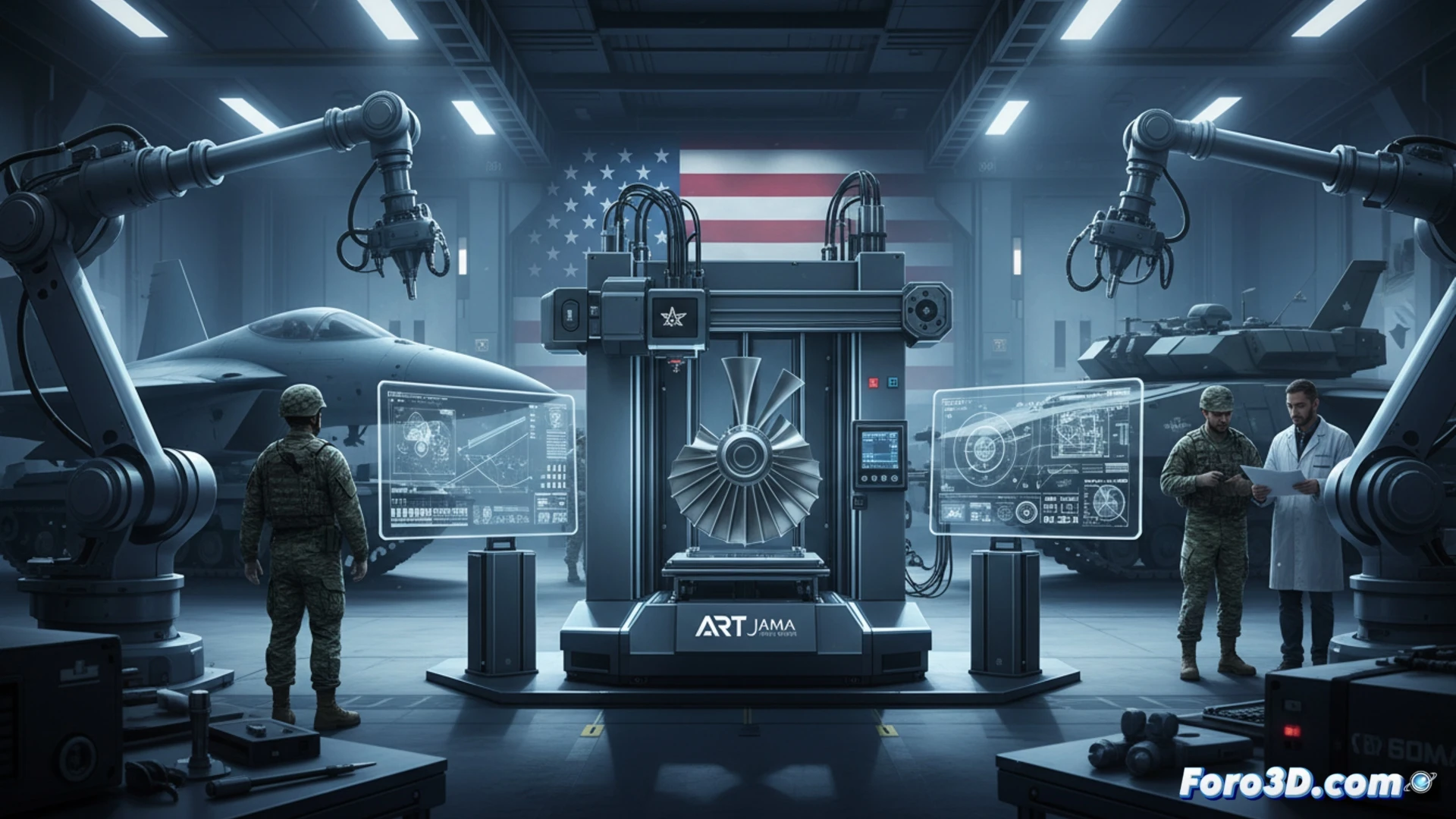
The U.S. Defense Logistics Agency has selected Applied Rapid Technologies as the prime contractor for the JAMA pilot program. This initiative aims to modernize the acquisition of parts through additive manufacturing, with the goal of rapidly and reliably producing critical components for flight safety. The contract will allow ART to validate processes and ensure that 3D printed parts meet the rigorous defense sector standards, strengthening the supply chain and military readiness.
From the warehouse to the digital file: the new logistics model 🚀
The JAMA program represents a paradigm shift in defense industrial logistics. It transitions from a model dependent on large physical inventories and long supply chains to one of on-demand production from digital files. This mitigates risks such as obsolescence, supplier disruptions, or shortages of critical spare parts. The key lies in the prior validation and qualification of additive manufacturing processes, which enables the production of parts with the necessary reliability for essential missions in an agile and local manner, dramatically increasing operational resilience.
Strategic investment in industrial sovereignty 💰
This pilot is not an isolated case, but part of a broad strategy by the Department of Defense to modernize its industrial base. The budget request of $3.3 billion for additive manufacturing projects in 2026 underscores the strategic importance given to this technology. The massive investment seeks to consolidate a national production capacity that is agile and secure, reducing external dependencies and ensuring readiness for contingencies, thus setting the course for the industrial logistics of the future.
How is the adoption of 3D printing by the U.S. Defense Logistics Agency transforming the paradigms of supply chain and on-demand production in the manufacturing industry?
(P.S.: at Foro3D we optimize routes like we optimize polygons: until the computer says enough)