Imagine transforming a daily waste into clean electricity. Microbial fuel cells, sometimes called Urine-tricity, do exactly that. These bio-electrochemical devices employ communities of microbes that break down the organic compounds in urine, releasing electrons that are captured as direct electric current. It's a fascinating process where biology and engineering unite to treat wastewater and generate energy simultaneously, an ideal concept to be explored and explained through 3D scientific visualization tools.
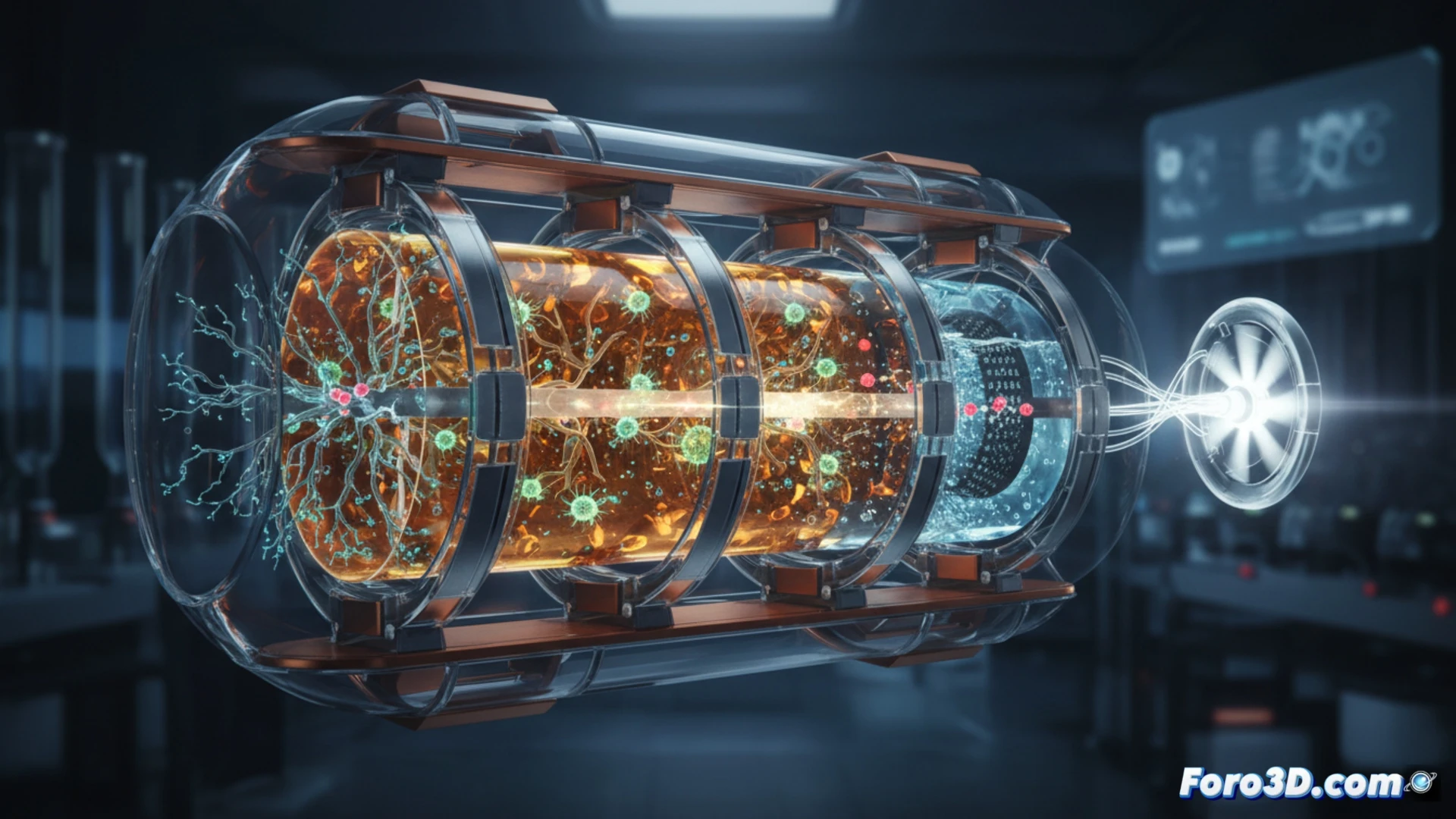
The role of 3D in understanding the bioelectrochemical process 🔬
The true magic and complexity of this technology occur at the microscopic scale, a perfect realm for 3D visualization. Through molecular modeling, we can represent the structure of urea and other compounds being metabolized by bacteria. 3D animations allow illustrating the journey of electrons: from the microbial cell membrane, through bacterial nanowires or chemical mediators, to the anode and then to the cathode of the device. Interactive three-dimensional diagrams help break down the cell's architecture, showing layers of electrodes, membranes, and the microbial biofilm, making a intricate system tangible that would otherwise be abstract.
Beyond outreach: 3D for innovation ⚙️
This visualization capability is not only crucial for public outreach but also for research and development. Modeling fluid dynamics inside the cell in 3D or simulating the spatial growth of the biofilm can lead to optimizations in electrode design and reactor geometry. By making the invisible visible, 3D tools become an essential bridge between theoretical scientific principles and practical technological applications, accelerating the path for these biological fuel cells to become a tangible and efficient solution.
How can we use scientific visualization techniques to optimize the design of microbial fuel cells that generate electricity from urine?
(P.S.: fluid physics to simulate the ocean is like the sea: unpredictable and you always run out of RAM)