Alberto Martínez, an engineer graduated from the Polytechnic University of Cartagena, has been awarded the national prize Impulsa Startup for his 3D-printed bionic prosthesis project. This recognition values the innovative approach and profound social impact of an initiative that seeks to democratize access to personalized assistive devices. The prize represents a key boost for the development and commercialization of this technology, positioning Martínez as a reference in the intersection between biomedical engineering and technology-based entrepreneurship. 🏆
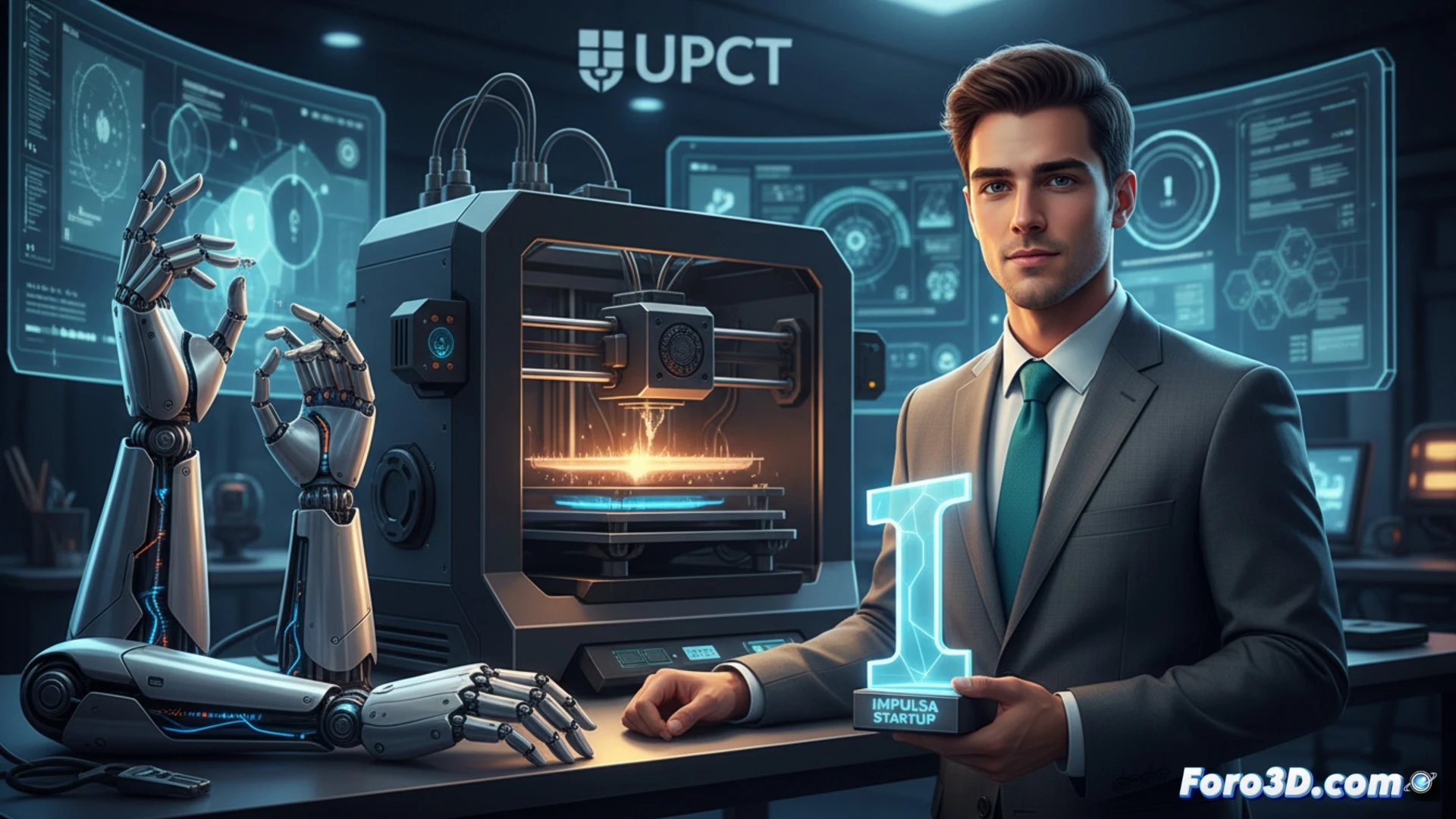
From 3D scanning to the bionic hand: technical process and materials 🔬
The core of the awarded project lies in a meticulous technical workflow. It begins with the precise capture of the user's anatomy through 3D scanning, the basis for personalized and ergonomic design. The resulting 3D modeling is optimized for additive manufacturing, selecting advanced materials that combine mechanical properties, durability, and biocompatibility. 3D printing allows the integration of lightweight and complex structures, housing the mechatronic systems that provide bionic functionality to the device. This process drastically reduces manufacturing times and costs, key to accessibility.
More than technology: social impact and future of the sector ❤️
The true success of this development transcends the technical aspect. By making prostheses cheaper and personalized, it restores autonomy and tangibly improves the quality of life of people, breaking economic barriers. This case exemplifies how knowledge generated in the university can materialize into a high-impact startup, closing the cycle between research and market. Projects like this not only revolutionize the niche of orthoses and prostheses but also pave the way for a new generation of person-centered technical aids.
How is 3D printing revolutionizing the design and accessibility of personalized bionic prostheses?
(P.S.: 3D prostheses are so personalized that they even have fingerprints.)